
Quick Breads
And a recipe for Corn Bread

Now that fall is here and we’re starting to make soups, stews, and chilies, I was yearning for something savoury to complement a simple, one-pot dish. With its light yet crunchy texture, corn bread and chili go hand-in-hand. But it is only one of many types of quick breads that fill that role.
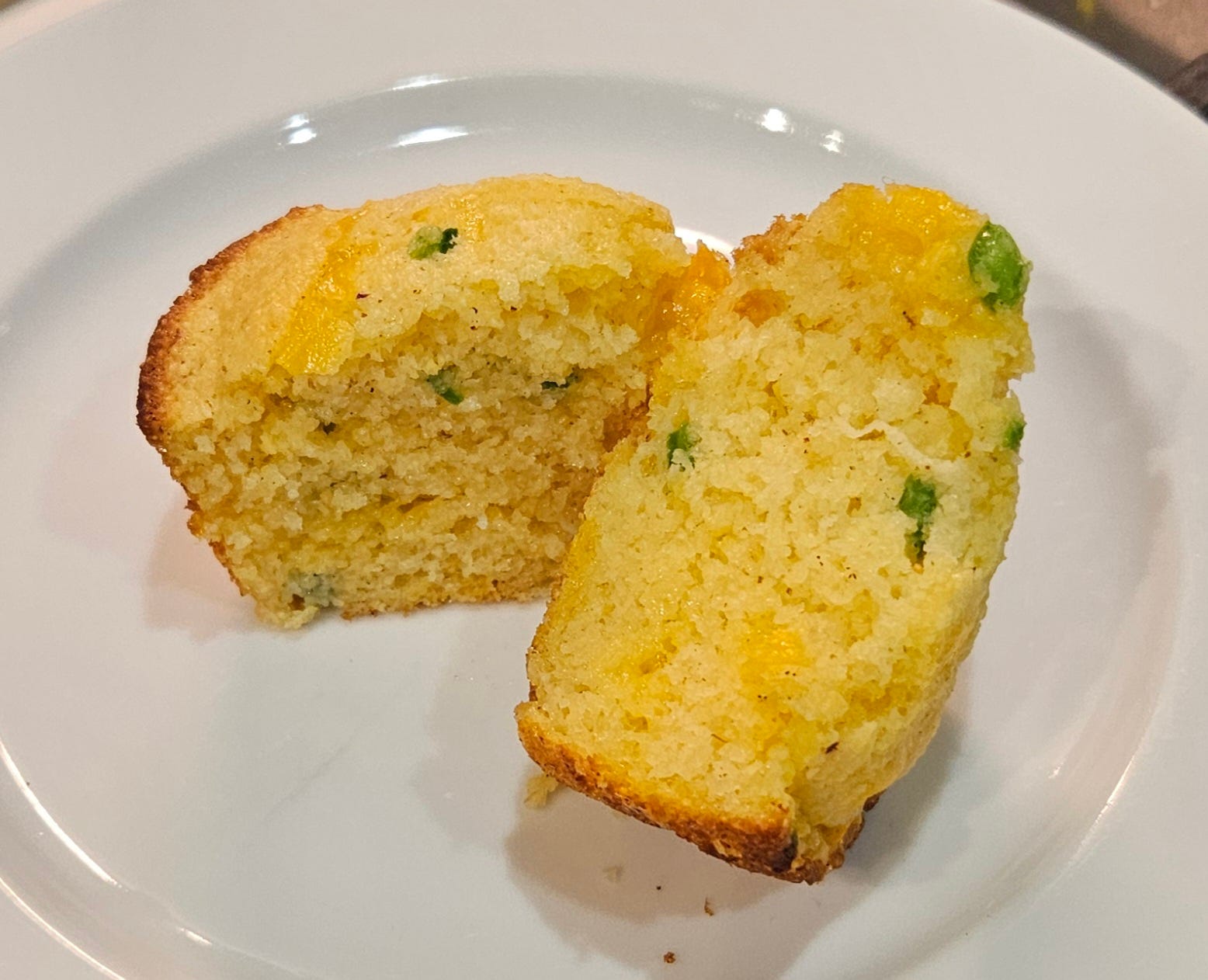
How quick breads and yeasted breads differ
Well, the heading says it all! One is quick, and the other has yeast! But seriously, besides the obvious, it’s not just about the leavening agent (and the time it takes for the bread to rise—more on that below) but also about the texture. Quick breads have a more cake-like texture to them. I think we call them “breads” because they’re typically baked in a loaf pan and sliced like bread when serving (like banana bread, for example.) Sometimes they’ll be called “loaf” as opposed to bread. Depending on how much liquid is added, savoury breads, like Irish soda bread, can be baked as a boule (round loaf) or a flat disk, similar to scones or biscuits (in case you’re new here, one of my first posts on here was about Biscuits, back in January of 2024.) Quick breads are really more like a muffin than a bread (in fact, you could make this corn bread into muffins, see notes below.)
The other thing that contributes to that cake vs. bread texture is the leavening agent used: baking soda and/or baking powder (and often, eggs) versus yeast. Yeast takes a while to rise, whereas baking soda/powder start to rise as soon as liquid and/or heat are introduced. A yeasted bread will take hours to make and proof (the term for letting the bread dough rise before baking,) whereas a quick bread can be ready to go into the oven within minutes.
Finally, the other big difference is the method: simple mixing of wet and dry ingredients, versus kneading (or in the case of no-knead breads, stretching and folding, as described in my sourdough bread recipe) to help develop gluten, which gives bread its structure and pliable texture. Quick breads don’t have that same stretchy, doughy texture and structure, so they’ll crumble if you were to try to slice them to use for a sandwich.
Basic Corn Bread Recipe
This corn bread recipe is adapted from Serious Eats, a site I visit often when I want all the science-y background on cooking and recipes. Their recipe calls for browned butter, which, if you remember, I wrote about a few months ago, so if you need a refresher, check out my Browned Butter post. You don’t have to brown the butter, but I reckon that it really does add a depth of flavour to this recipe that can’t be beat.
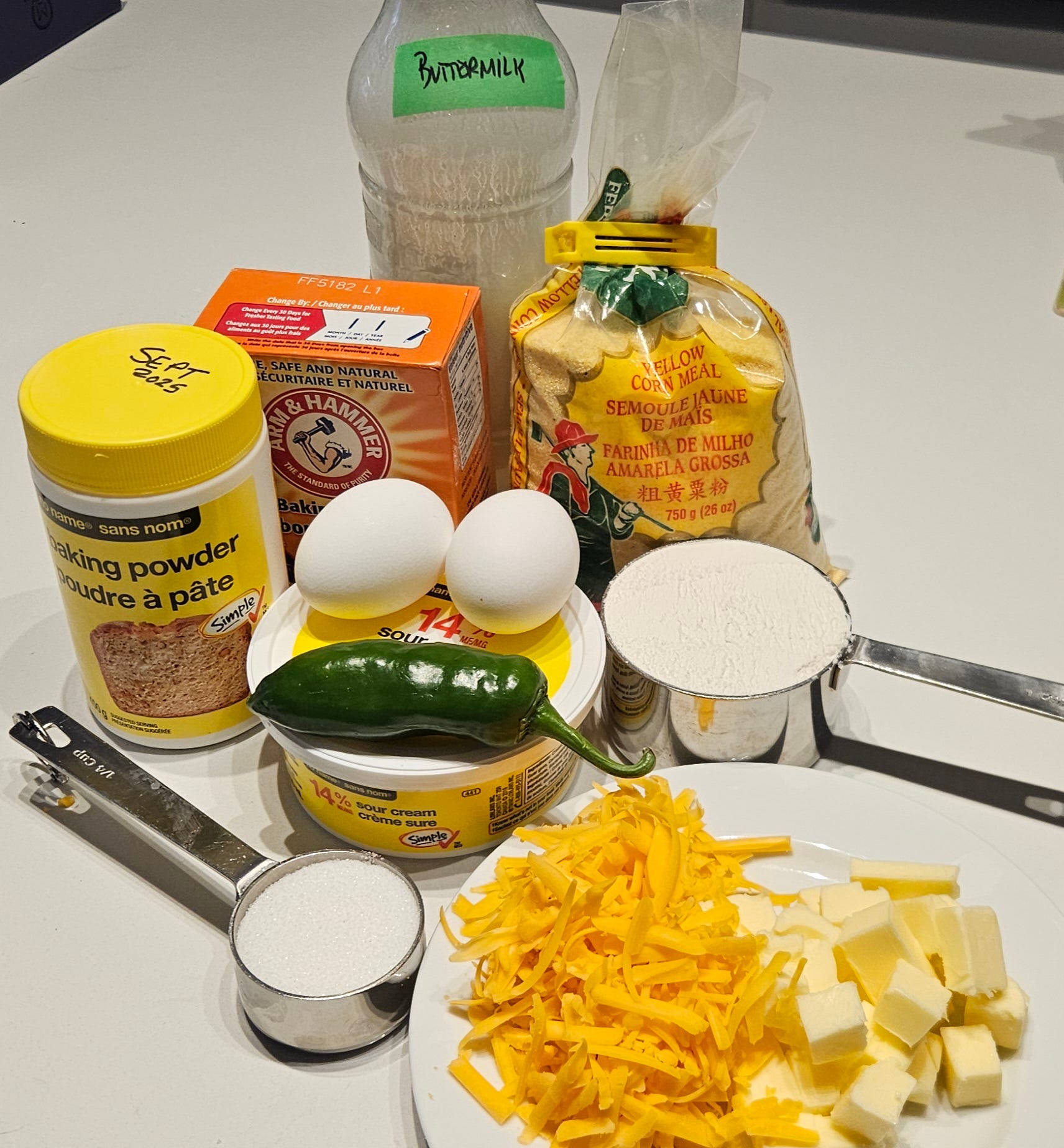
After the recipe below, I also give some notes, variations, and substitutions you can make to suit your tastes and dietary restrictions.
Equipment
While you can make this in any type of baking tin (darker ones are better for heat retention and distribution,) a cast iron frying pan is best. It can go from stovetop to oven, and has incredible heat conduction. Enamel-coated cast iron (e.g., Le Creuset or Staub) will also work, but the bottom might not be as crispy. This recipe makes enough for one 10” cast iron frying pan. See notes below if your pan is smaller. No other special equipment is required, just basic kitchen tools.
Ingredients
7 tablespoons butter, cubed*
1 cup fine yellow cornmeal
1 cup all-purpose flour
1/4 cup sugar
1 teaspoon kosher salt*
2 teaspoons baking powder
1/4 teaspoon baking soda
2 eggs, lightly beaten
3/4 cup sour cream**
1/2 cup buttermilk**
1 jalapeno pepper, seeded and finely diced (optional)
1/2 cup cheddar cheese, grated (optional)
Method
Set your oven rack in the middle and pre-heat it to 425°F.
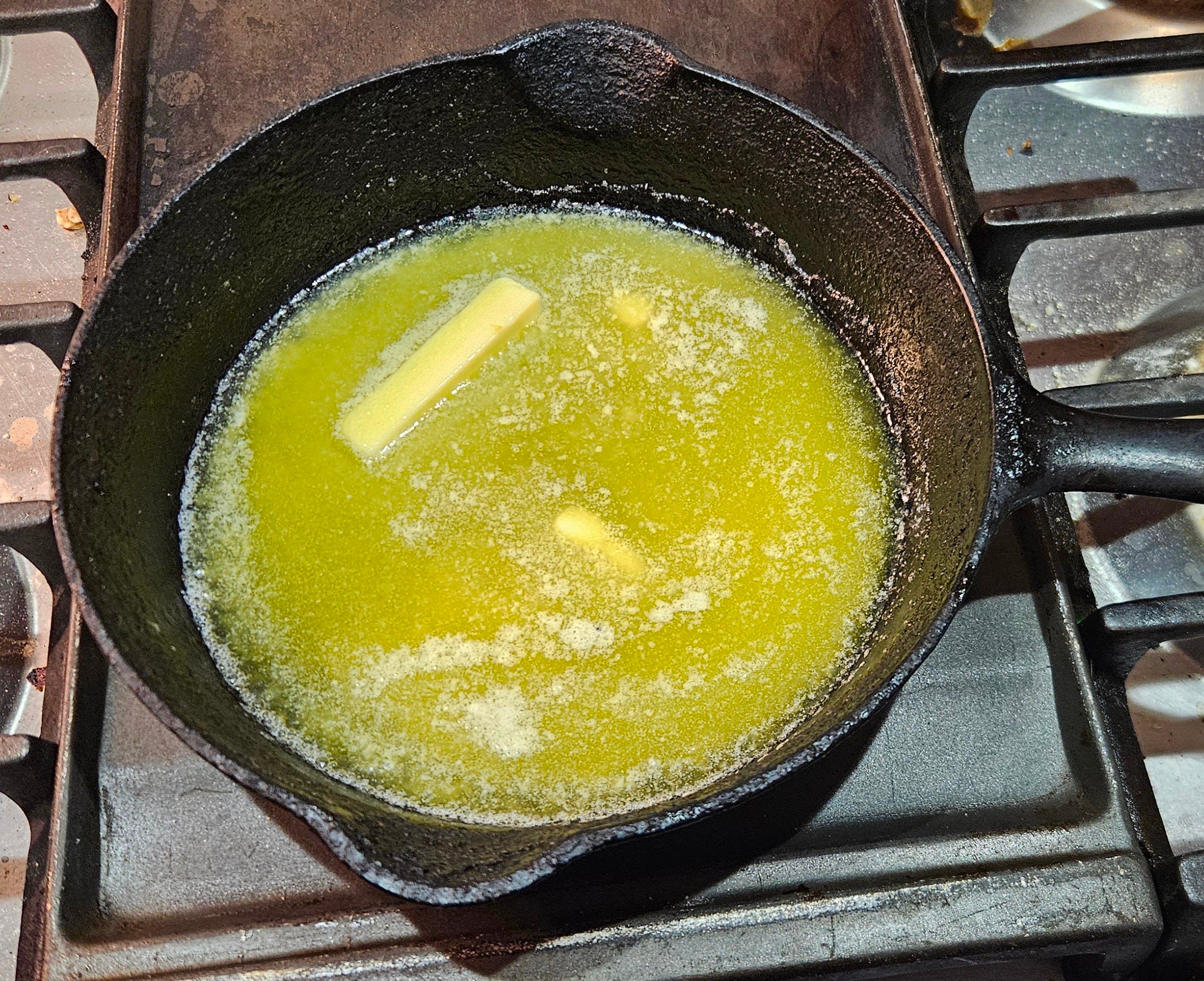
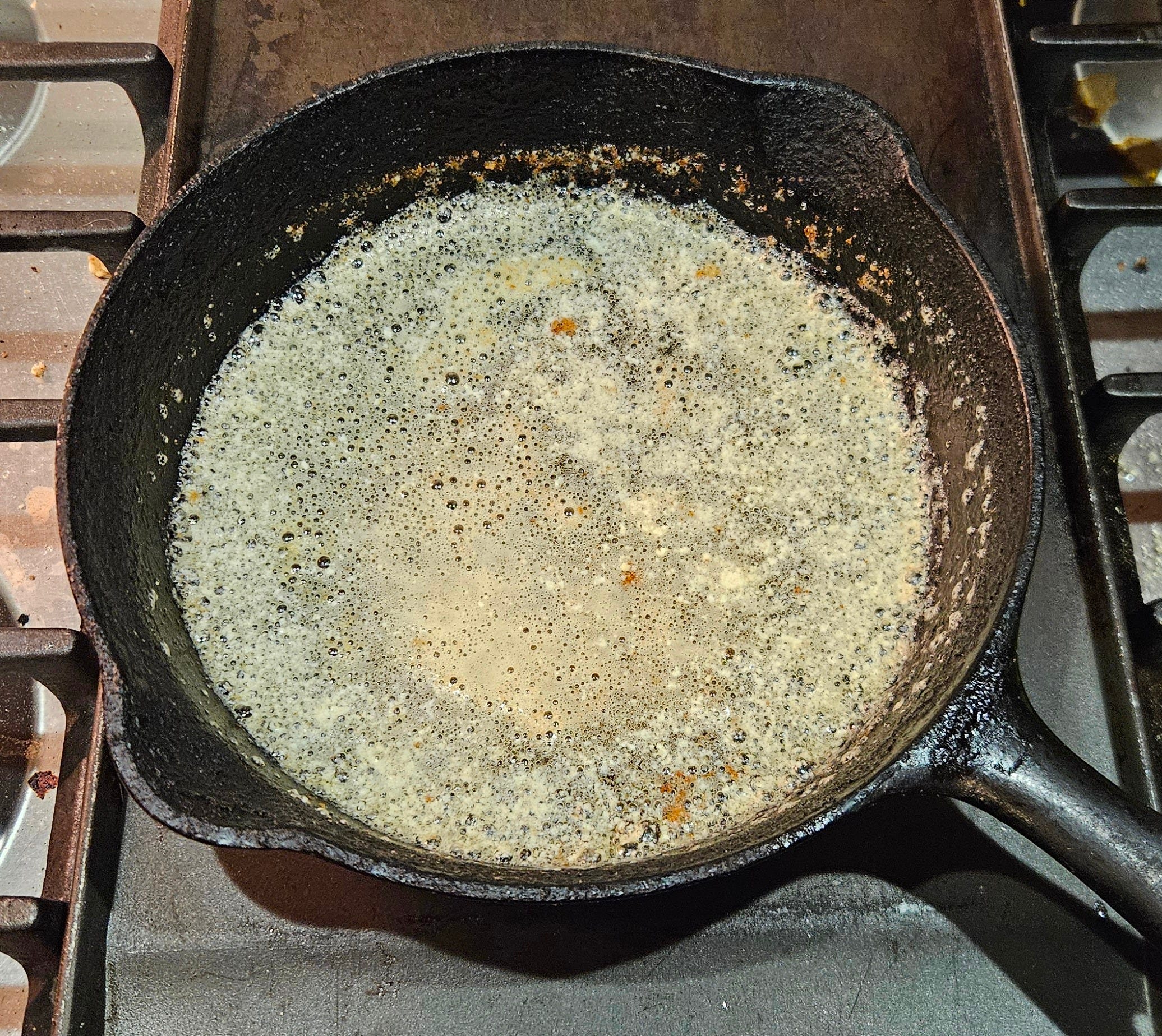
Cut the butter into small pieces (either pats or cubes are fine) and put them in a 10” cast iron skillet (or other suitable baking tin) and place it in the oven. While the butter melts and then browns (takes about 15 minutes) you can prep the rest of your ingredients.
In a medium-sized bowl, measure out the cornmeal, flour, baking soda, baking powder, and salt.
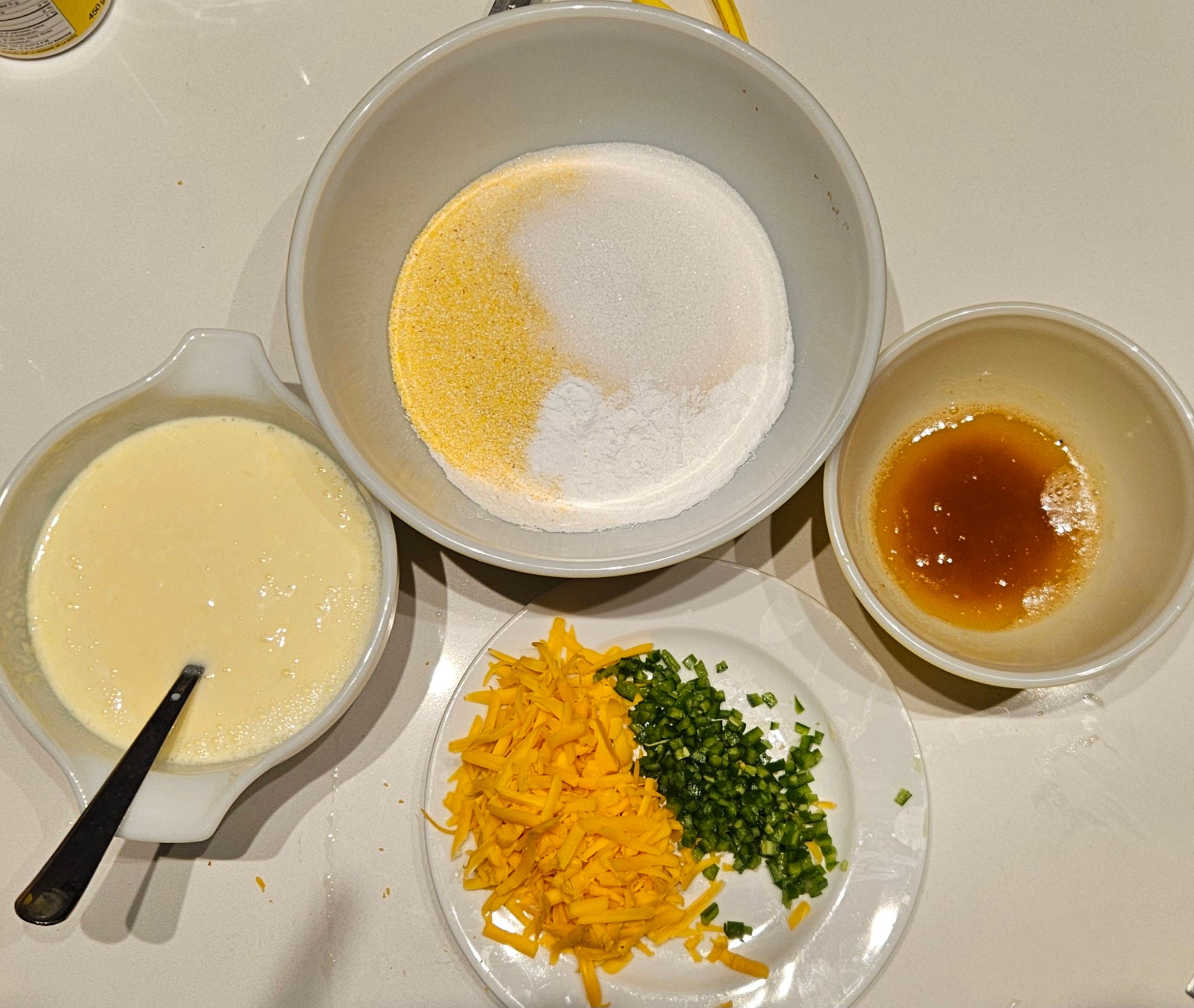
In another bowl, mix the eggs, sour cream, and buttermilk.
When the butter has melted and browned, remove the pan from the oven and drain off all but one tablespoon of the butter into a heat-proof bowl.
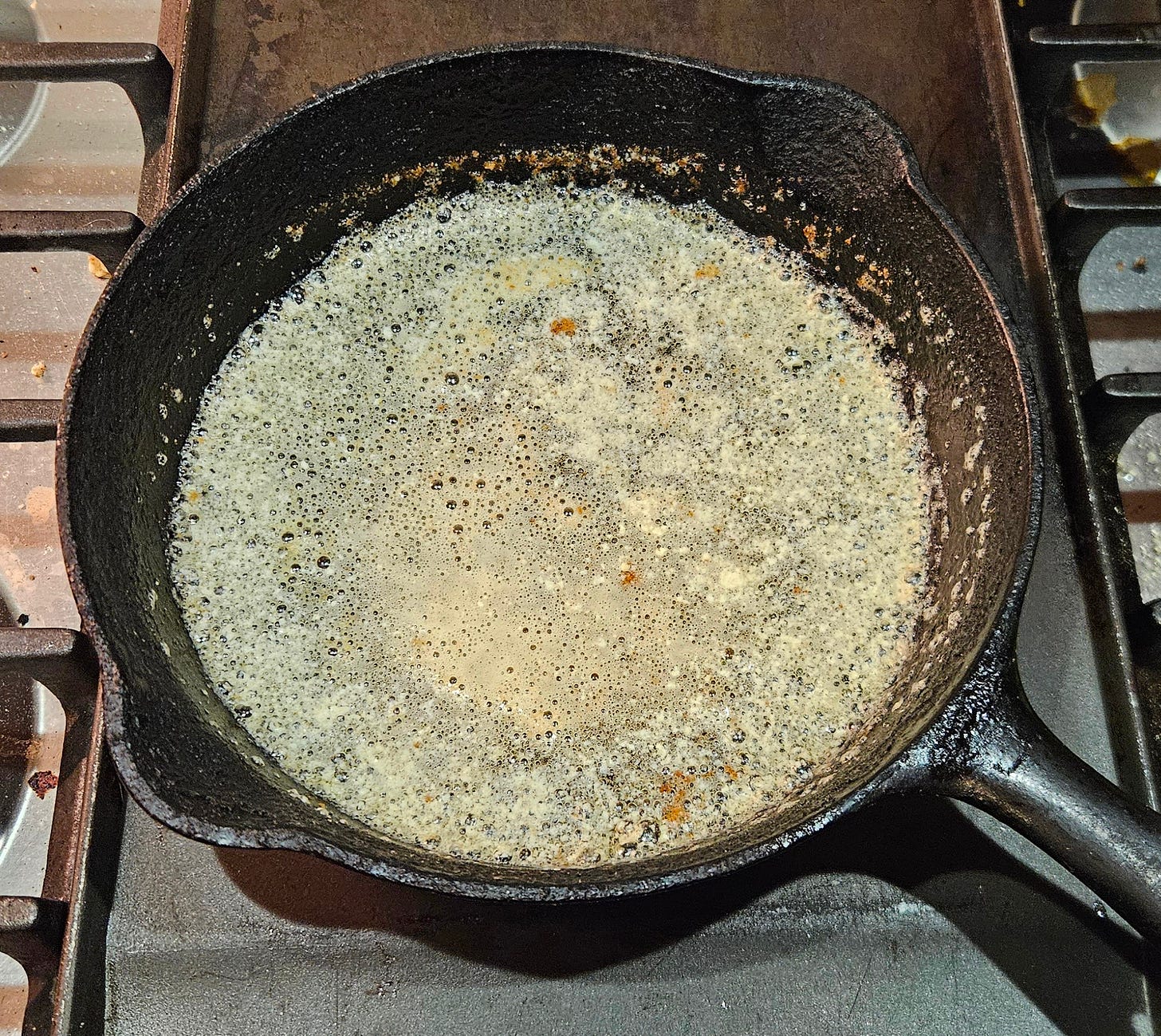
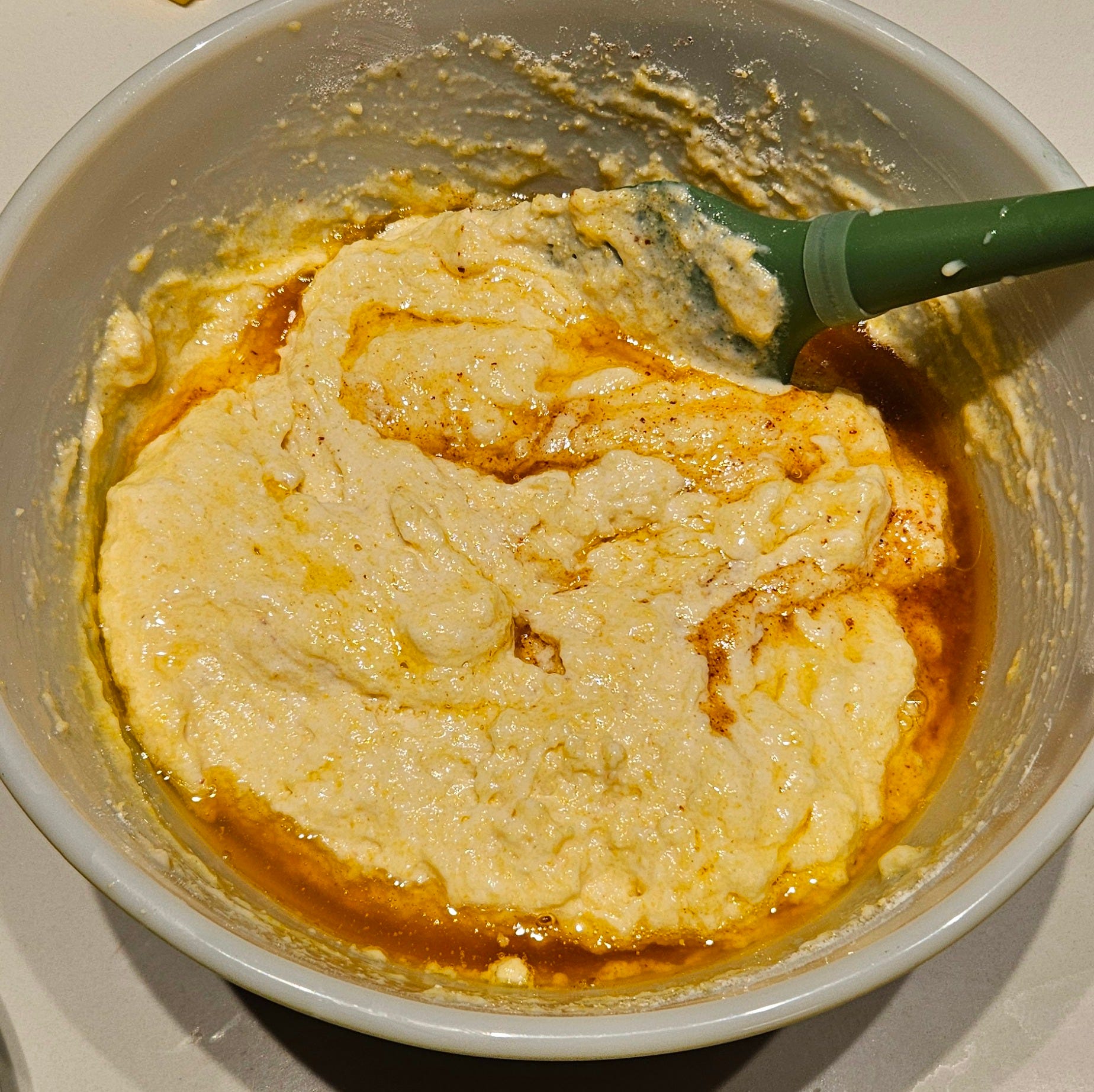
Browned butter Mix the wet and dry ingredients together, then drizzle in the melted, browned butter. Just mix to combine, no need to beat it or over-mix it. The consistency should be like thick cake or muffin batter.
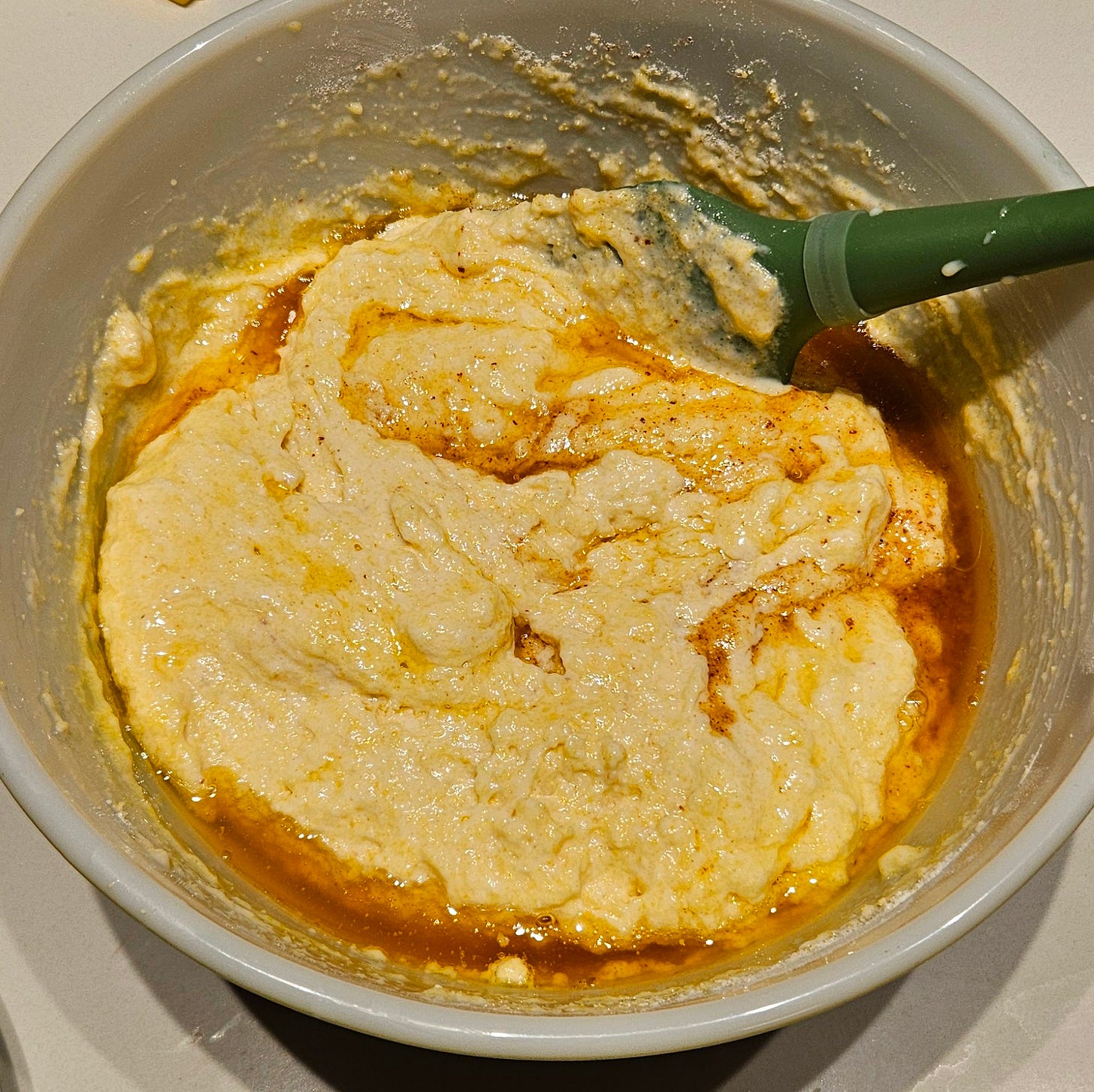
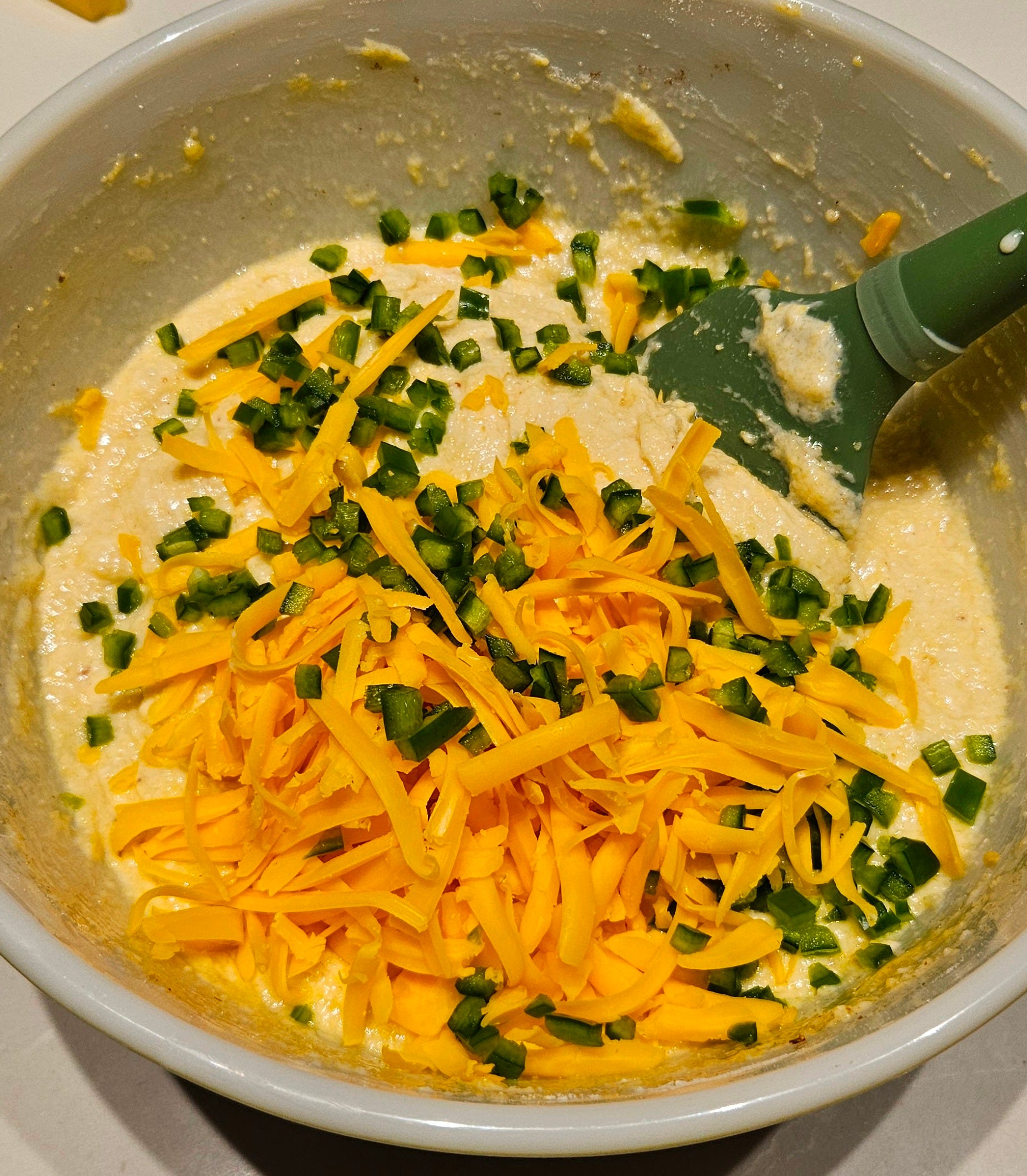
Adding the browned butter to the batter If you are adding the cheddar and jalapeño, do it now.
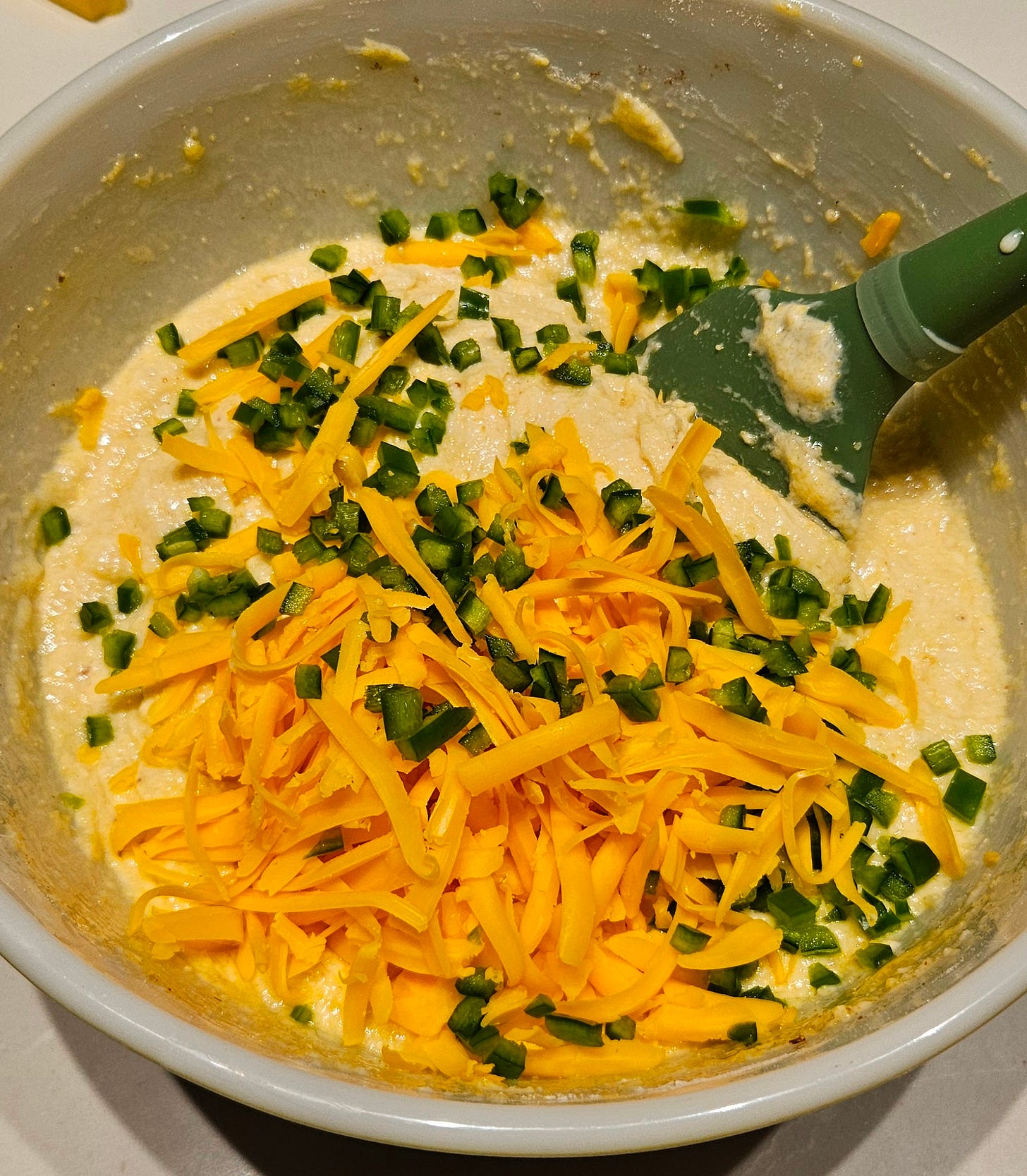
Mix in the cheese and jalapeños, if using Make sure the bottom and sides of the pan are completely coated in melted butter, then spoon the corn bread mixture into the pan, smoothing out the surface with the back of the spoon.
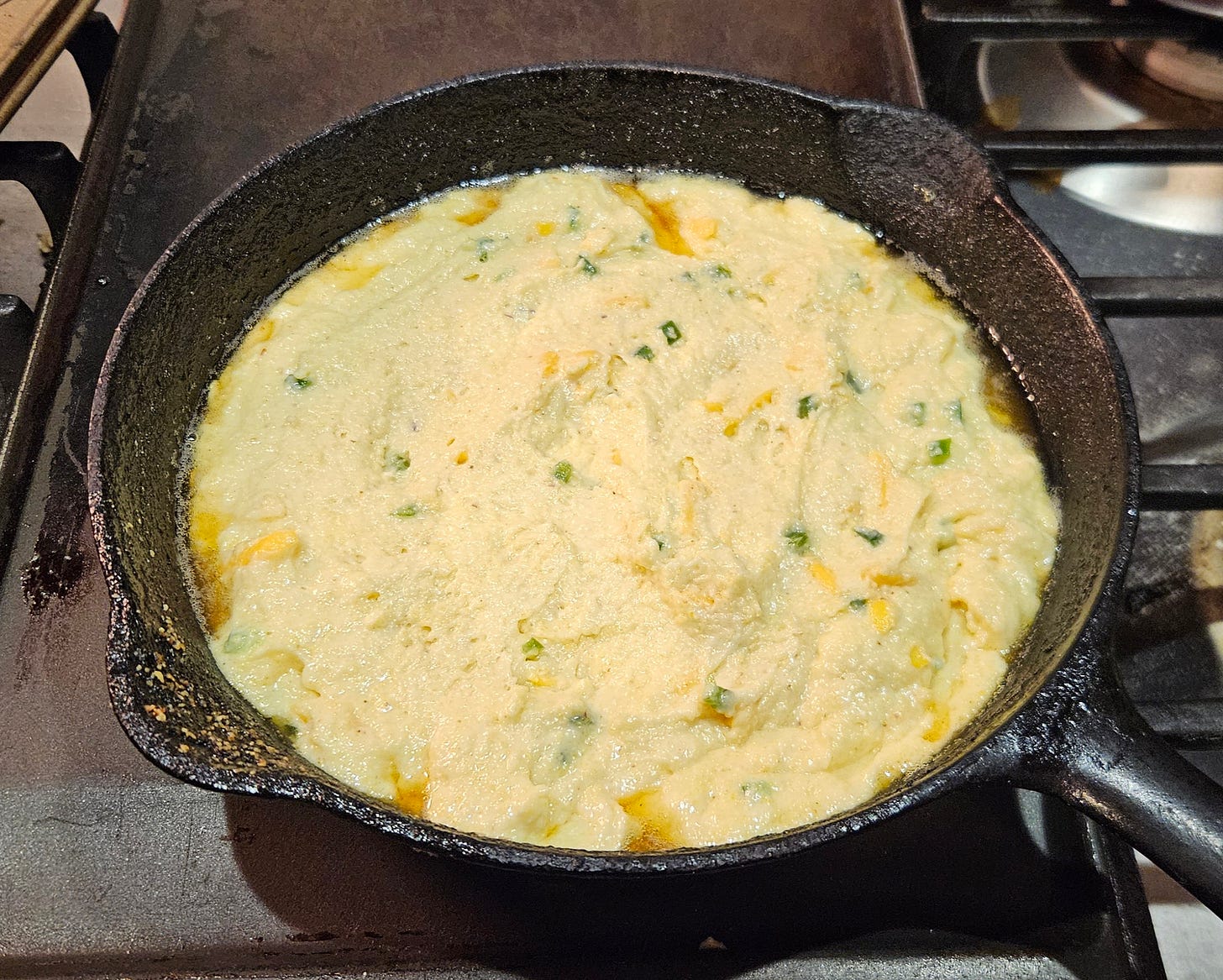
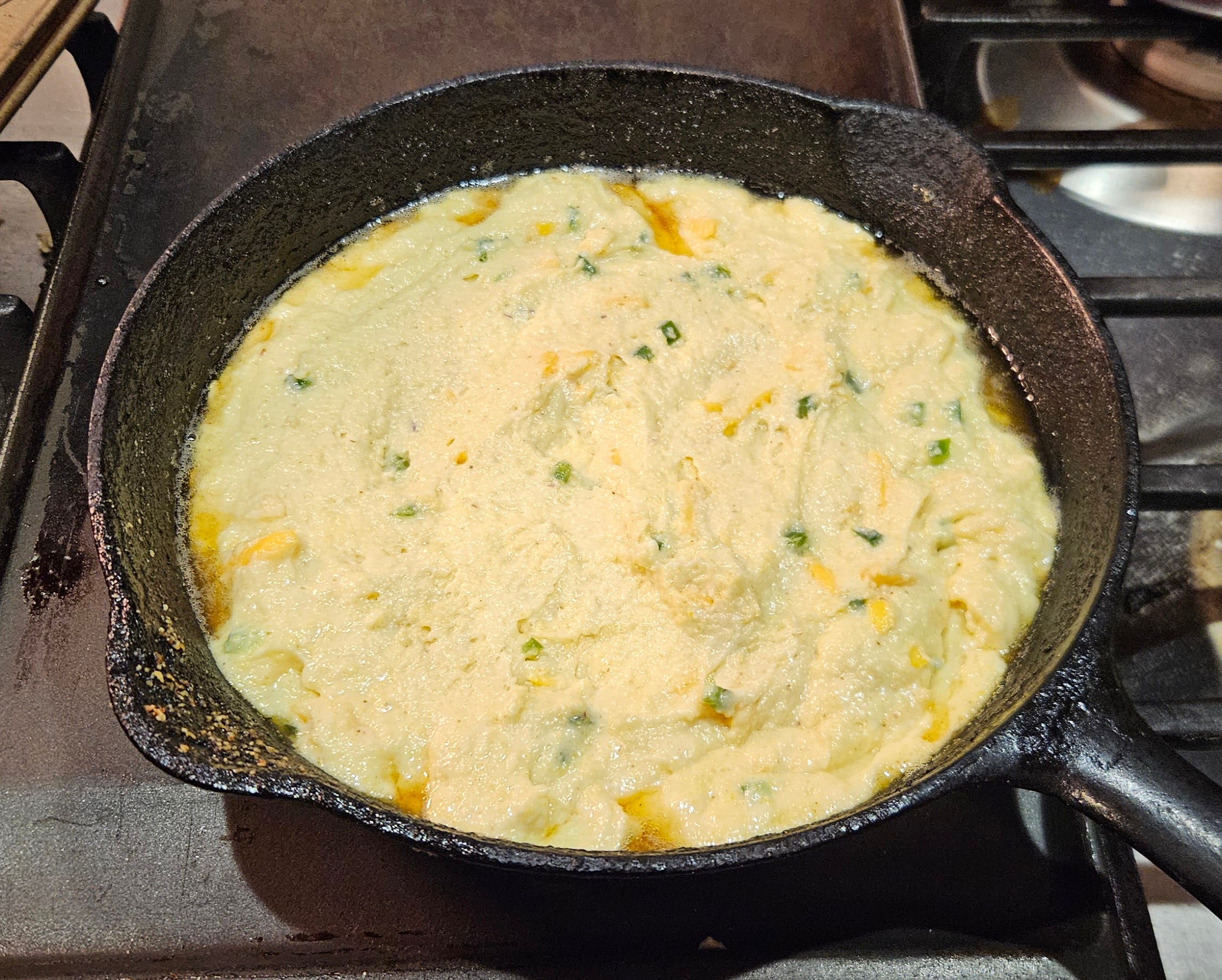
Corn bread batter ready for the oven Bake for 20-25 minutes, or until a toothpick inserted in the centre comes out clean/dry. The edges will be brown and crispy, while the top will be lightly golden in colour.
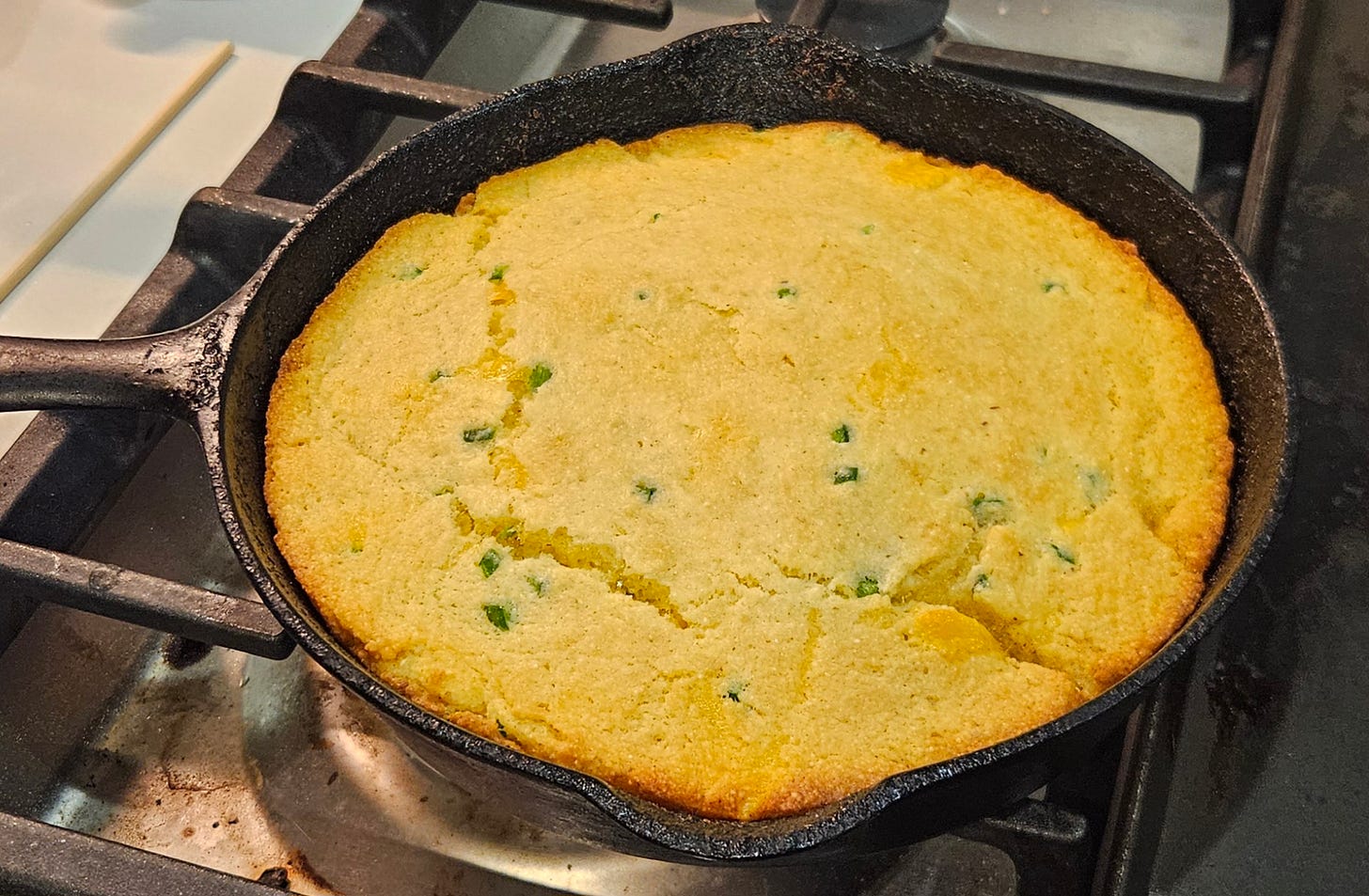
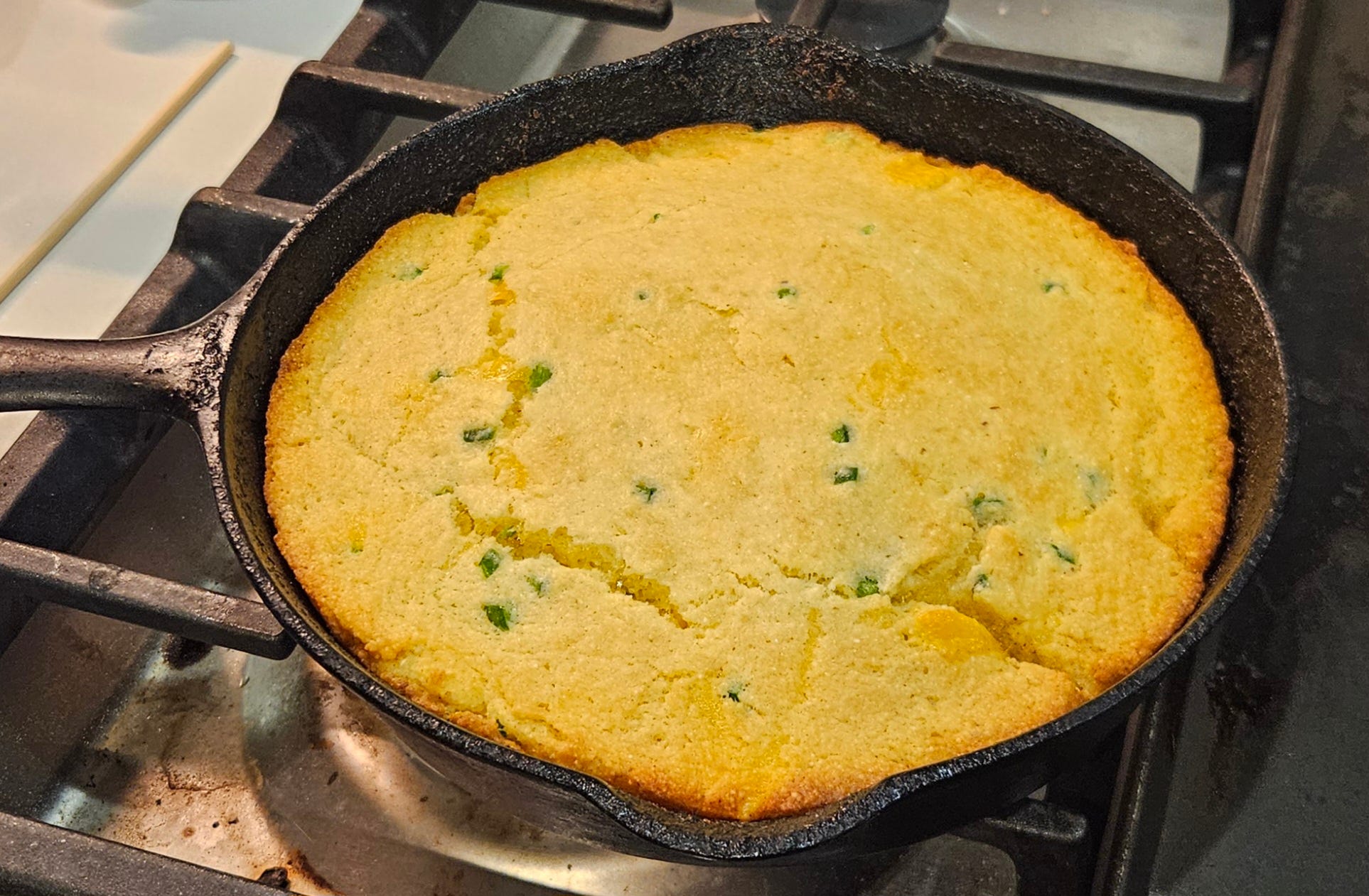
Perfectly baked corn bread! Let cool for 10 minutes before serving. After it’s fully cooled, you can cut and wrap individual pieces and freeze them in an air-tight bag or container for a couple of months (if they last that long.)
Notes, Variations, and Substitutions
*If you use salted butter (as I did,) simply omit or reduce the salt from the dry ingredients.
**You could substitute full-fat Greek yogurt for sour cream. While cultured buttermilk (i.e., the stuff you buy in a carton) will give the best flavour, you can make your own by adding 1 1/2 teaspoons of lemon juice or white vinegar to half a cup of milk to achieve similar results. Buttermilk is more acidic than regular milk, which will help the baking soda to produce leavening. Alternatively, if you make your own cultured butter you can also make cultured buttermilk!
This volume of this recipe is for a 10” cast iron pan. Mine is only 8” so I had some batter left over, which I turned into muffins.
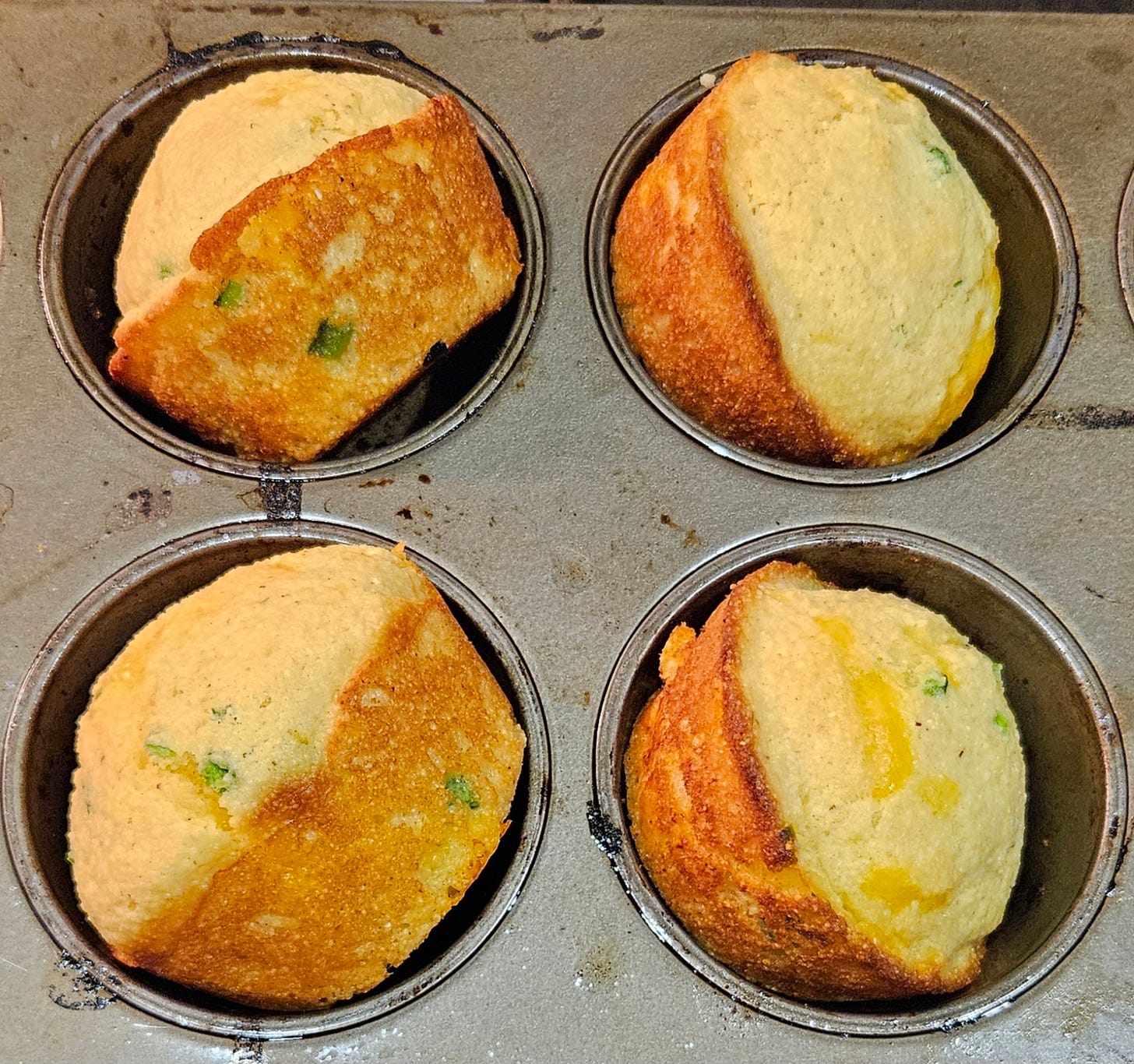
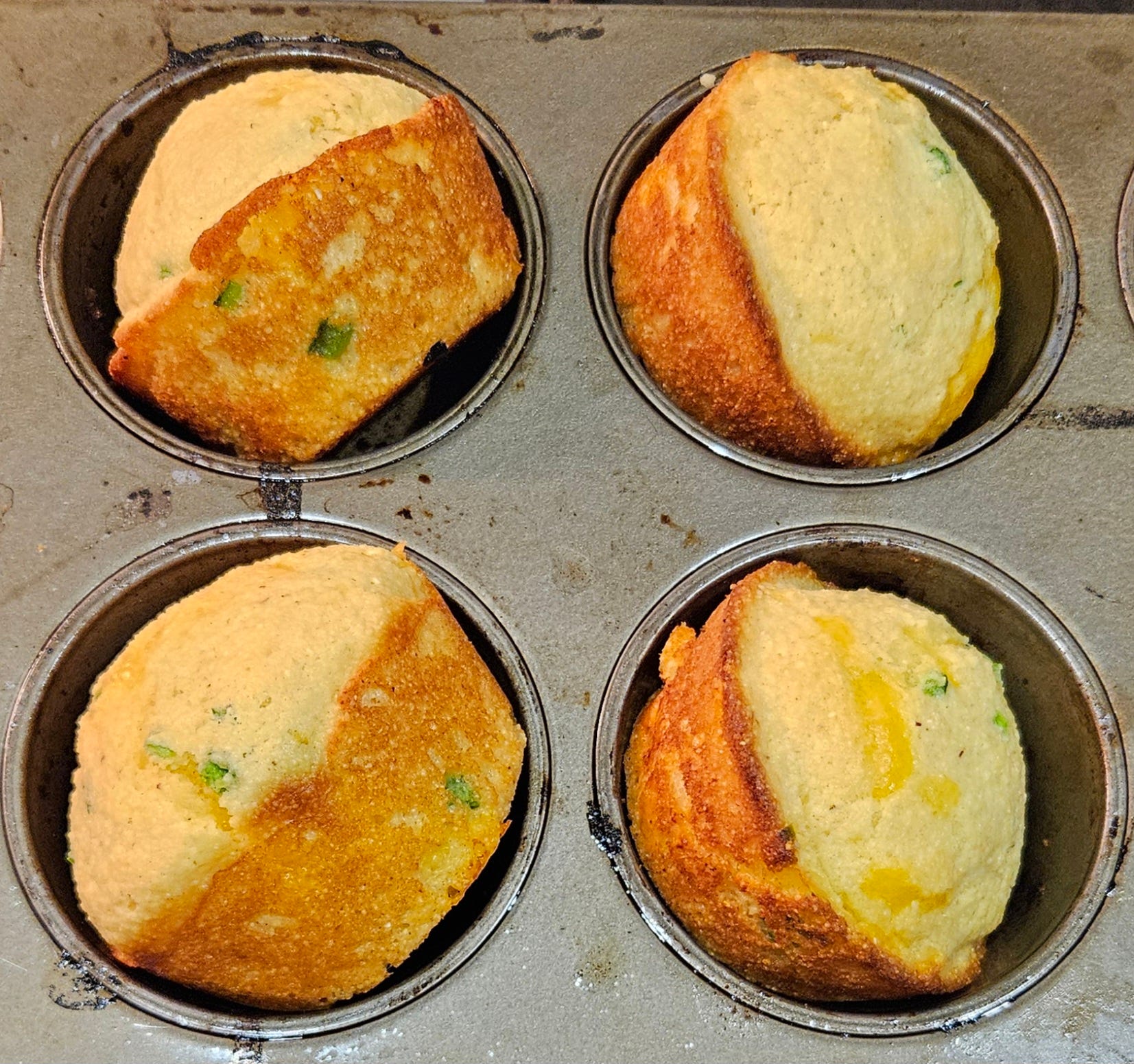
I ended up with enough batter to make five individual muffins You can easily make this (and any quick bread recipe) into muffins, rather than a whole loaf. In this case, you’ll want to brown the butter on the stove, then use a pastry brush to grease each muffin cup with some of the browned butter. I’d probably also brown an extra tablespoon of butter (so, 8 tablespoons, or 1/2 cup) to make sure I had enough for greasing and to add to the batter. To achieve nice, crispy edges, pre-heat the muffin tin for 10 minutes before adding the batter. I used a 2-ounce cookie scoop to portion the batter, and the cooking time was about 13-15 minutes.
The flour in this recipe helps to lighten it as one made with 100% cornmeal might be a bit too heavy and dense. You can absolutely make a gluten-free version of this by using any cup-for-cup GF All-purpose/cake flour. When using GF flour, you might also have to add a bit more liquid (buttermilk) since GF flours tend to be a bit more “thirsty” than white wheat flour.
Vegan “butter” can be substituted, but it might not brown the same way as dairy butter will due to the lack of milk solids. You could also use refined coconut oil or vegetable shortening (e.g., Crisco) though you might want to add a bit more salt since those fats don’t have much flavour. Fats that are solid at room temperature will be best so that the finished product is firm once cooled. Soft/spreadable butter substitutes aren’t suitable for this.
Most egg substitutes will work in this recipe. If you’re looking for some fully tested options, check out this post from The Kitchn on the best egg substitutes for baking.
In this recipe, sugar is mostly used for sweetness, not for structure, so any sugar replacement will work: honey, maple syrup, agave, monk fruit, etc. If you’re using a liquid sweetener, add it to the wet ingredients rather than the dry. You can also cut back on the sugar if you prefer a less sweet corn bread.
Flavour additions: this or any other savoury quick bread is easily enhanced by the addition of chili powder, diced jalapeños (either fresh or canned/drained,) cheese (grated or cubed,) sundried tomatoes (finely chopped,) and either fresh (e.g., cilantro) or dried herbs. The possibilities are limited only by your own imagination. The only thing to be mindful of is whether any addition you make will alter the hydration of the batter (all of the above suggestions will not.)
What are your favourite add-ins for corn bread? Do you prefer muffins or one large loaf? What’s your favourite meal to pair the corn bread with?
Looks great! I’ve been making the Chatelaine recipe for years and it’s always worked out well, I’m making some later this week to send to the kids