
Trying a different grain: Barley
A recipe for Barley Risotto

If you’d prefer to listen to this episode, click the Play button below, or you can listen on your favourite podcast platform, just look for No Recipe Required with Lesley Taylor. And if you subscribe/follow, episodes will drop right into your podcast queue. The link to the episode on Spotify is provided below.
Link to No Recipe Required on Spotify.
The experience most of us had with barley growing up was in the form of Beef Barley Soup, probably Campbell’s, though many store brands/generics were available. If we were feeling really fancy, we’d buy Scotch Broth, though that wasn’t always readily available. I can still smell both of those soups, and sometime in the fall I’m going to revisit barley and make a few different recipes with it.
According to The Barley Council of Canada (yes, barley has its own council!) it’s the fourth largest crop grown in Canada, mostly in Alberta. Adults likely consume most of their barley in the form of beer, whiskey, or other malted beverages. Just like any other grain, it can be used in distilling and brewing. Another great resource I consulted was from the European Food Information Council and their campaign called “Switch to Whole Grains.”
Types of Barley
Before I get to the recipe for the barley risotto I made for dinner the other night (sorry, no “jump to recipe” button available) I want to talk a bit about the main types of barley, how they can be used in cooking, and which type is best for whatever you’re making.
Whole Barley
As the name suggests, this is the whole grain version, with all three parts of the grain intact: the hull, the germ, and the bran. Just like brown rice, it takes a lot longer to cook, so pot and pearl barleys are more commonly used in recipes. You can sometimes find barley that’s only had the hull removed, so with the germ and bran intact, it’s still considered to be a whole grain.
Pot Barley
Through a process called “pearling,” the grain is stripped of its outer hull, germ, and bran, which makes it whiter, softer, and quicker to cook. As a result, it has less fiber, fewer nutrients, but cooks much faster than the whole-grain version.
Pearl Barley
Similar to white rice, this version has been “pearled” to remove even more of the outside of the grain. It breaks down a bit more in cooking, so it’s more tender. And like with Arborio rice, the starch is a bit more readily available to help thicken the dish. I wanted something that still had texture, but that would quickly and easily absorb the liquid.
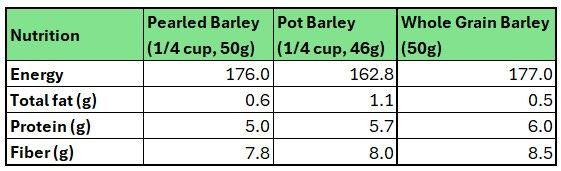
As you can see in this chart, there’s not a huge nutritional difference between the types of barley, so choose whichever you prefer or will work best in the recipe you’re making. As with many other whole grains, barley can be a valuable part of your diet as a source of fiber, protein, and many other micronutrients.
Risotto, by any other name, would taste as great
With all this in mind, let’s get on with how to use barley as a replacement for Arborio rice in risotto. Technically, you can’t really call this risotto because it doesn’t have any rice. The Italian word for barley is orzo, which I find interesting because there’s a pasta shape called orzo that I always thought looked like grains of rice, but it actually resembles whole grain barley. Go figure! So, should I call this recipe Orzotto? Perhaps!
Barley Risotto with Lemon, Fresh Herbs, and Italian Kale
How did I come up with this recipe? By simply rummaging through my fridge to see what I had on hand and what needed to be used up. I tend to think of risotto as a fall or winter dish, but by using lemon and fresh herbs, it made it a bit more summery.
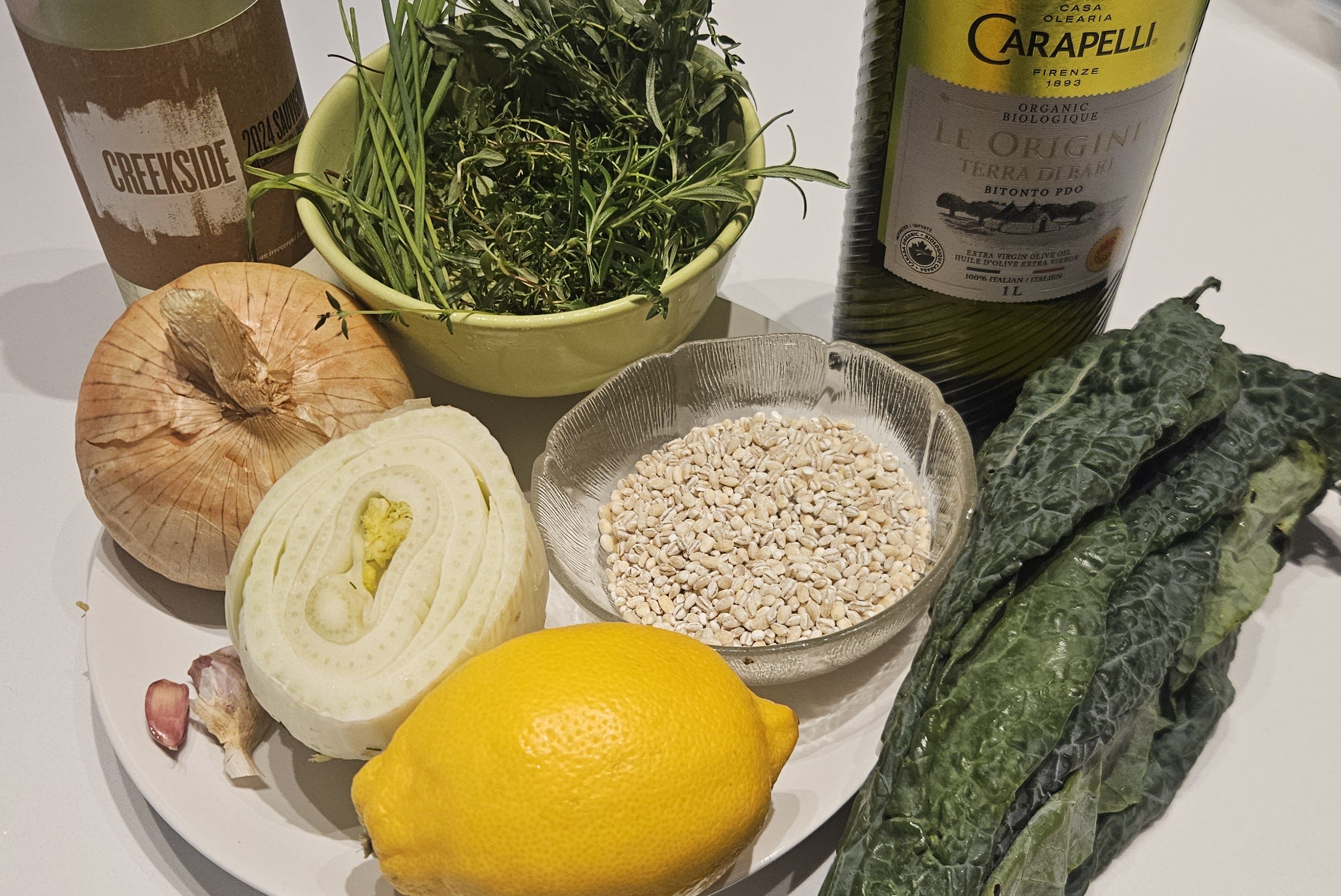
I still had half a bulb of fennel from the Beet, Orange, and Fennel salad I made last week (that one is only on Instagram) and some Italian kale (sometimes called black kale, or cavolo nero.) Kale is really hearty and holds its shape in cooked dishes much better than other greens. It also keeps for quite a while in the fridge.
For the herbs, I had some chives and tarragon left over from the Green Goddess Dressing I made a few weeks ago, and on my balcony I had some rosemary and thyme (that had been growing wildly and needed to be cut back.) Tarragon and fennel go really well together because they both have a very faint anise flavour to them.
I’ve gone into detail in the past on how to make Risotto, so I won’t go into as much detail here. But if you missed that post, I suggest you go back and read it.
Ingredients
The amounts below are for one large portion, so adjust accordingly. Though I should point out that doubling this recipe will be more than enough for two people. This recipe can be made vegetarian by using vegetable stock rather than chicken stock. And it can be made vegan by eliminating the cheese, or using a vegan parmesan.
100g (1/2 cup) pearl barley
500-600mL* (2 1/4 - 2 1/2 cups) chicken or vegetable stock
15mL (1 tablespoon) olive oil
60mL (1/4 cup) dry white wine (or white wine vinegar)
75g (1/2 cup) finely chopped onion
2-3 cloves (depending on size and personal preference) of garlic, minced
75g (1/2 cup) fresh fennel, finely diced
3 stalks of Italian kale, de-stemmed and roughly chopped
Large bunch of fresh herbs, finely chopped
Zest of 1/2 a lemon
15mL (1 tablespoon) lemon juice
40g (about 1/2 cup) finely grated Parmigiano-Reggiano cheese
Salt to taste (if needed)
*For the stock you need about 4-6 times the amount of stock by volume as the amount of barley. I usually boil the kettle and have it ready in the event that my stock is running low before the barley is cooked to my liking. It’s better to have more stock than not enough.
Method
This is a recipe where you really should do your mise-en-place before you start cooking, that way everything is ready to go, and you won’t forget anything.
Put your stock on the stove to heat up over medium heat, then turn it down to low once it gets close to boiling. As you chop your veggies and herbs, you can throw the skins, stems, and leftover bits into the pot of stock to give it even more flavour.
Chop the onion and fennel into a fine dice.
Remove the stems/spines from the kale and roughly chop it.
Remove the leaves from the stems of the rosemary, tarragon, and thyme, then chop it all finely along with the chives.
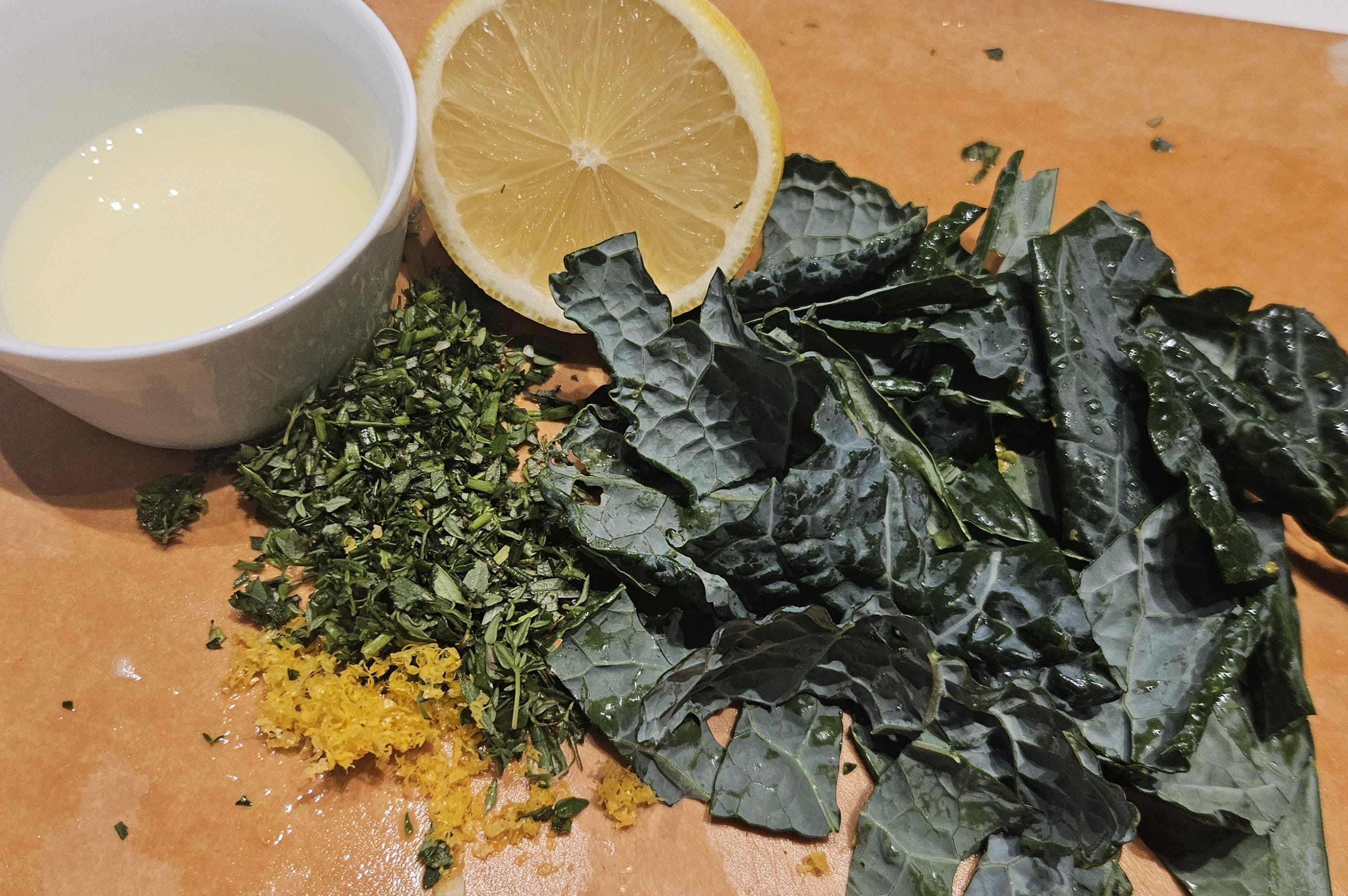
Zest half the lemon and squeeze out some juice (I used the juice from half a lemon and it was actually too much. 15mL/1 tablespoon would be plenty for one serving.
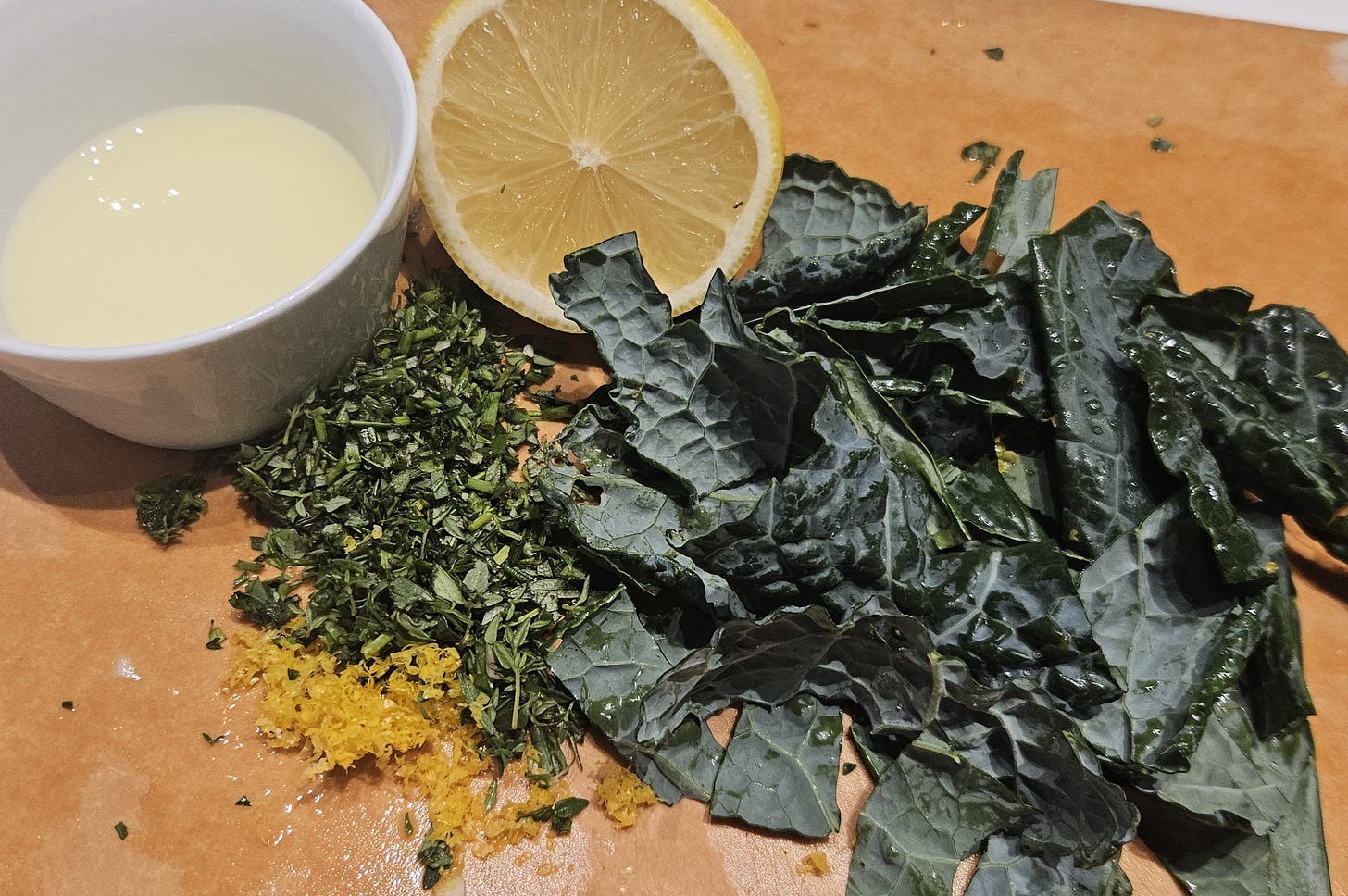
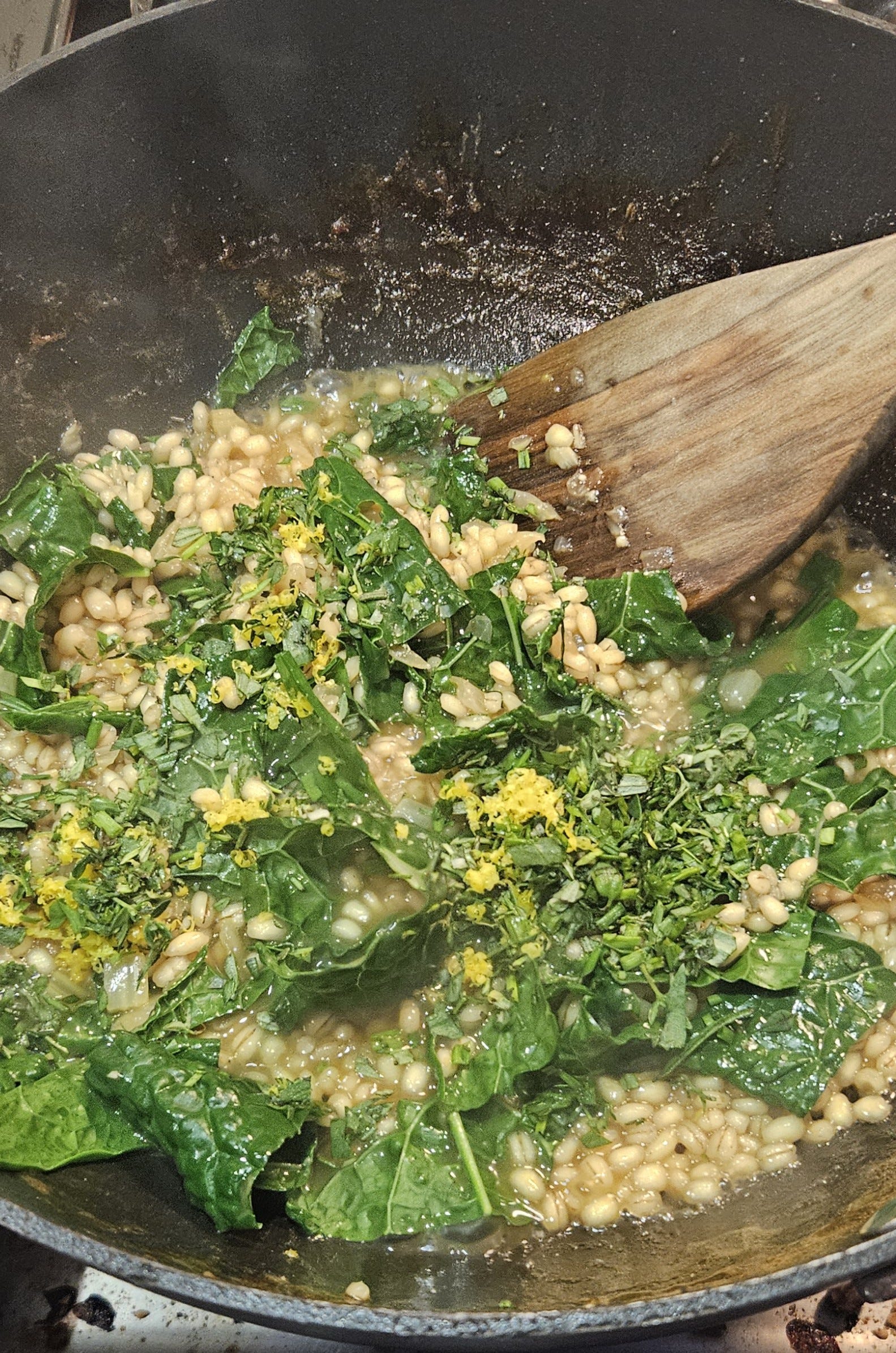
Lemon juice, lemon zest, chopped herb, and chopped kale. Finely grate the Parmigiano-Reggiano.
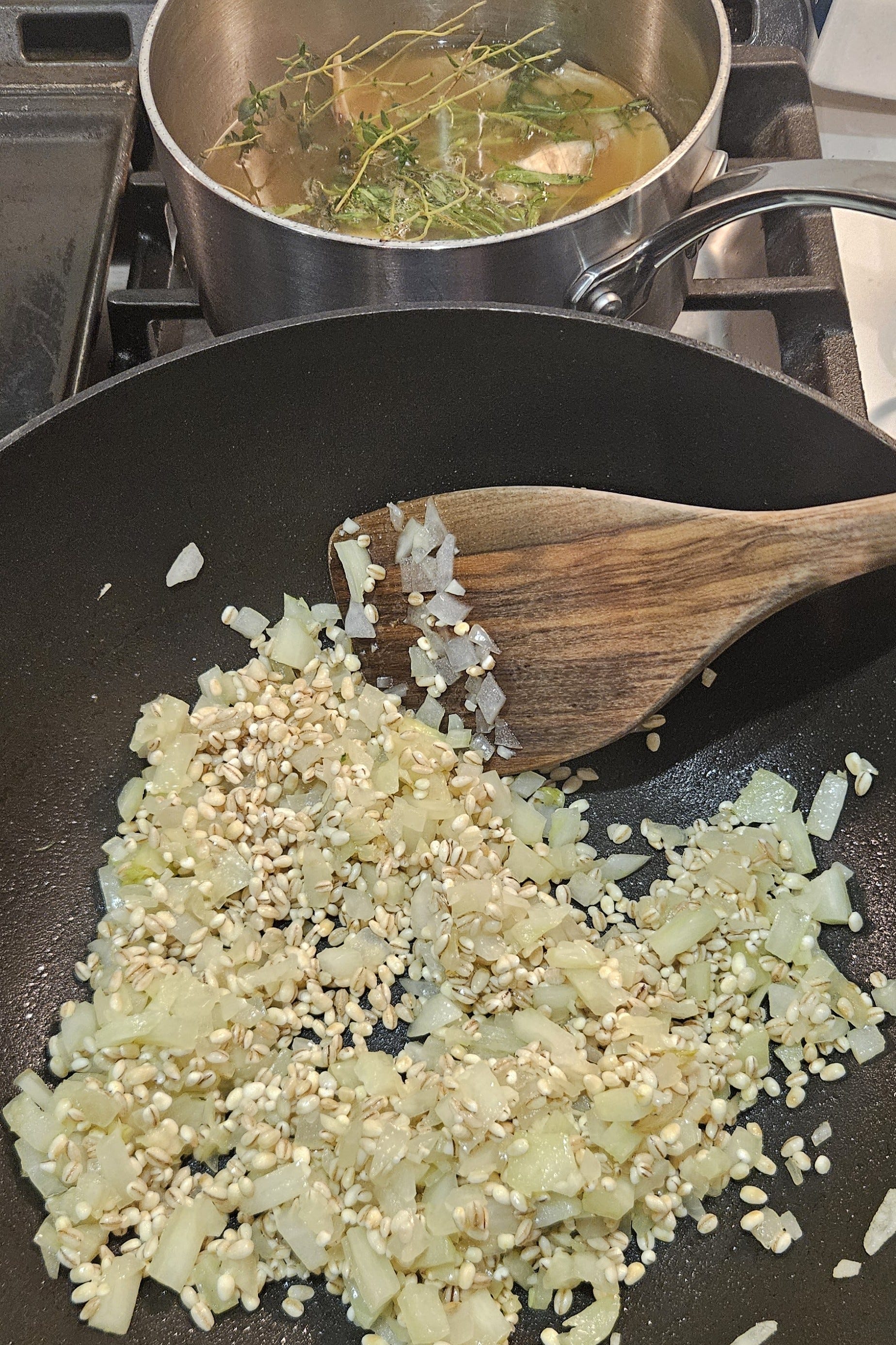
Heat the olive oil in a frying pan or sauté pan over medium-high heat, then sauté the onions and fennel until they are soft and the onion is translucent (2-3 minutes.)
Add the barley and continue sautéing for another 2-3 minutes until the grains of barley are well-coated with oil.
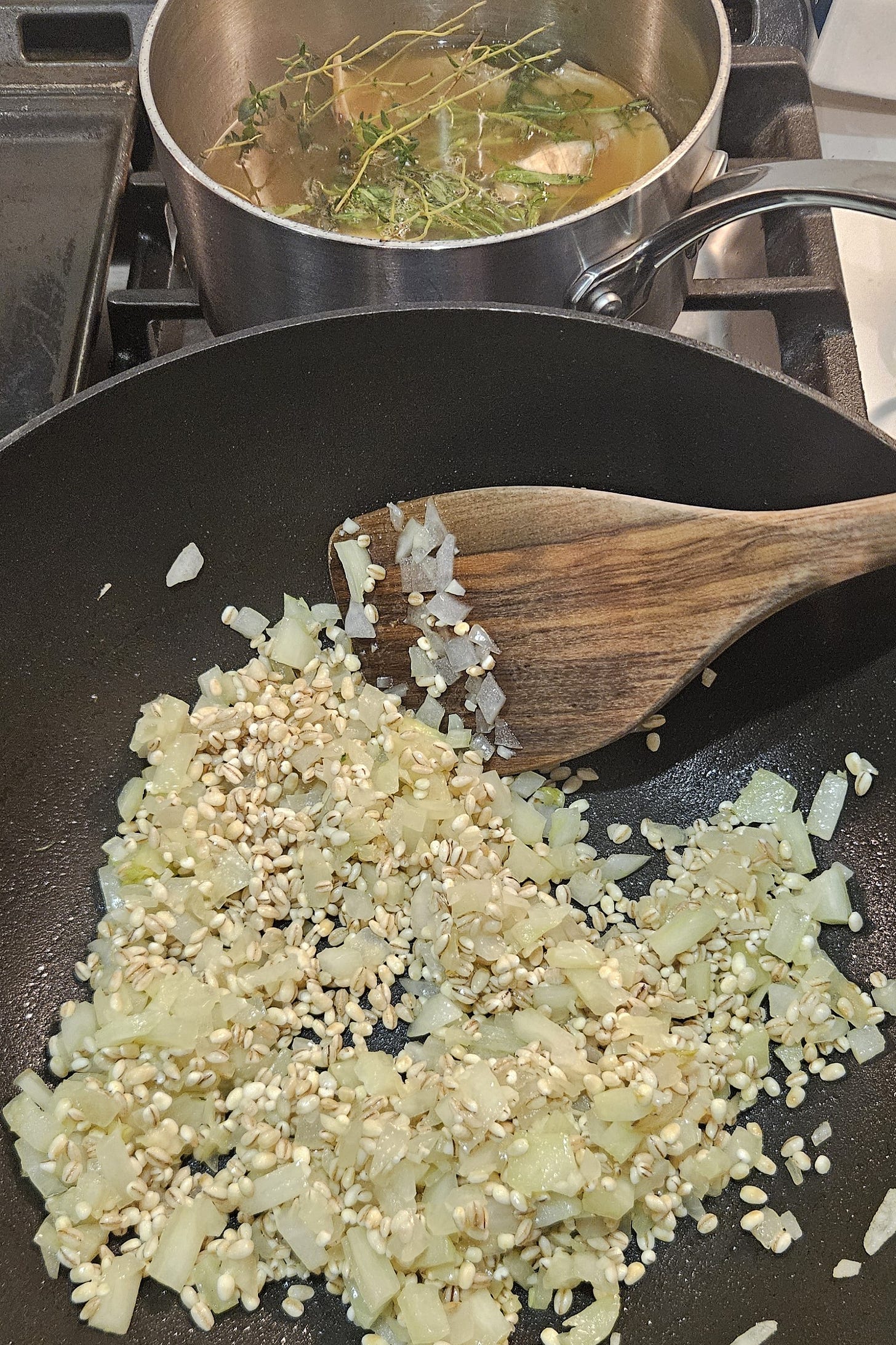
On the back burner is my pot of stock simmering with bits of onion, garlic, herbs, and lemon to give it more flavour. Add the wine and stir until it’s been absorbed.
Turn the heat down to medium and add the stock in 60mL (1/4 cup) increments (roughly, you don’t have to measure this) letting the liquid absorb in between each addition. Barley doesn’t seem to absorb the liquid as quickly as Arborio rice, so it took about 6 minutes between each addition of liquid for it to almost completely absorb. The finished product was also a bit runnier than risotto.
Taste the grains of barley to determine when they are close to being cooked to your liking. Unlike rice, which has a hard, chalky core, barley can be eaten at whatever level of doneness you prefer. I like mine with a bit of texture or bite to it, as opposed to soft/mushy.
Add the fresh herbs, kale, and lemon juice and cook until the kale has softened a bit (about 1-2 minutes.)
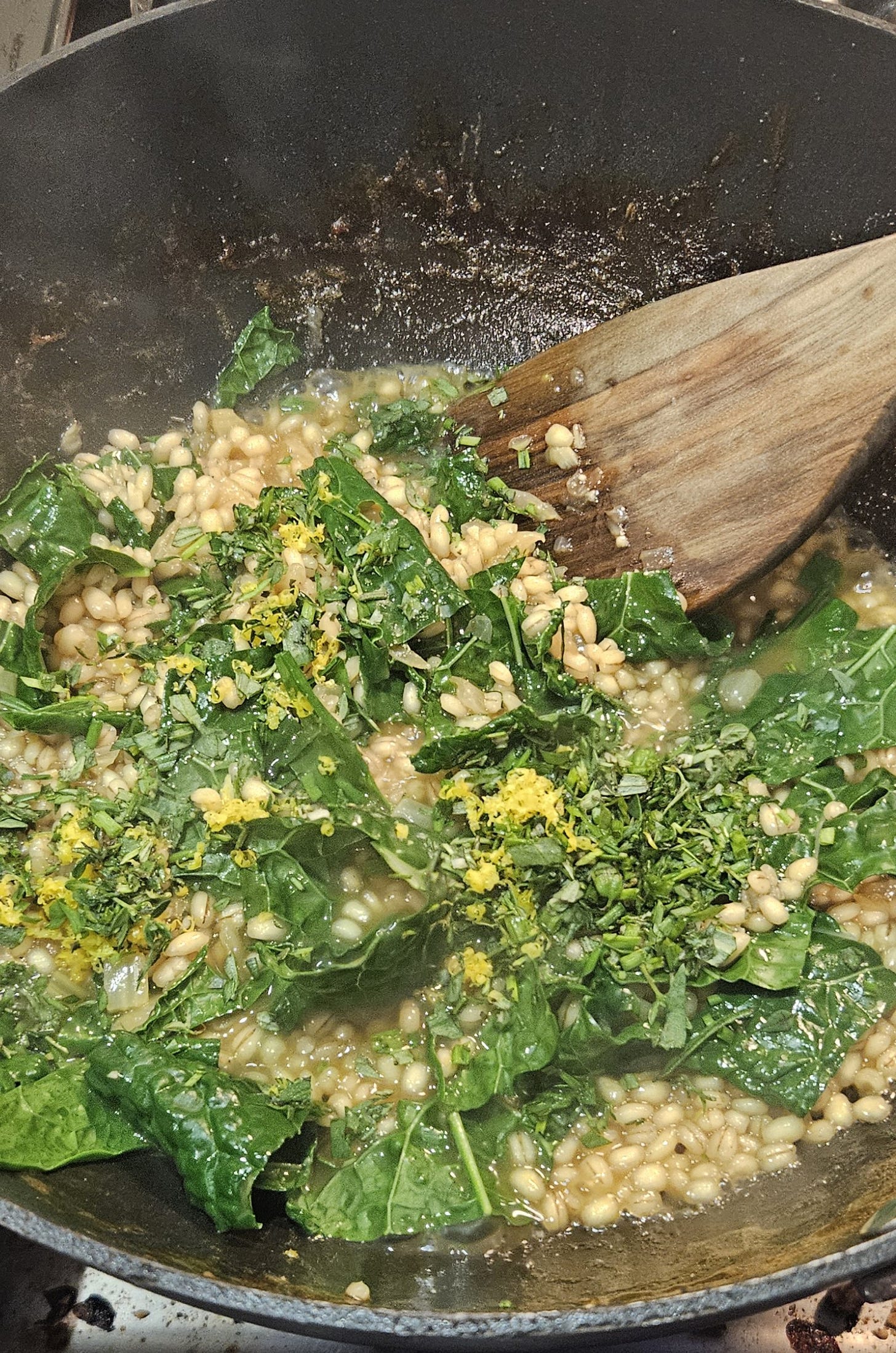
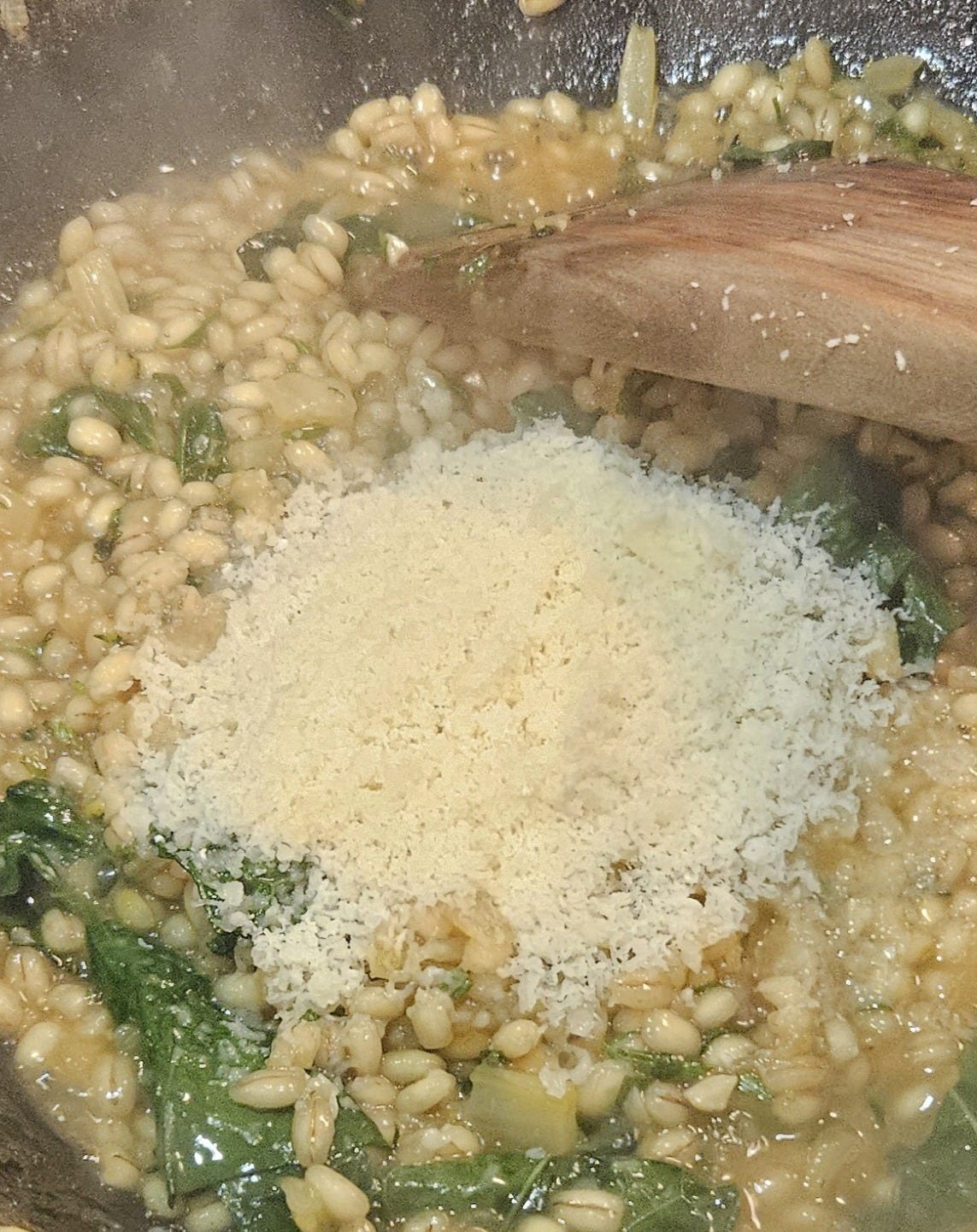
Turn the heat off, then stir in the grated Parmesan.
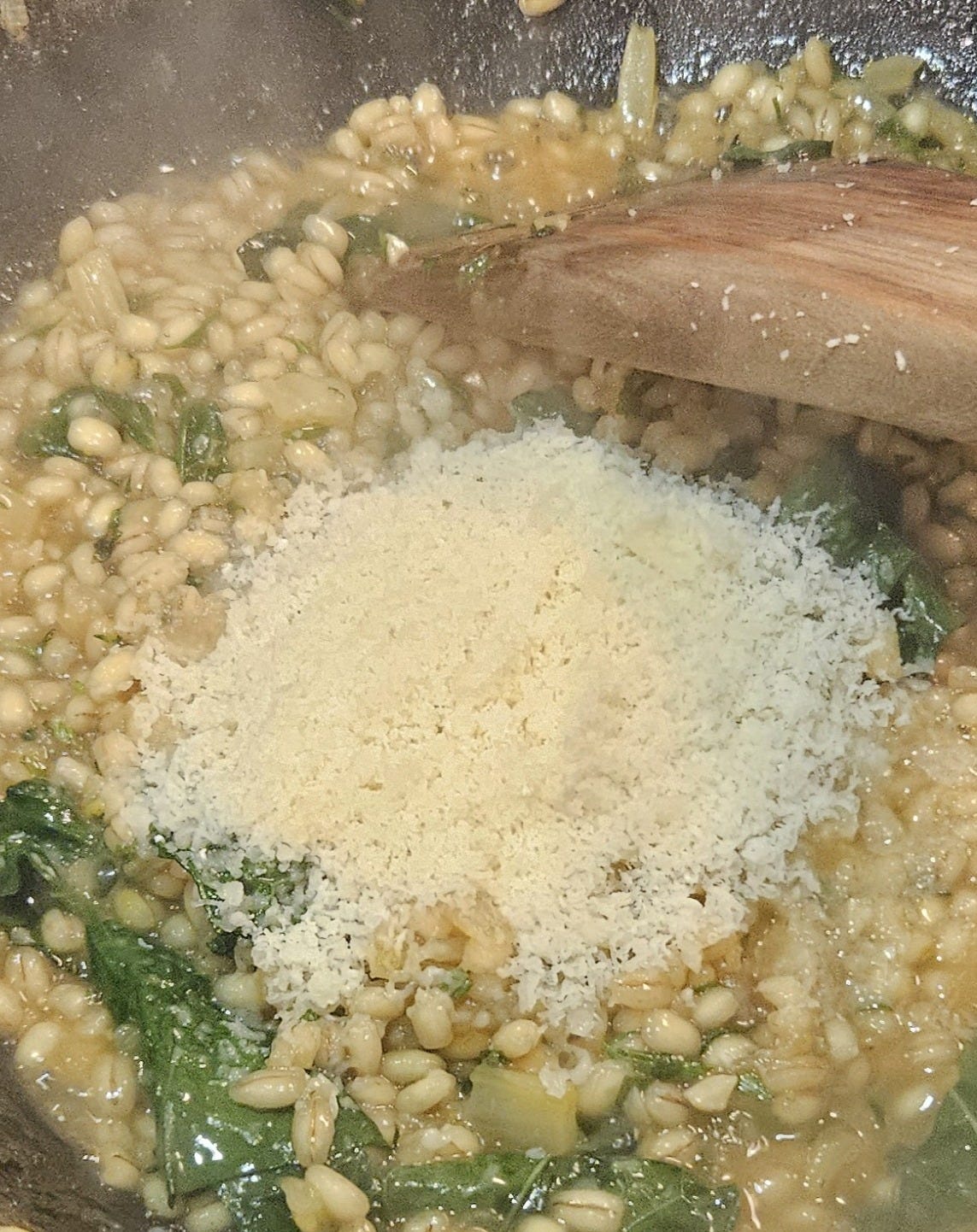
Taste for seasoning and add salt if necessary (I didn’t need to add any salt to mine, but everyone’s tastes are different.)
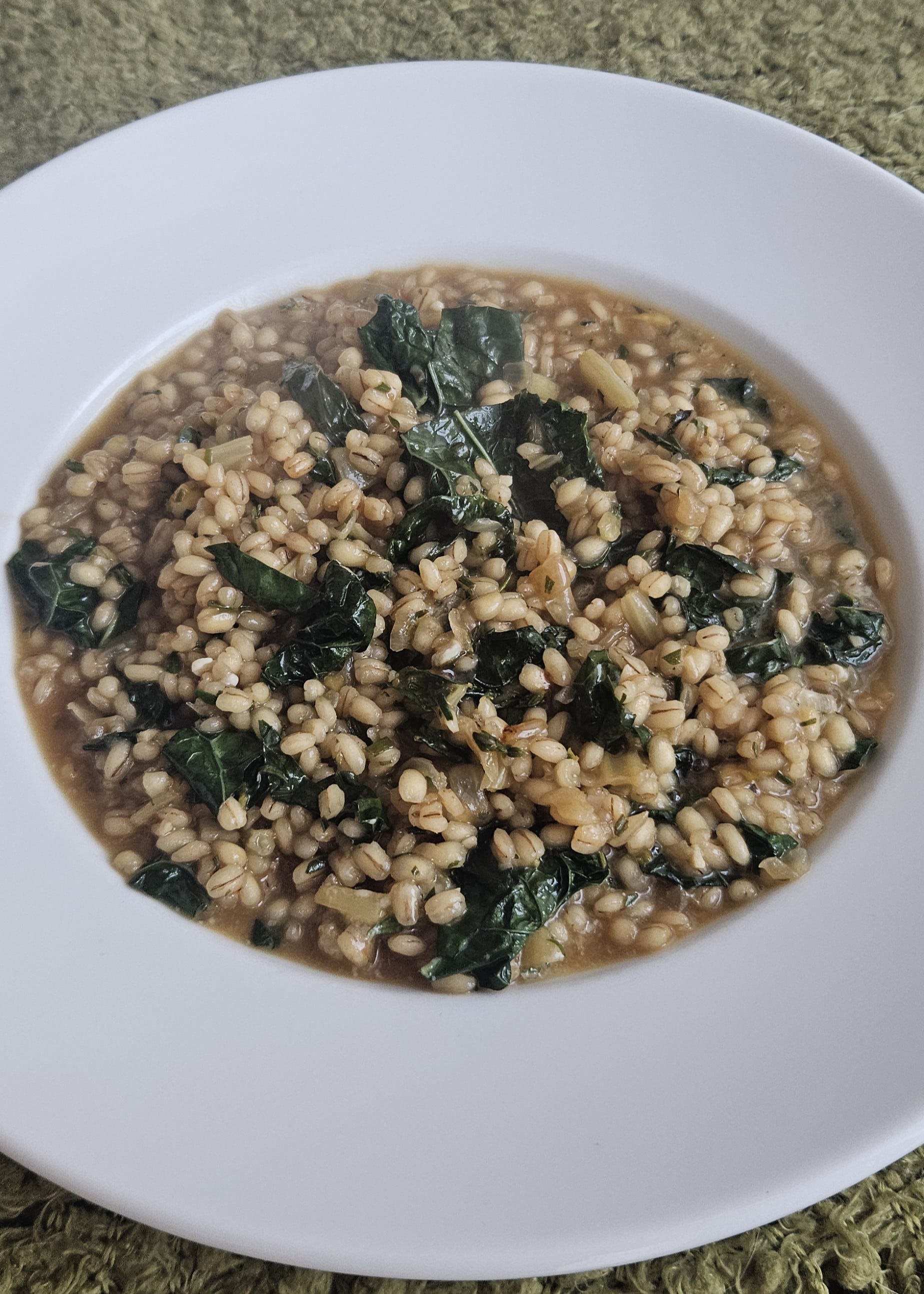
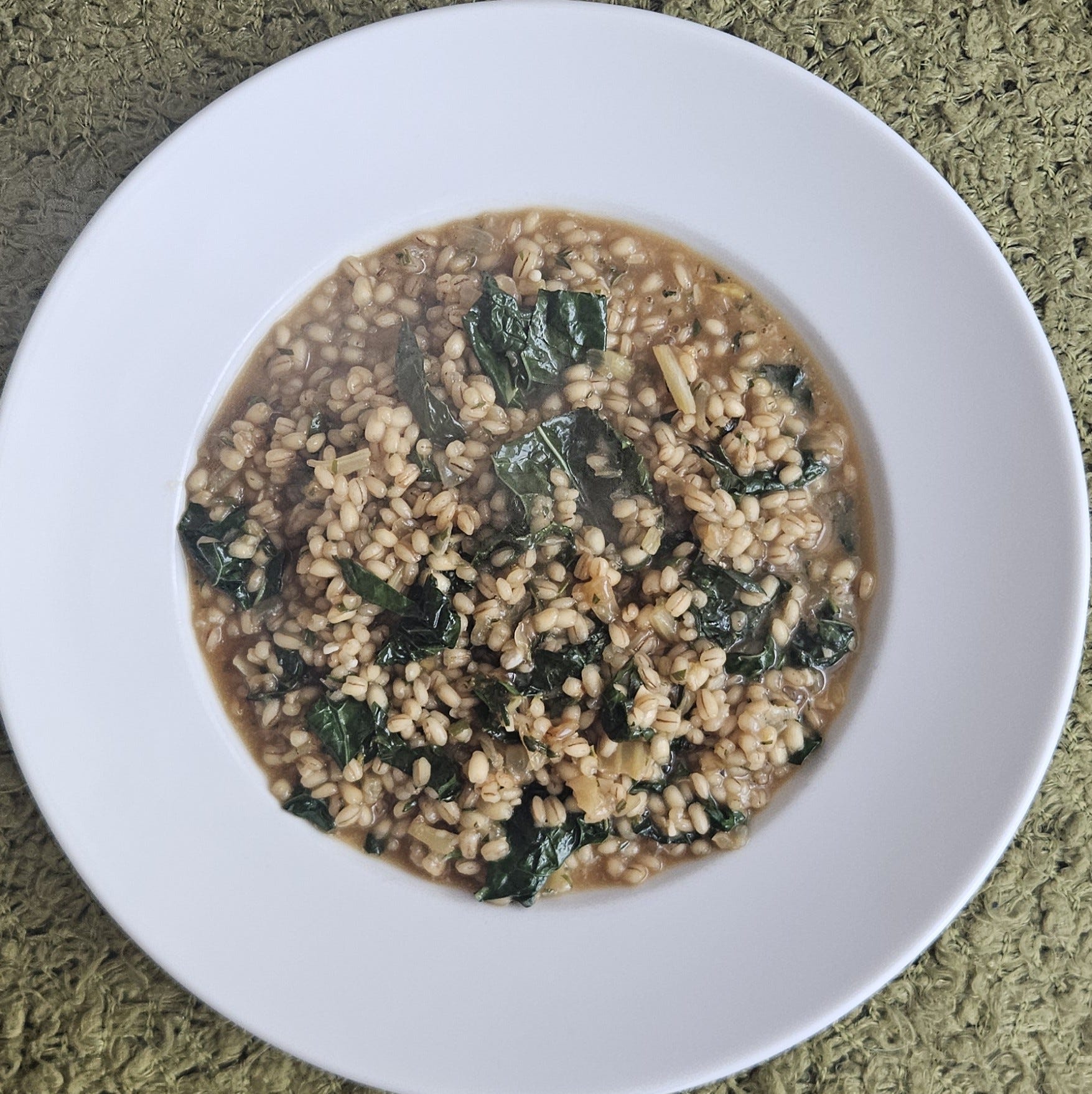
Spoon the “Orzotto” into a pasta dish and serve immediately.
Wine Pairing
I don’t have a specific bottle to recommend this week, so I’ll just suggest you look for a dry white wine with high acidity and bright, lemony flavours such as a young, cool climate Chardonnay, like those found in Ontario and BC. Alternatively, a Chablis or Burgundy (Bourgogne)—if you can afford it—would be lovely. If you want to pair it with something from Italy, northern regions like Trentino-Alto Adige and Friuli-Venezia Giulia make excellent Chardonnay and Pinot Grigio, either of which would go well with this dish.