

As loyal followers will know, I’m all about making stuff up as I go along, adapting recipes, adding or omitting ingredients to suit my taste (or just because I don’t have something on hand.) I’m not afraid of trying things and taking risks because I have enough experience to know how to combine things in a way that they will turn out.
That is, except where eggs are concerned, especially custards. Whether it’s a quiche, a pastry cream, a set custard, or a custard sauce, I just can’t seem to do it without a recipe. And by that, I mean getting the ratio of eggs to milk right to achieve the result I am going for. I know that in theory the higher the egg-to-milk ratio the more “set” or thick the custard will be, but I still get stymied when it comes to executing it. So in preparation for this week’s recipe, I did a LOT of perusing of recipes online to determine what ratio I should use (spoiler alert: there was NO consensus!) Hopefully, the ratio(s) I’ve chose will turn out, because as I write this, the dishes are still baking.
OK, so, back to this week’s recipes. I was inspired by a few things: firstly, it’s peach season and I had a few lying around, and I also bought some more at the farmers’ market on Sunday, so I wanted to make something peach-inspired.
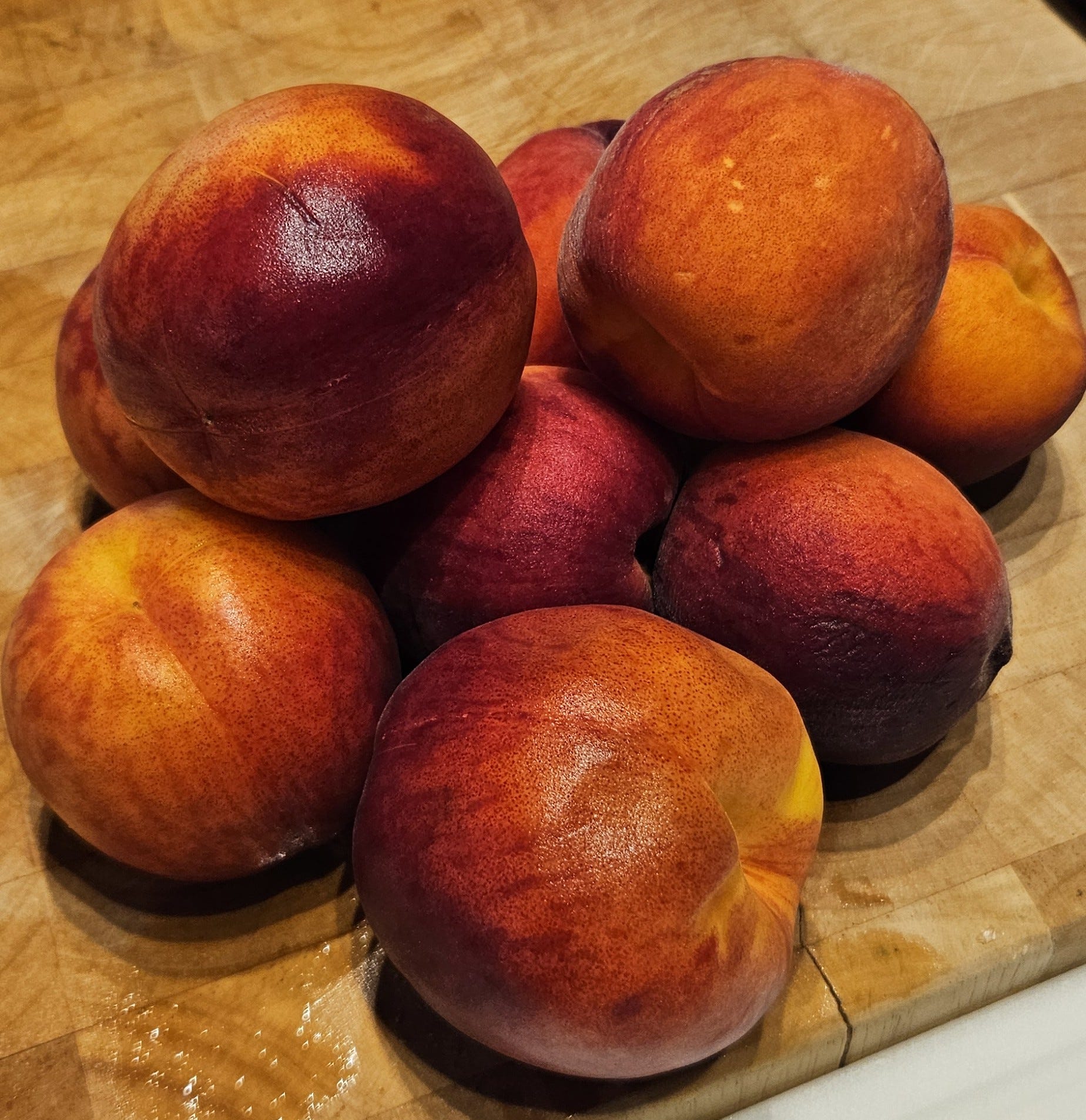
Secondly, I also found a bunch of bread ends (heels, as I call them) in my freezer from past loaves of sourdough bread I’ve made.
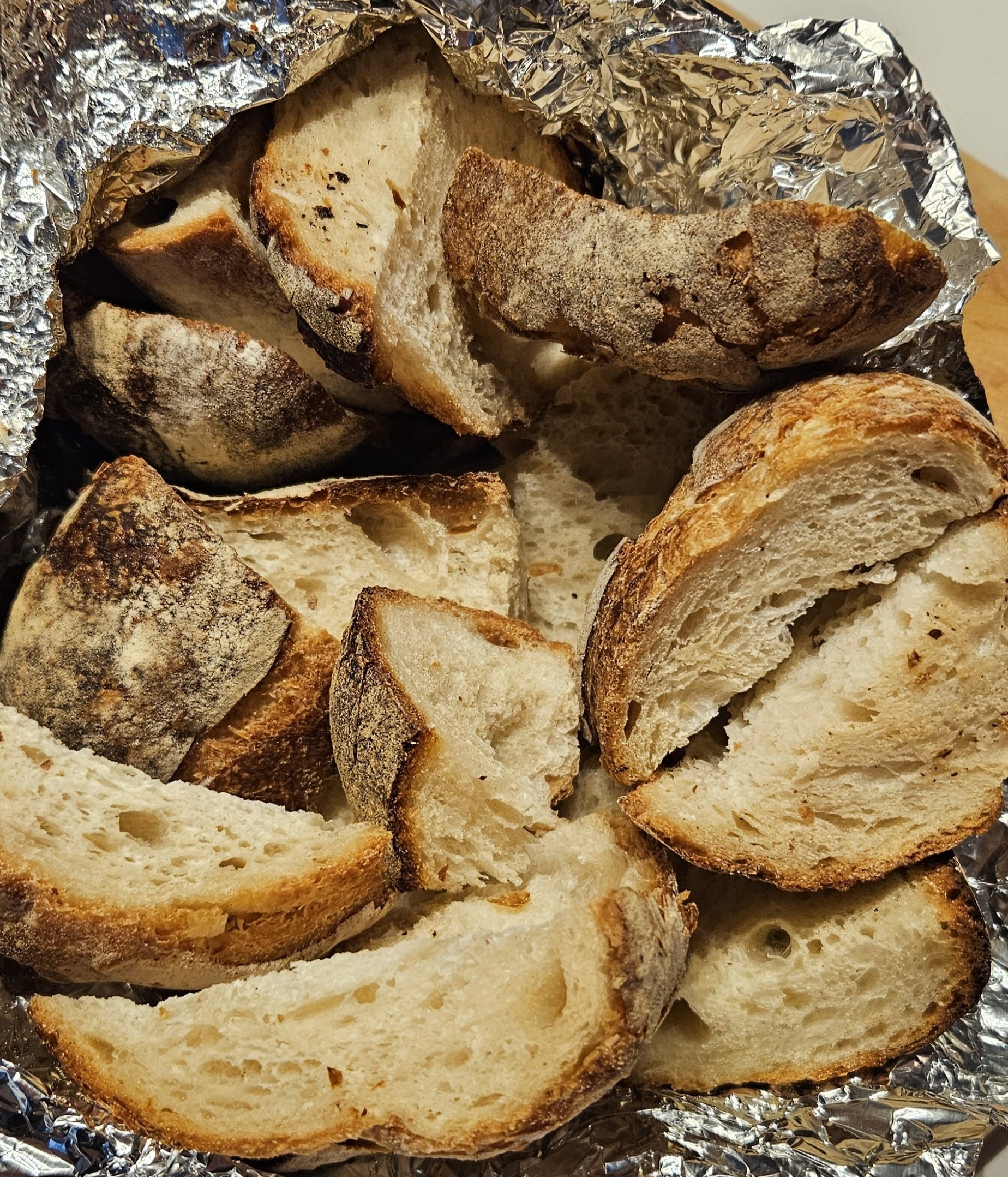
They were taking up a lot of space, so I wanted to use those up in some way. Enter the idea of Bread Pudding.
Tips for a successful bread pudding
Use stale bread. If your bread isn’t stale, you can dry it out in the oven at 275F for 8-10 minutes, or leave it on the counter overnight. When the bread is stale, it’s able to soak up the liquid a lot better. For this recipe I cut the bread into bite-sized pieces, but you could also use full slices of bread that you layer with the filling and the custard—it’s entirely your choice.
Pre-cook any vegetables you’re using. Whether making a quiche, an omelet, a pizza, or this bread pudding, nothing will make things a runny, watery mess more than raw vegetables will. Veggies (and fruit) have a LOT of water in them, and when you cook them, that water is released, and you don’t want it released into your baked/cooked dish. Sautéing or roasting your veggies ahead of time will release all that water, and will concentrate their flavours. Be sure to let everything cool thoroughly before adding the custard because you don’t want to “cook” the egg unevenly before it’s even baked.
Beat the eggs, then add the milk. It seems odd to mention this, but sometimes people don’t think this through before they do it. If you try to beat the eggs and milk together at the same time, it will likely splash all over the place. I beat my eggs with a whisk in a large measuring cup with a handle and spout (any large similar vessel will do) and then add the milk/cream to that. It’s much easier (and less messy) that way, and I can pour it from the measuring cup right over the bread.
Let the bread soak up the custard before baking. After you pour the milk/egg mixture over the bread, let it sit for 15-30 minutes so that it has a chance to absorb. This will ensure that your dish won’t be runny and the bread won’t be dry.
Savoury Bread Pudding
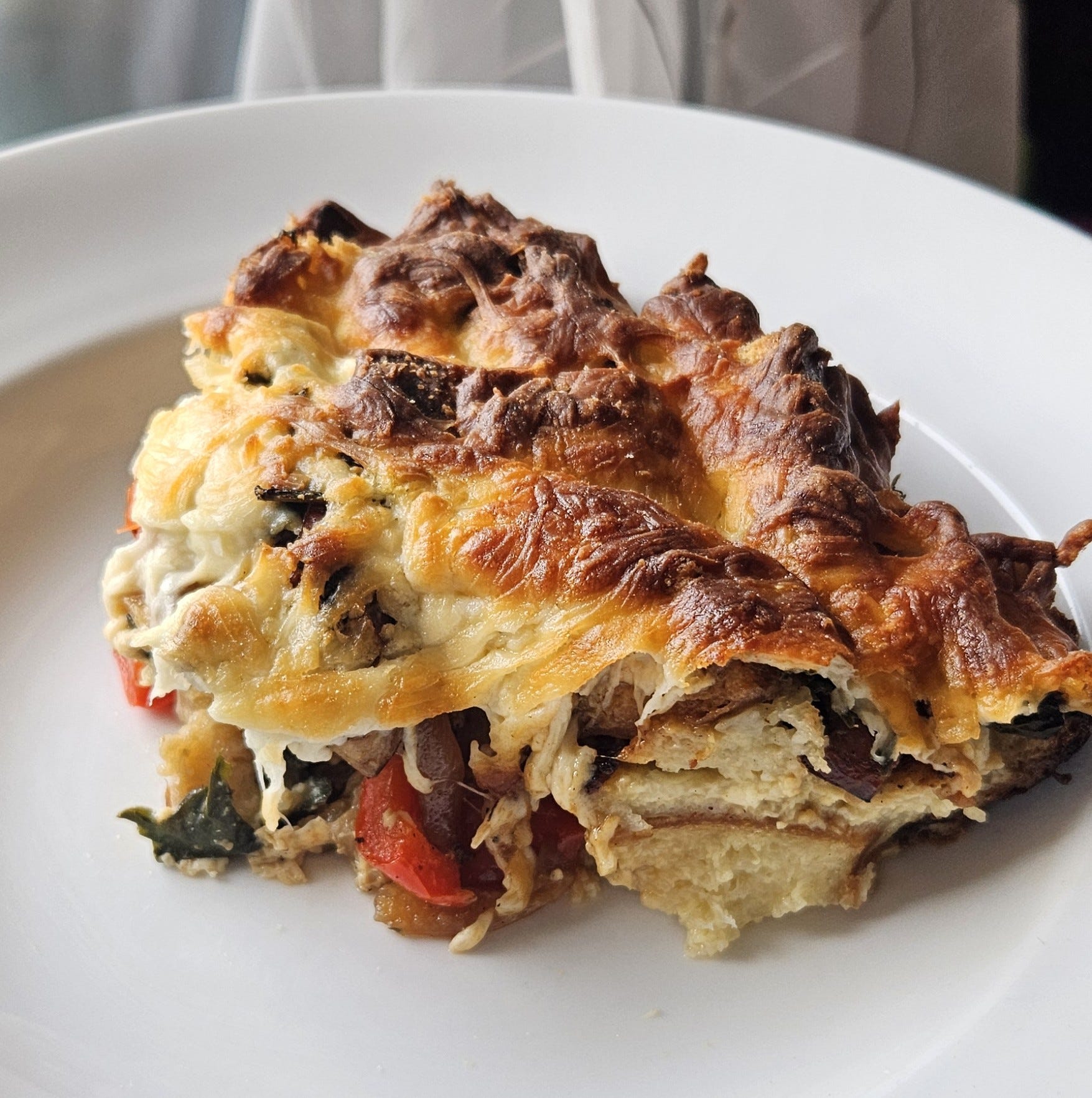
When I volunteer at the church cooking lunch for their weekly inter-faith community luncheon, one of our staples is a savoury bread pudding, which all the guest really enjoy. My version will be similar, though on a much smaller scale. Sometimes this versions is referred to as a “strata” (usually with sliced bread as opposed to cubes, and layered, similar to lasagna) and it’s a very popular brunch dish, especially for a crowd. You can use whatever combinations of veggies, cooked meat, and cheese you desire. You can even omit the meat entirely. This recipe is very forgiving and adaptable, so use up whatever you have on hand. I’ve not tried it with non-dairy milk/cheese, nor with an egg substitute, so if you do try those (or have experience using them) please let me know how they turned out for you.
The Filling
I used a spicy Spanish Chorizo sausage, along with sliced onions, garlic, mushrooms, red peppers, and beet greens (because I had them left over and needed to use them up—you could also use spinach, chard, or kale.)
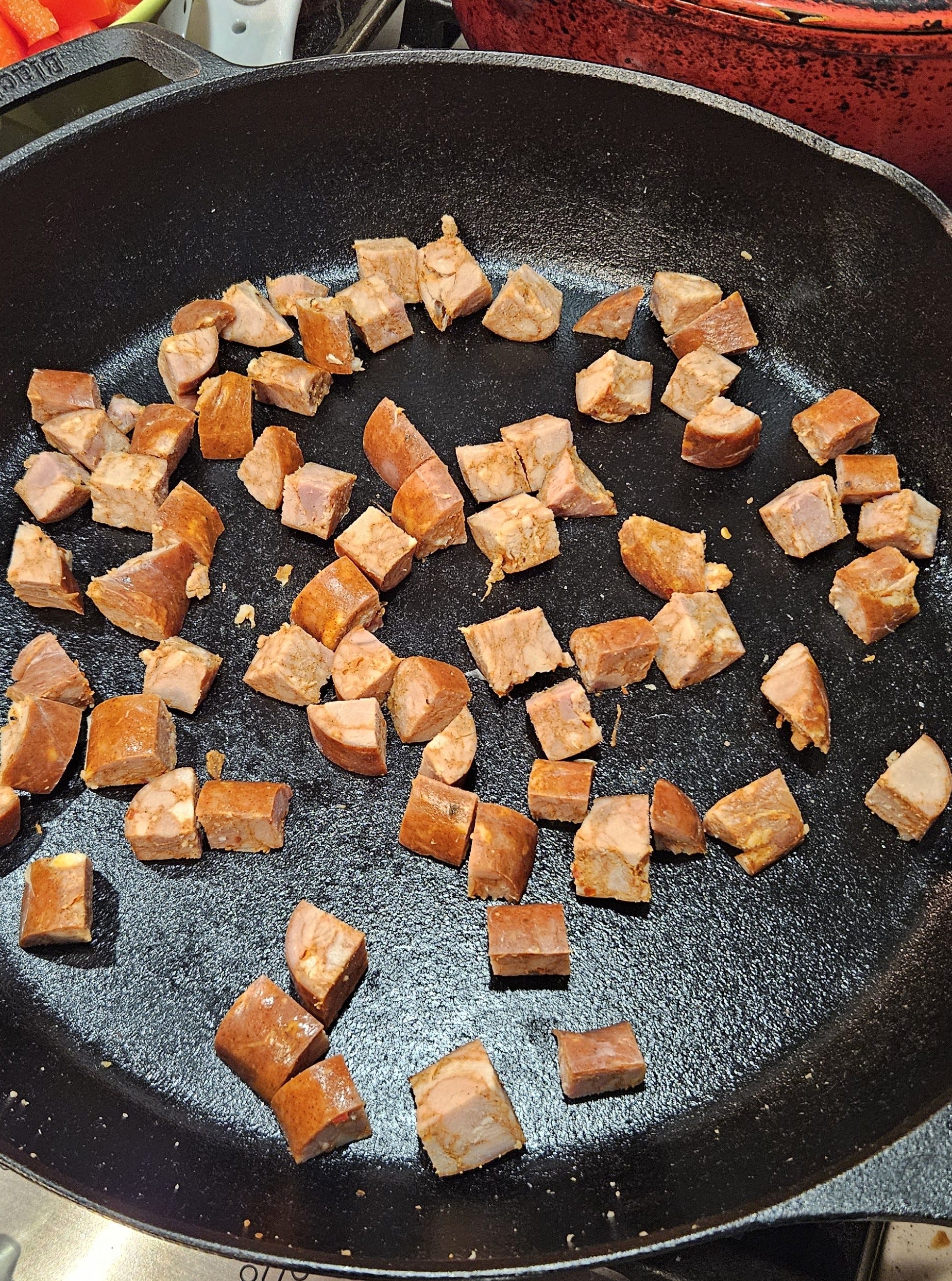
I started by cutting up the chorizo into small pieces (about 1 cup,) then sautéing them in a 12” cast iron skillet over medium heat to release some of their fat (I found I needed to add a bit of olive oil, though.)
Then I added the sliced onions (1 whole) and garlic (2 cloves, chopped,) and sautéed them until the onions were nice and soft.
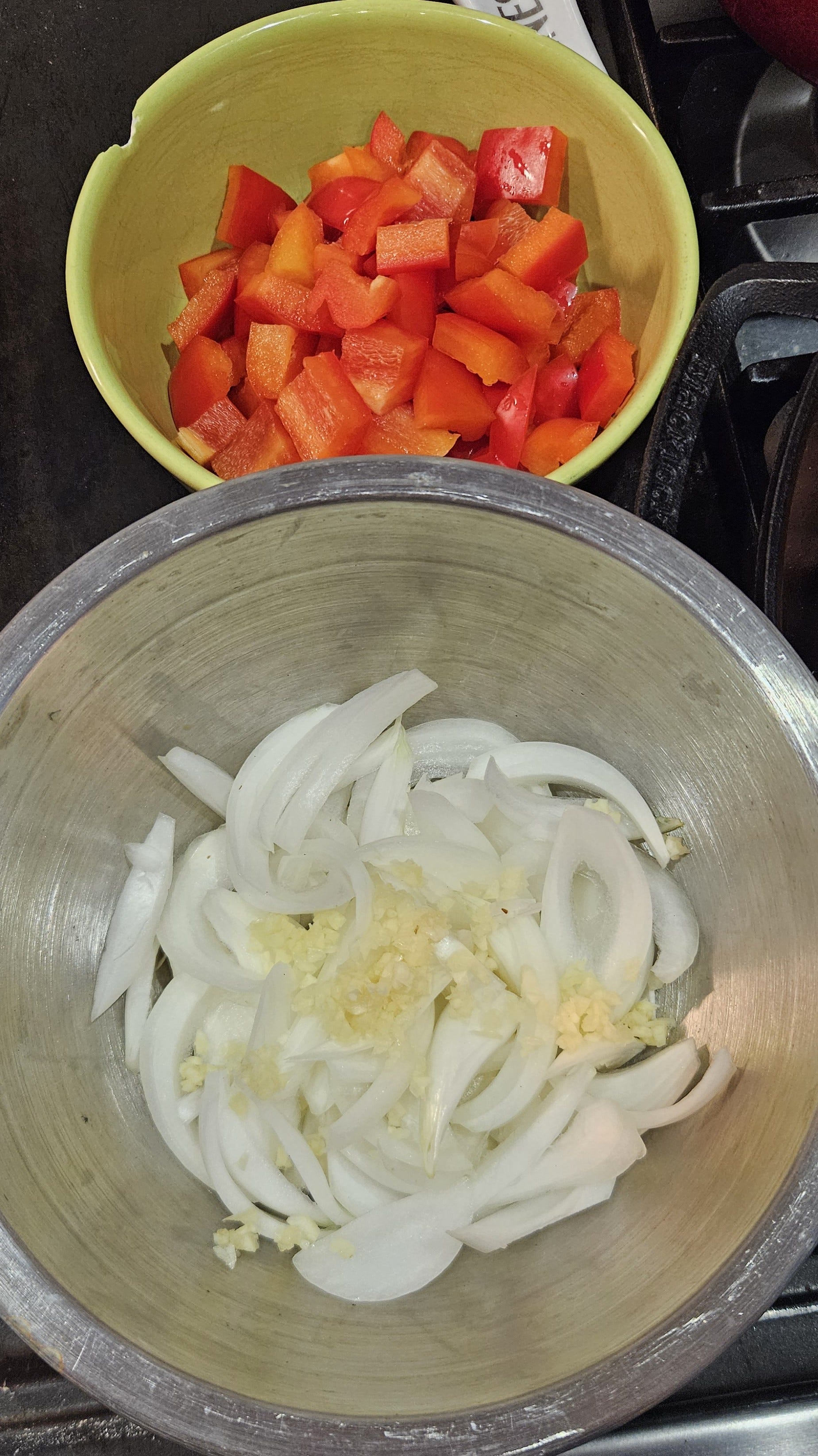
Then came the mushroom (about 3 large,) which were sautéed until they started to release their moisture, and finally the diced red pepper (1 whole) and chopped beet greens (about 2 cups.)
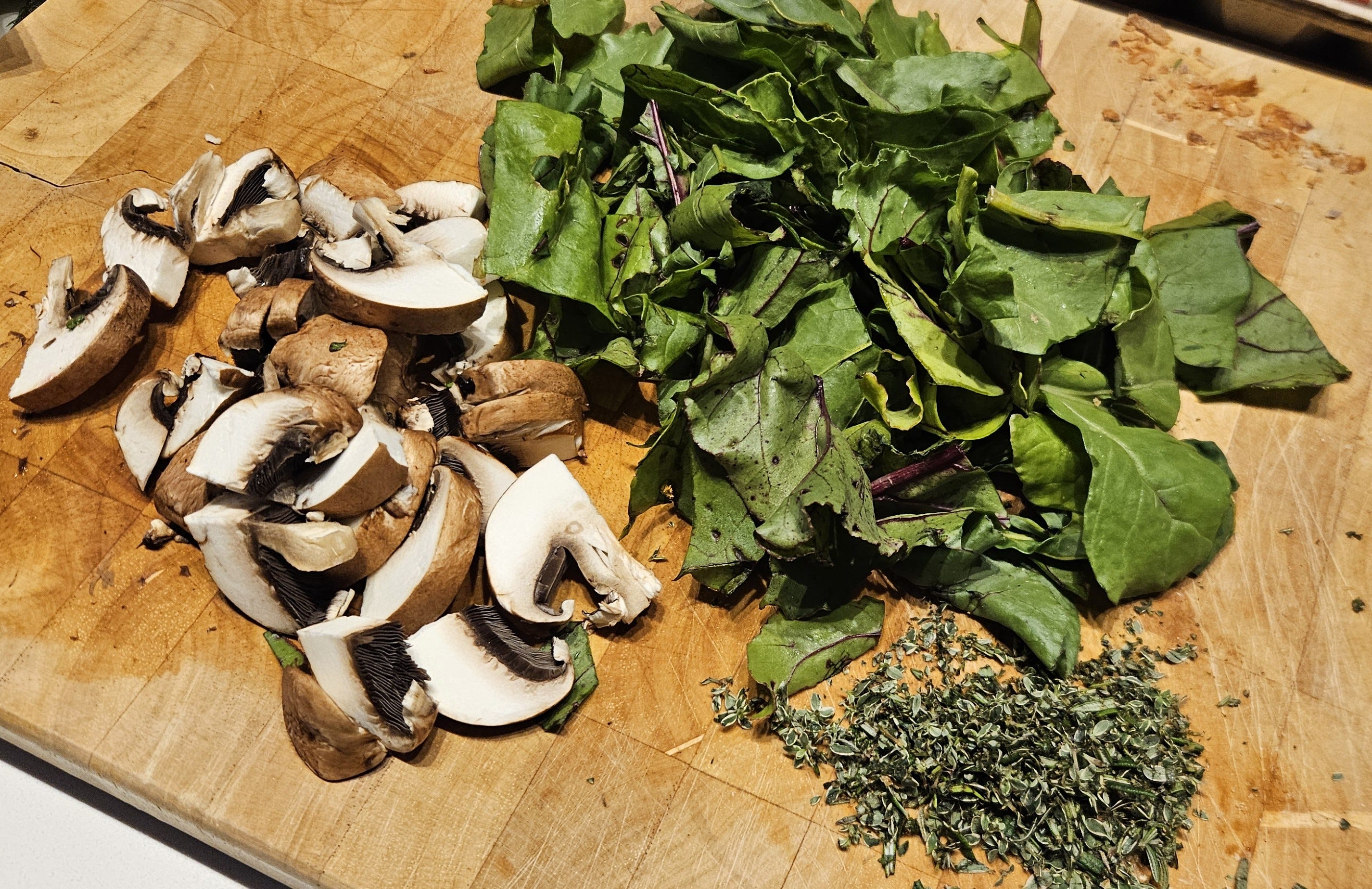
Those were only cooked until the greens started to soften and wilt. I also added some chopped, fresh thyme and rosemary (you can use whatever you have on hand.) I didn’t add salt or pepper because the chorizo is likely salty/peppery enough.

Remove the pan from the heat then toss in the cubes of bread, enough so that it’s level with the top of the pan, and then set it aside to fully cool.
The Custard
For this one, I wanted a custard that would be more on the set side (similar to a quiche) so I went with a ratio of 6 eggs to 3 cups of milk* [note: it’s not a true 2:1 ratio because while it’s 2 eggs to 1 cup of milk, 1 egg by weight or volume is much less than a cup of milk, but you get the idea.] I also added about 2 tsp of salt and a few grinds of pepper. Another thing to keep in mind in terms of how much custard to make is how much bread you have to cover with it, so adjust as necessary.
*You can use whole milk, 2%, half-and-half (10%) or any ratio of cream to milk you desire. I probably wouldn’t use all cream (18% or higher) as it would be a bit too rich. Since I only had 1% milk and 35% cream on hand, I made mine with 2 cups of milk and 1 cup cream.
Putting it all together
Pour the custard mixture over top of the bread and filling and let it sit for about 30 minutes.
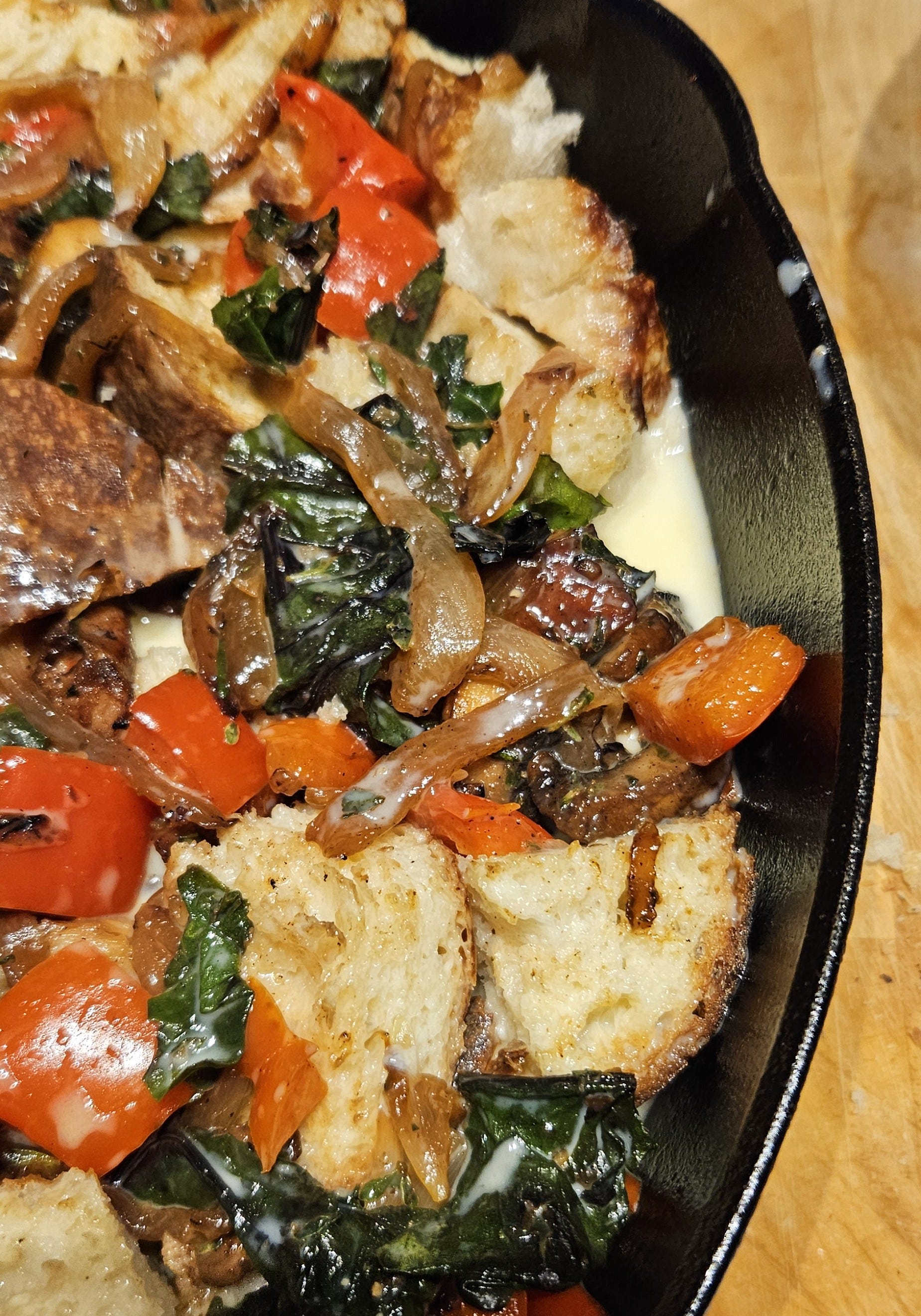
It will look a bit runny at first, and don’t worry if pieces of bread or filling are sticking out from the custard. Preheat your oven to 375F. When ready to bake, sprinkle a generous amount of shredded cheese over top (I used mozzarella, because it’s what I had on hand) and bake it for about 45-60 minutes.
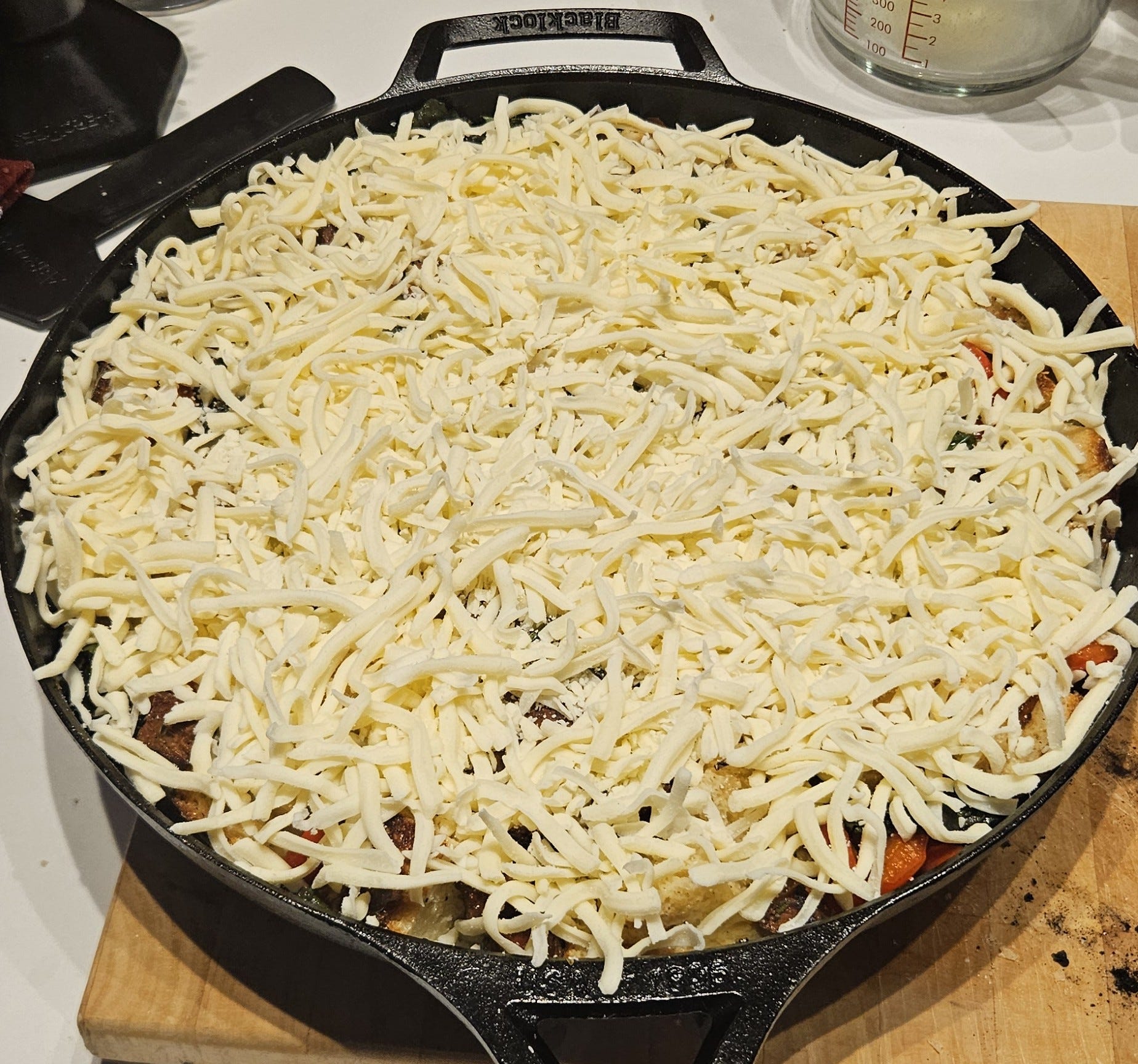
The exact amount of time will depend on how wet the bread was, so stick a knife into the dish and if it comes out clean, it’s done. Mine took 50 minutes (checked it after 40, then put it back for another 10 minutes.) You’ll also want the cheese to be nice and brown (just like lasagna.)
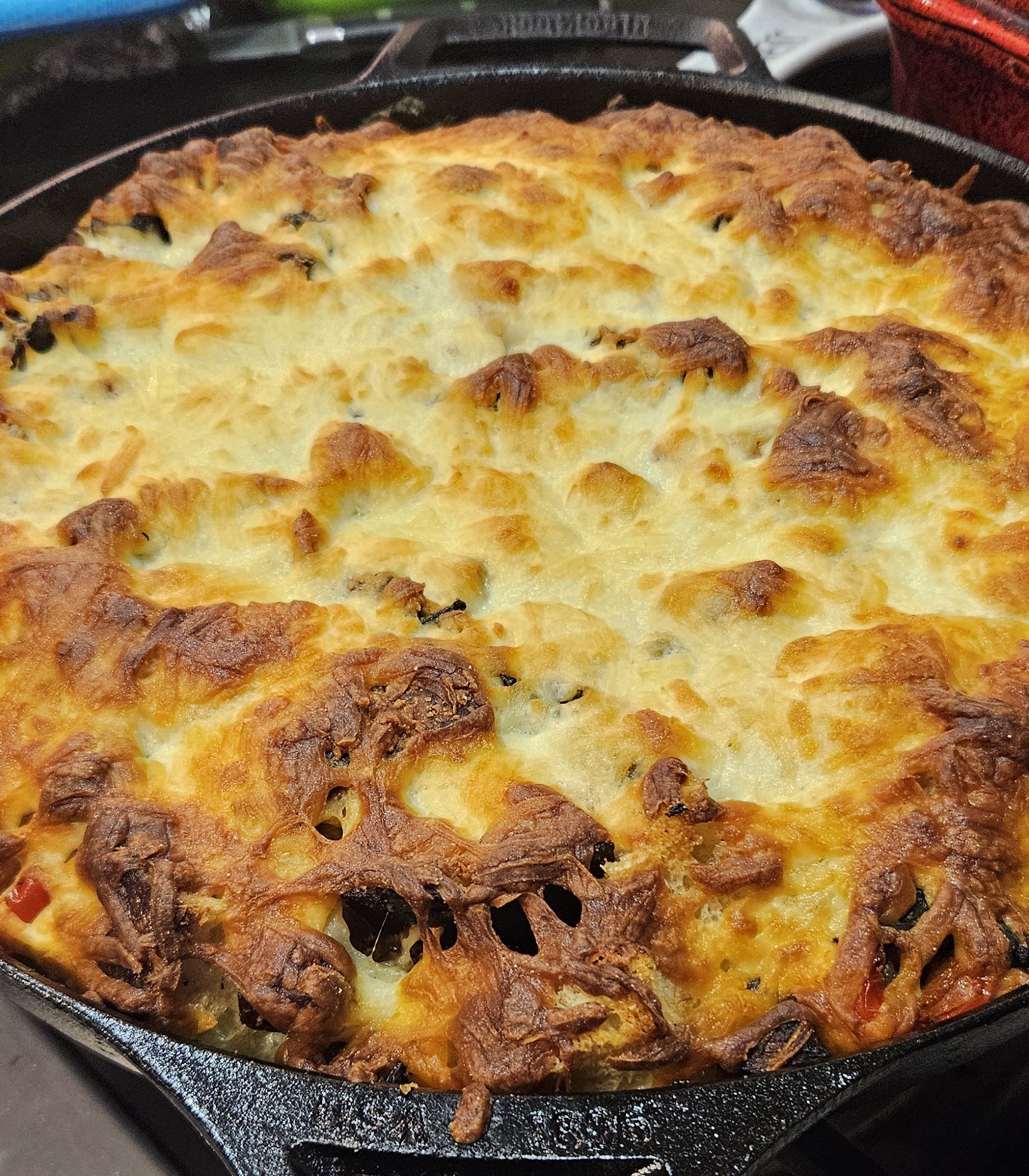
Let the bread pudding sit for about 10-15 minutes to allow it it set up a bit, then cut and serve.
Sweet Bread Pudding
This is the more traditional version that most people are familiar with. As mentioned above, I wanted to use up some peaches, so that’s where I started. And while I used leftover sourdough bread (because it’s what I had) some people like to use brioche or challah because it’s sweeter, or even plain old white bread. That’s entirely your choice.
[Side note: last year, I wrote about an obsession I had for a peach pie that my mum used to make. You can read that post here. This bread pudding is inspired by that recipe. I’m also going to suggest that you review that post if you need more details on how to blanche and peel the peaches as I don’t want to repeat myself.]
Peach filling
I blanched, peeled, and sliced up my peaches (I had 5 old, very ripe peaches, and 4 that were fresher, yet still ripe.) Remove the little stem nub (if it’s still there) then use a sharp knife to put a cross through the surface of the skin on the opposite end of the peach. Drop them into boiling water until you see the skin start to peel away from the fruit where you made the cross.
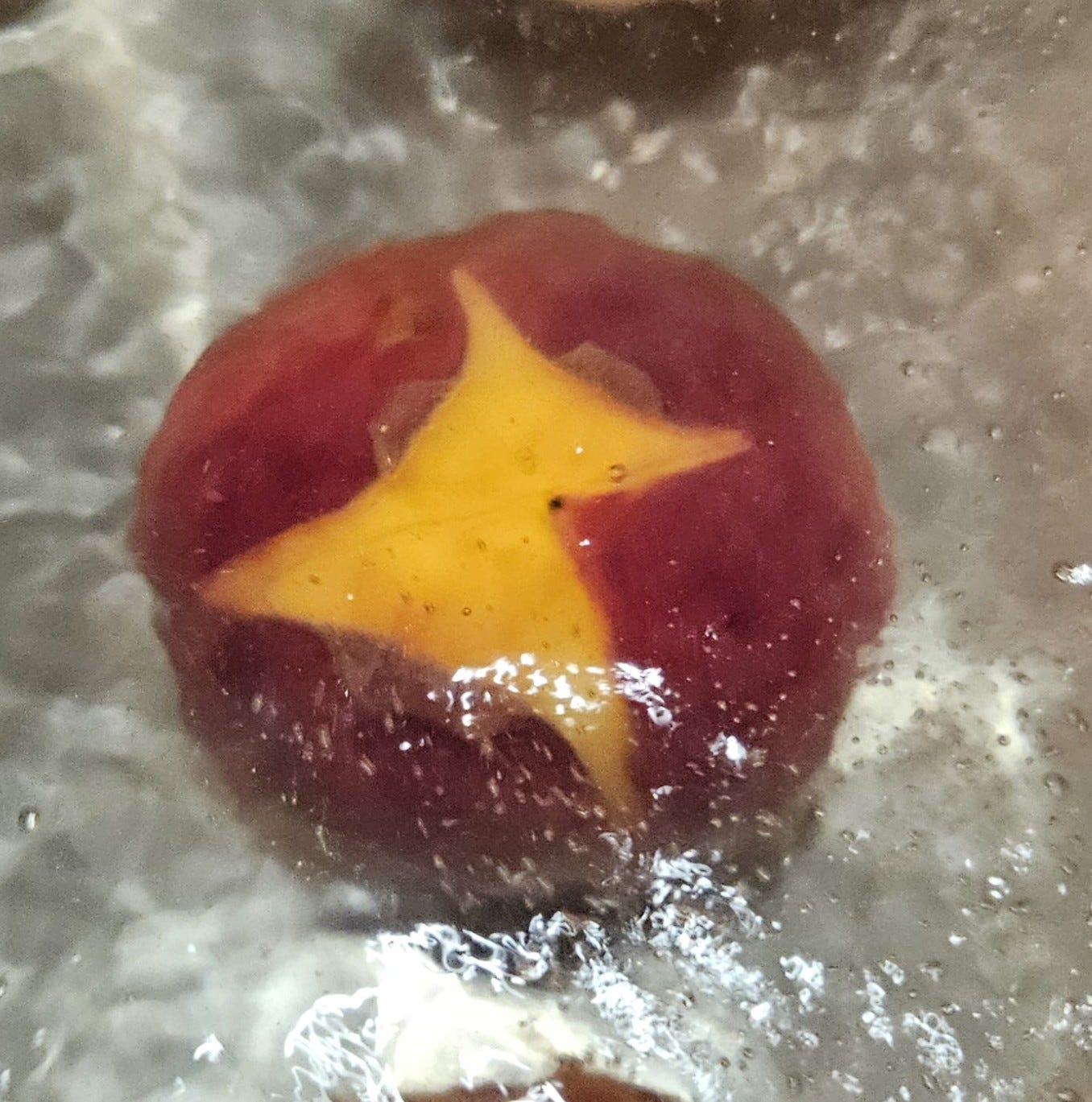
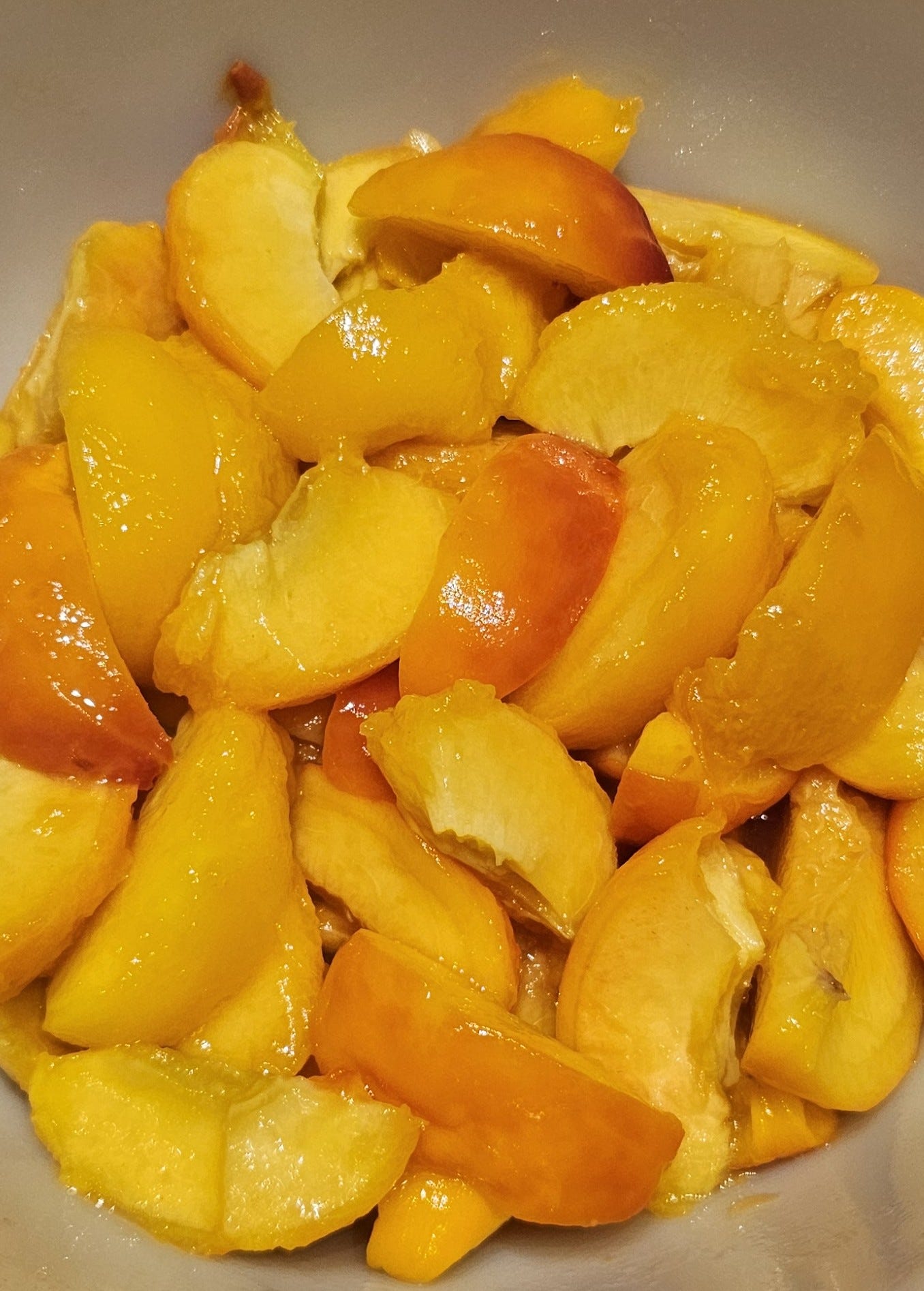
Remove the peaches and put them in an ice bath (bowl of water with ice cubes in it) and then slide the skins right off (it’s easiest to do this in the ice bath itself.) Slice the peaches and discard the pit. Sprinkle about 1-2 tablespoons of lemon juice over the slices to keep them from browning, then cover them with plastic wrap until ready to use them.
Peach sauce (optional)
This is a peach syrup of sorts that will be used to amp up the peach flavour in the pudding. Take about 1 cup of the peach slices and all the juice that the entire batch of sliced peaches has given off (I used a strainer to get all that juice.)
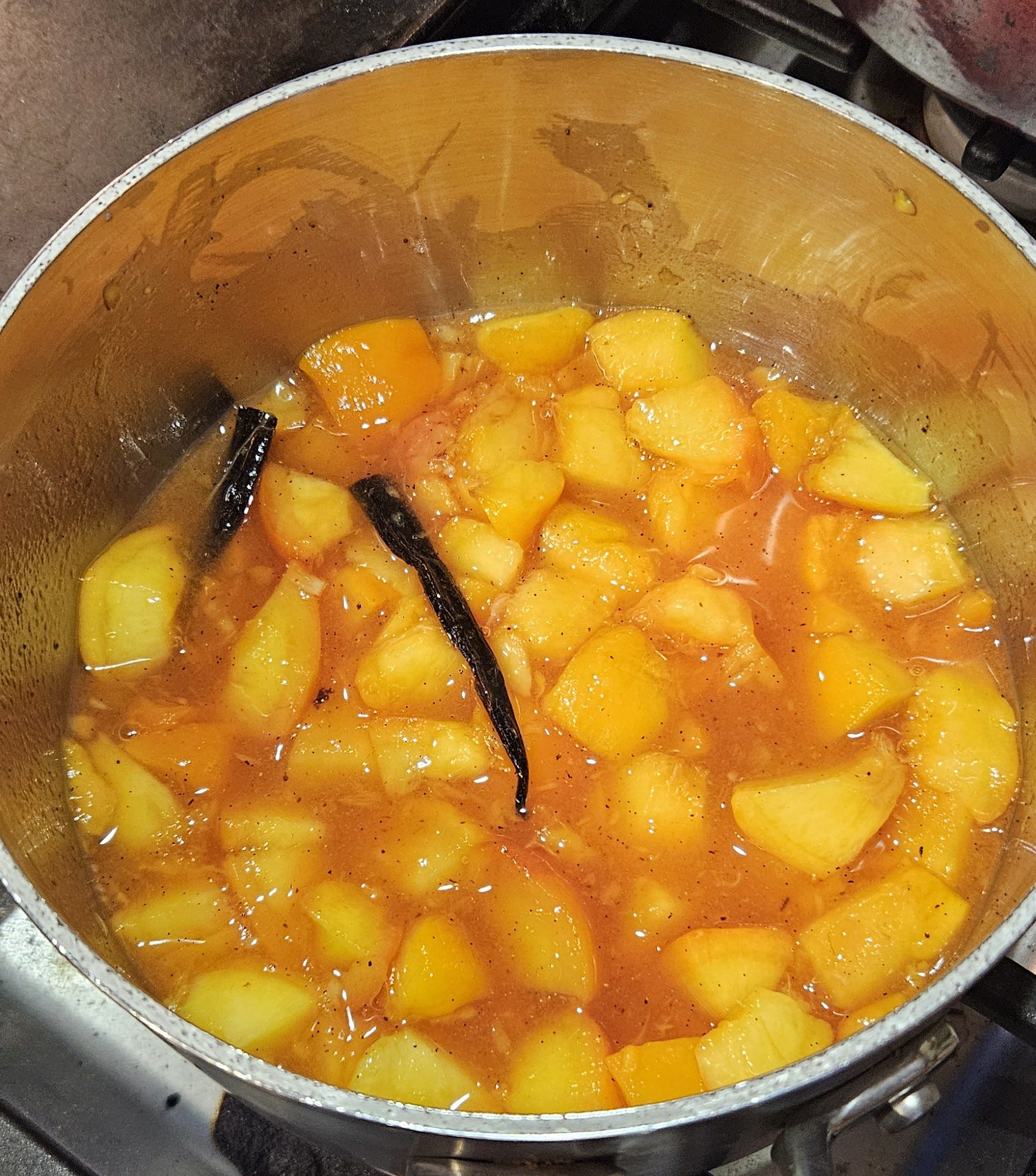
Put them in a small pot with 1 Tbsp lemon juice, about 2 Tbsps of sugar, the leftover vanilla pod from the ice cream I made last week (or you can use 2 tsp of vanilla extract if you don’t have a leftover vanilla pod) and a scant bit (less than 1/8 of a teaspoon) of ground cloves and dried ginger (don’t go too heavy as it’s very pungent.) Bring this to a boil, then smash the fruit up with a hand blender or potato masher (I used the latter.)
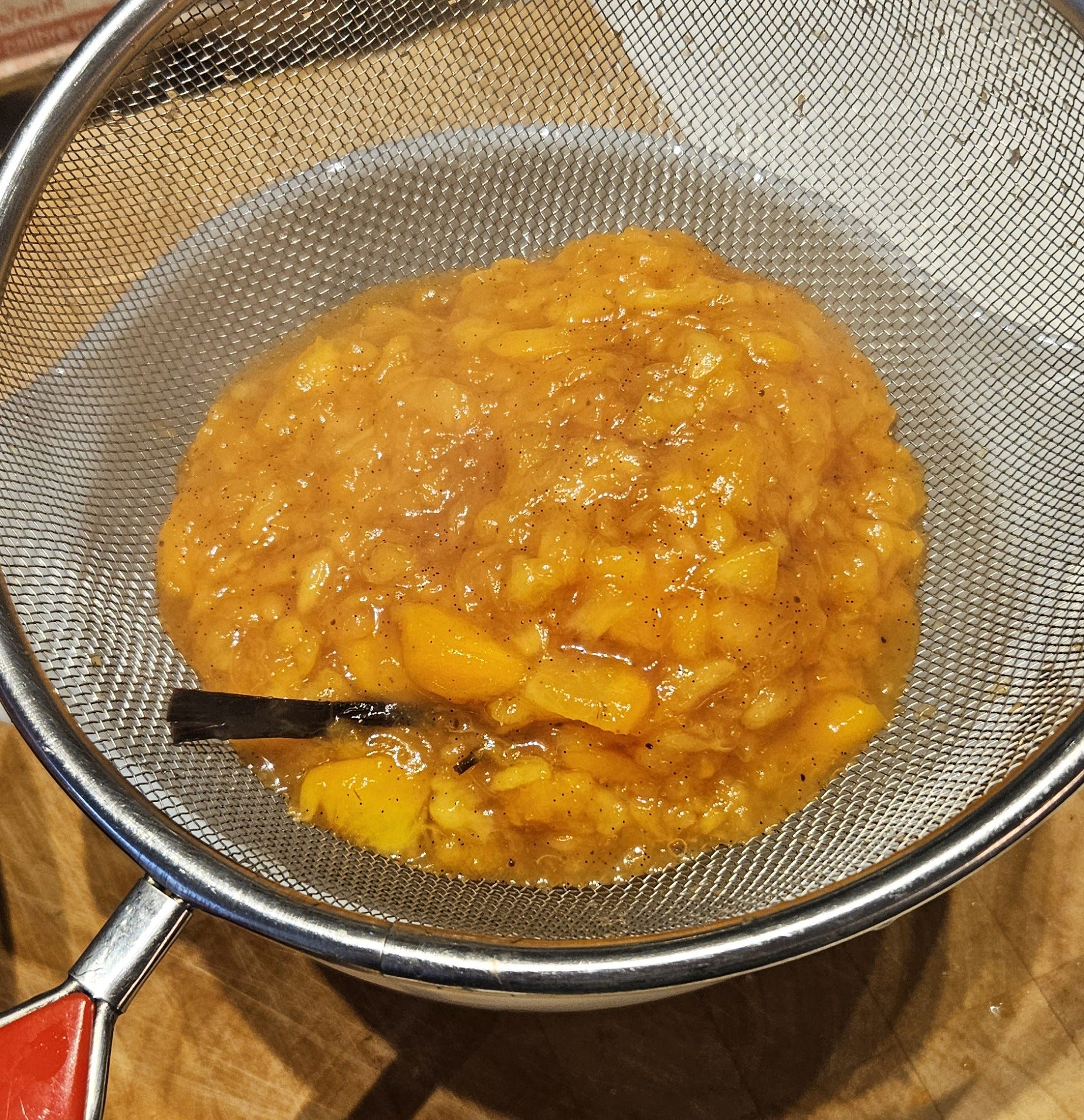
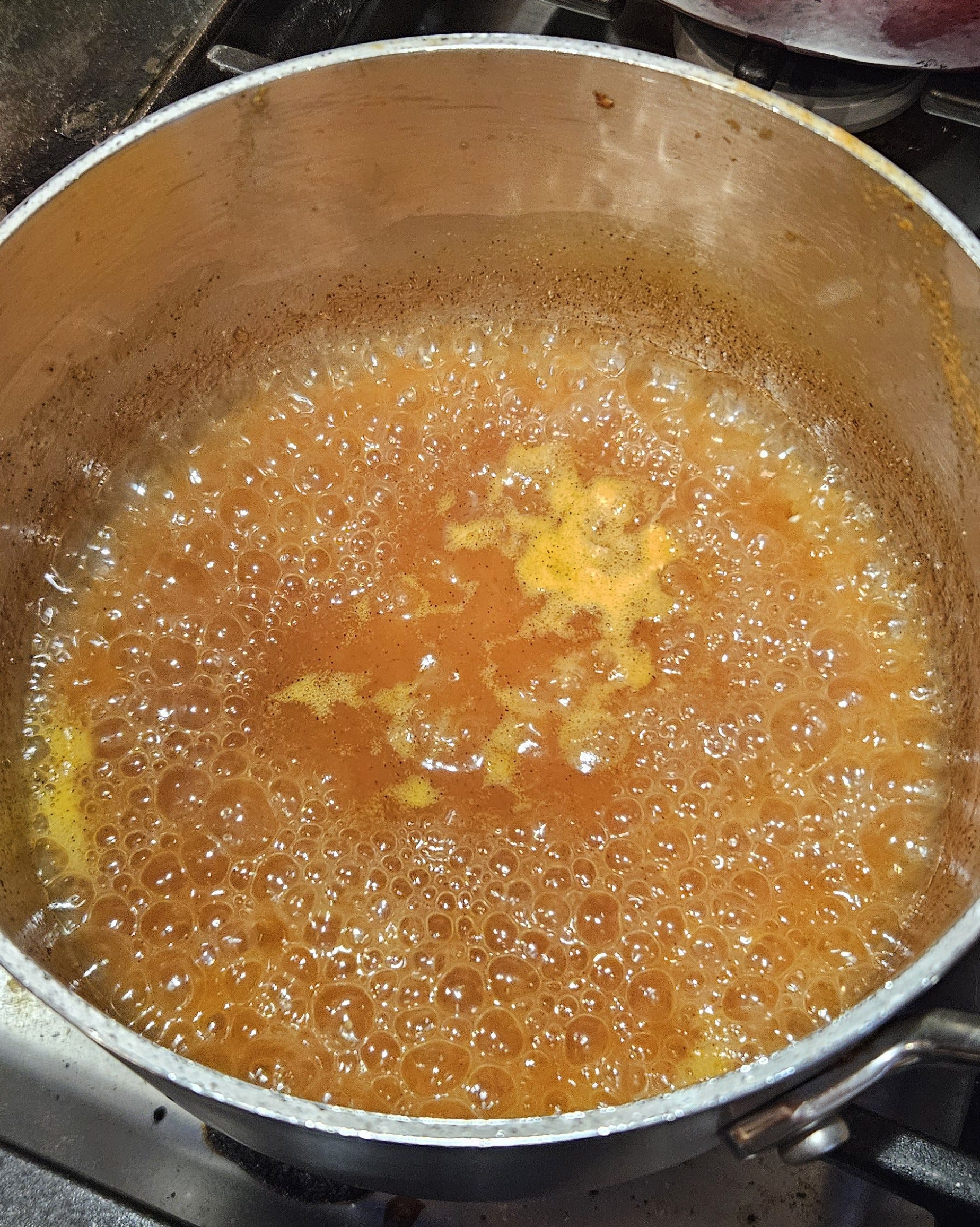
Push it through a sieve to remove all the lumps, leaving the pulp behind, then return the sauce to the stove and reduce (i.e., boil) it until it’s nice and thick (about 5-10 minutes) then set it aside to cool.
Sour cream topping
Mix a small container (250g) of sour cream with 3 Tbsp of brown sugar in a small bowl. Cover and put it back in the fridge for a few hours to allow the sugar to melt into the sour cream (it shouldn’t be gritty.) This will go on top of the bread pudding when it’s served.
Sweet custard
As mentioned above, I want this custard to be a bit softer/creamier (i.e., less eggy and set) than the one I used for the savoury pudding, so I used a different ratio of eggs to milk/cream. This time, I went with equal parts 35% cream and 1% milk (3 cups in total) and only 3 eggs (so a 1:1 ratio of sorts.) I beat the eggs with 3 Tbsps of sugar and 1 Tbsp of vanilla extract, then added the milk and cream.
Putting it all together
For this one, I made it in a ceramic pie plate because it was the right size for the amount of bread I had. Butter the pie plate (with about 1 Tbsp of soft butter) then add the cubed bread and the remaining sliced peaches (about 2 cups) and toss it together. Pour the custard over top and let it sit for 15-30 minutes to absorb.
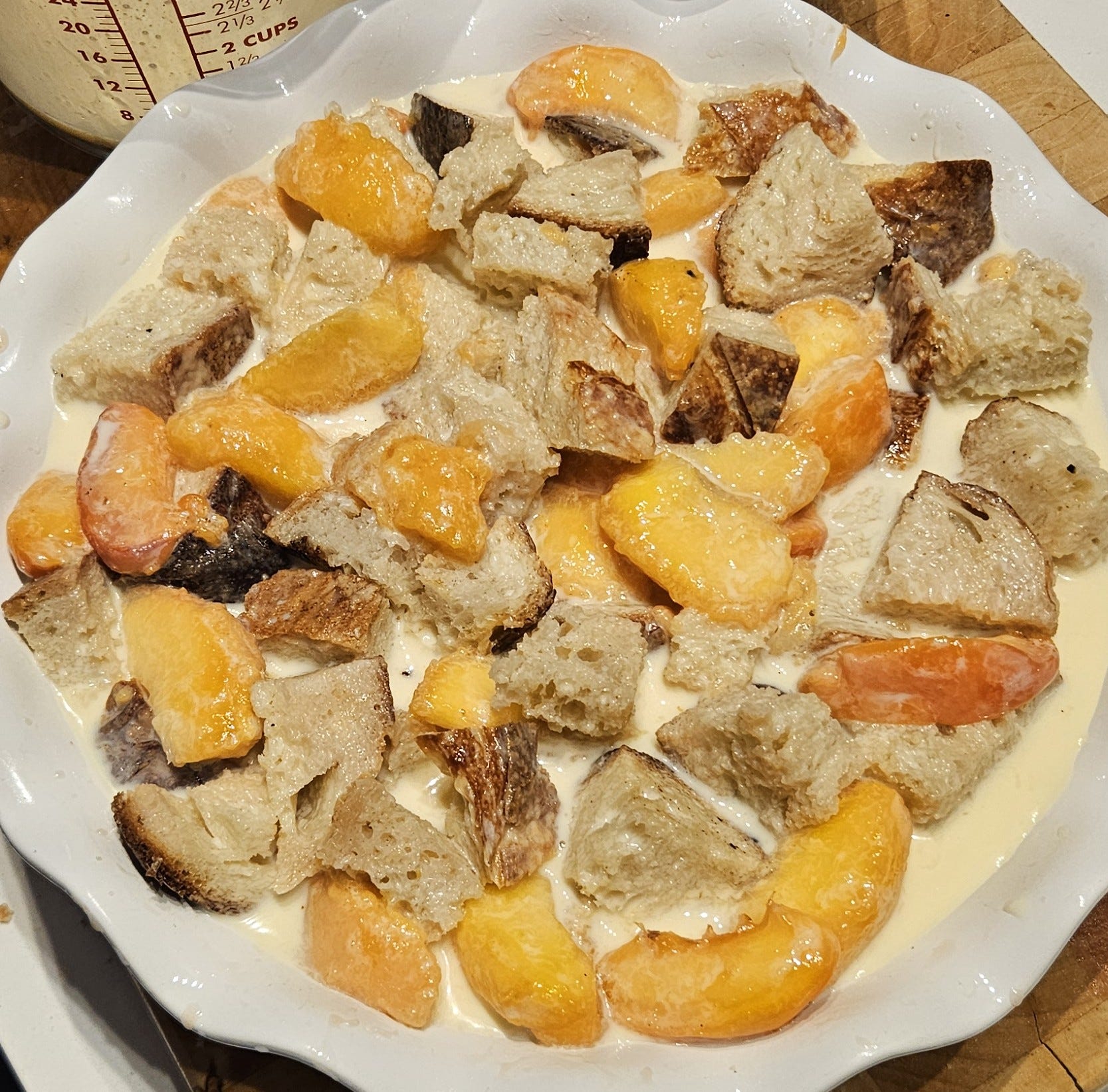
Preheat your oven to 375F. Right before baking, sprinkle about 1 Tbsp of sugar over top and bake uncovered until the custard is almost set, about 40 minutes (I checked first at 30 minutes, then put it back in for another 10 minutes.)

Serving
This dessert is best served warm (not hot) so let it cool a bit before scooping it out into individual plates or bowls.
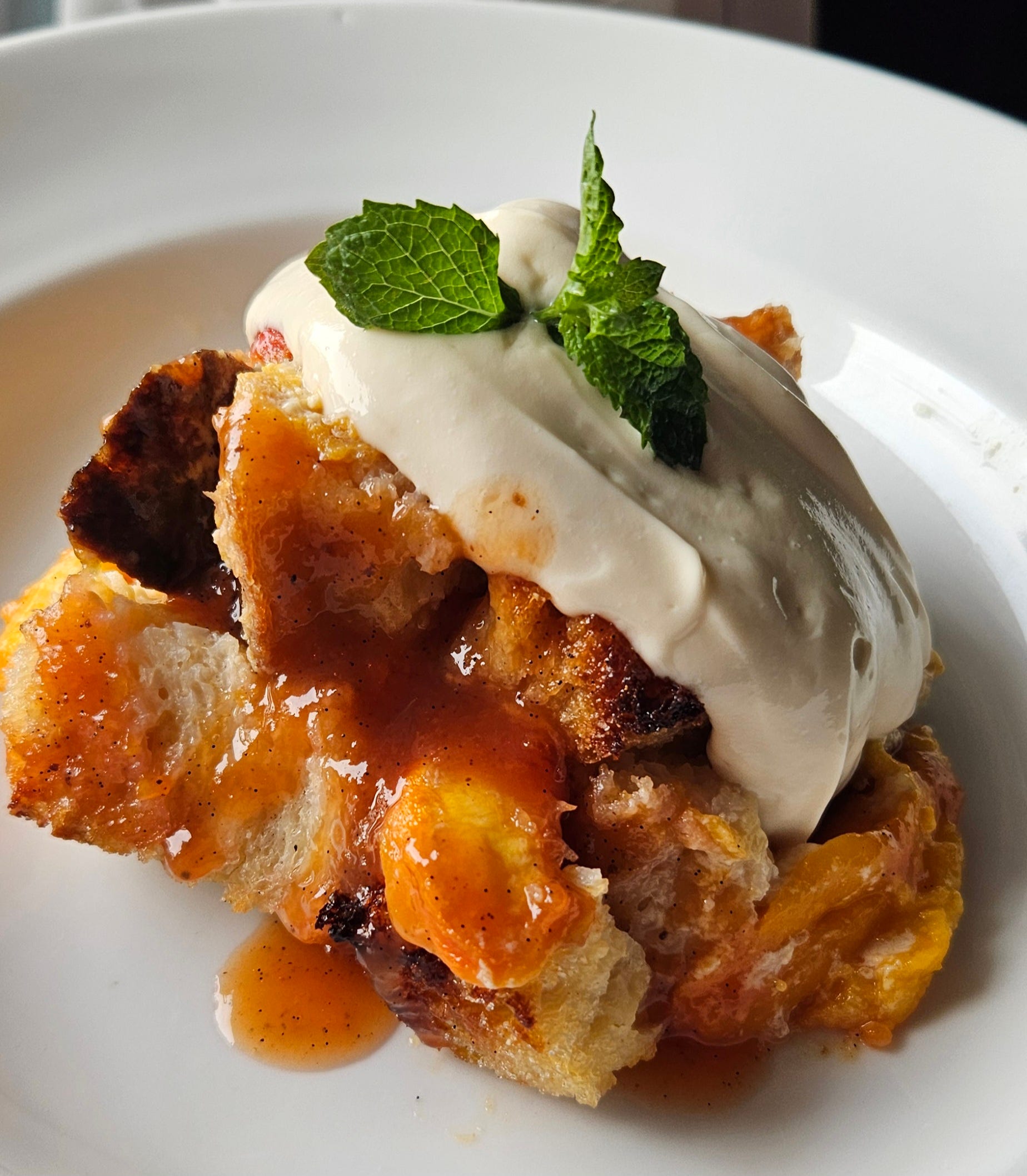
Drizzle some of the peach syrup over top (you could also drizzle it over top of the whole thing when it comes out of the oven) and finish with a dollop of the sour cream and brown sugar mixture made earlier. A more traditional serving would be to put a scoop of vanilla ice cream on top.
Wine Pairings
I wouldn’t be practicing what I’ve learned in my wine course so far if I didn’t make a recommendation of what to serve with these dishes.
For the savoury bread pudding, a lot will depend on what your fillings are. Mine are very salty and spicy, so I would probably go with a high-acid, crisp white wine like a cool climate Chardonnay (Ontario, BC, or Chablis.) Because of the smokiness of the chorizo I used, I wouldn’t mind a little oak on my Chardonnay.
Suggestions:
Mission Hill Reserve Chardonnay 2021, $27.95, VQA British Columbia
Domaine Queylus Tradition Chardonnay 2019, $33.70, VQA, Ontario
La Chablisienne Les Vénérables Vieilles Vignes Chablis, $32.95, Bourgogne, France
For the sweet bread pudding, that’s a bit easier. You can never go wrong with sparkling wine, so anything labeled Brut or Extra Dry/Sec (which, ironically, is sweeter than Brut) would be lovely. You’re looking for something with 12-20g of sugar per Litre. Because the dessert is sweet, the wine will taste less sweet. If you were to serve it with a drier sparkling wine (Extra brut or Zero Dosage,) it would likely taste too sour or lacking in flavour. If you want to go with a still wine, I’d choose an off-dry Riesling (20-40g of residual sugar per Litre,) which will complement the peachy notes.
Suggestions:
Tawse Spark Limestone Ridge Organic Brut Sparkling Riesling, $24.95, VQA, Ontario
Blomidon Crémant-style Extra Dry Sparkling, $34.95, Nova Scotia
Louis Bouillot Perle d'Aurore Brut Rosé Crémant de Bourgogne, $25.95, Bourgogne, France
Thirty Bench Small Lot Wild Cask Riesling 2021, $32, VQA Ontario
White Rabbit Landwein Rhein Riesling, $15.55, Rhine, Germany
How do you prefer your bread pudding: sweet or savoury?