
Porchetta
And some thoughts on cookbooks

Last week, my friend Maria gave me copy of a cookbook called “Montreal Cooks: A Tasting Menu From The City’s Leading Chefs” that she had received from a client.
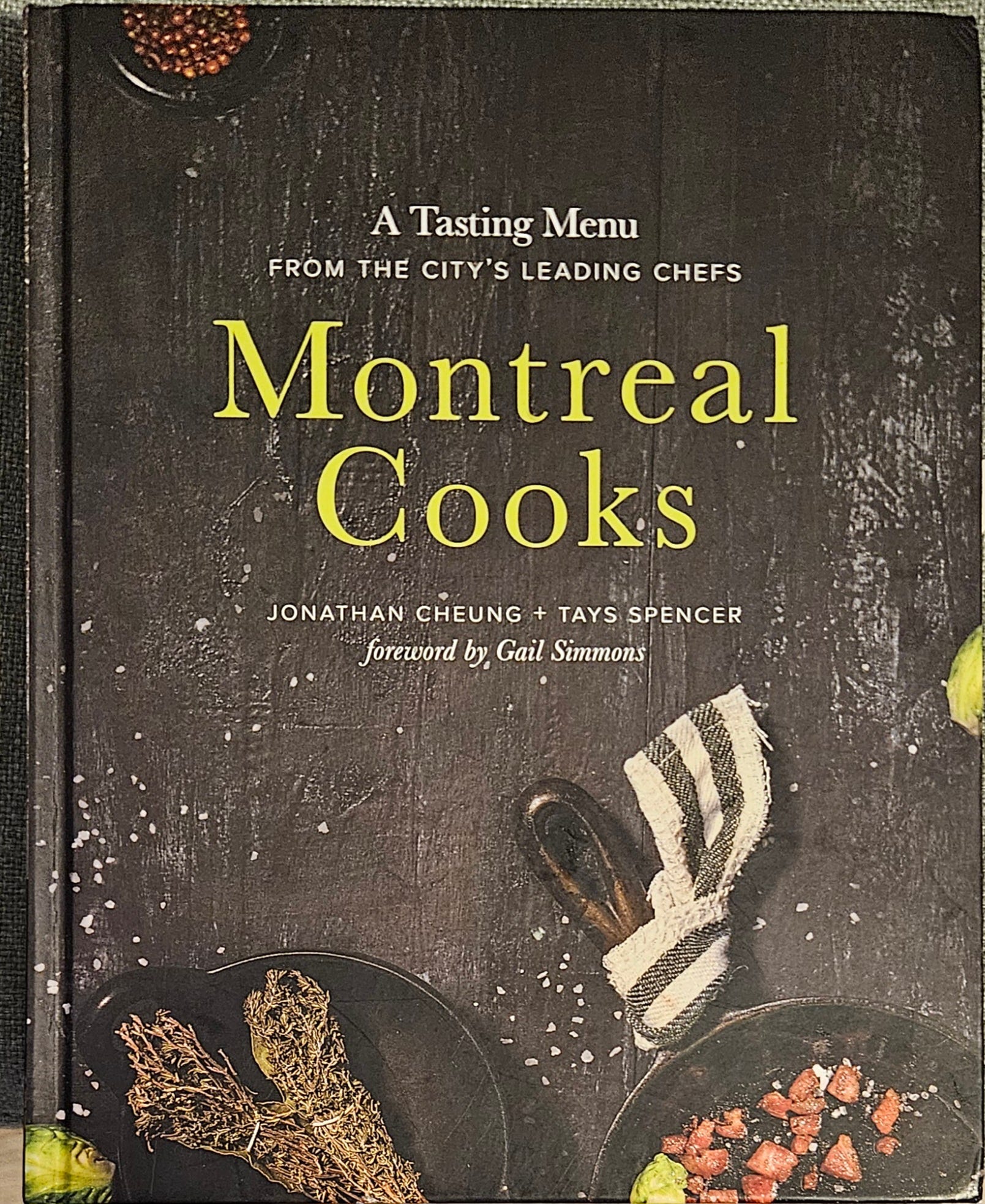
I was eager to check it out because Montreal has one of the best food/restaurant scenes. The cookbook is more than 10 years old (2015) so it’s no surprise that fewer than half of the restaurants included are still open. But I did find a recipe I was eager to try, Porchetta, from restaurant “Impasto,” located in Little Italy (though as of this writing, it’s no longer on their menu.)
[Side note: I’m going to give more thoughts on this book, as well as cookbooks in general, at the end of this post because I have opinions, but I want to get to the recipe first.]
What is Porchetta
In simplest terms, Porchetta (por-KET-a) is an Italian pork roast that is stuffed with herbs and garlic, rolled, tied with twine, slow roasted, and then sliced to serve. It can be a main dish, or used hot or cold as leftovers in a sandwich. Another main characteristic is that it typically had a large fat cap over top, which moistens the meat as it roasts, and then crisps up into a kind of delicious crackling. Traditionally, it’s made with pork loin or pork belly (or a roast that has both the loin and the belly still attached.) But the recipe I followed called for using pork shoulder. Whichever cut of pork you use, it’s important that it has that large piece of fat to cover the top.
How To Make Porchetta
I’m going to share both the original recipe from the book, as well as my own modifications (some made out of preference, others due to what I had/didn’t have on hand.)
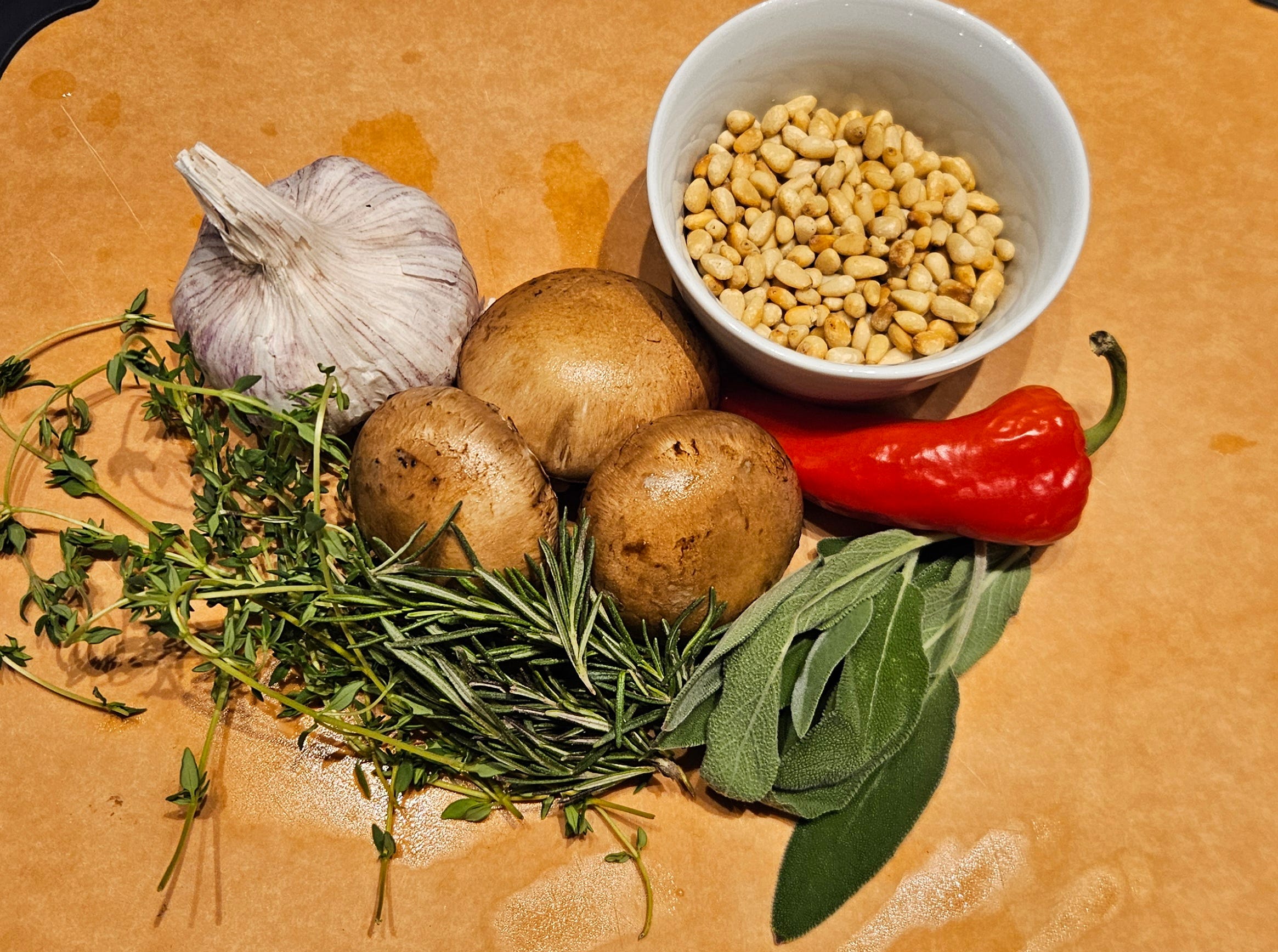
Ingredients
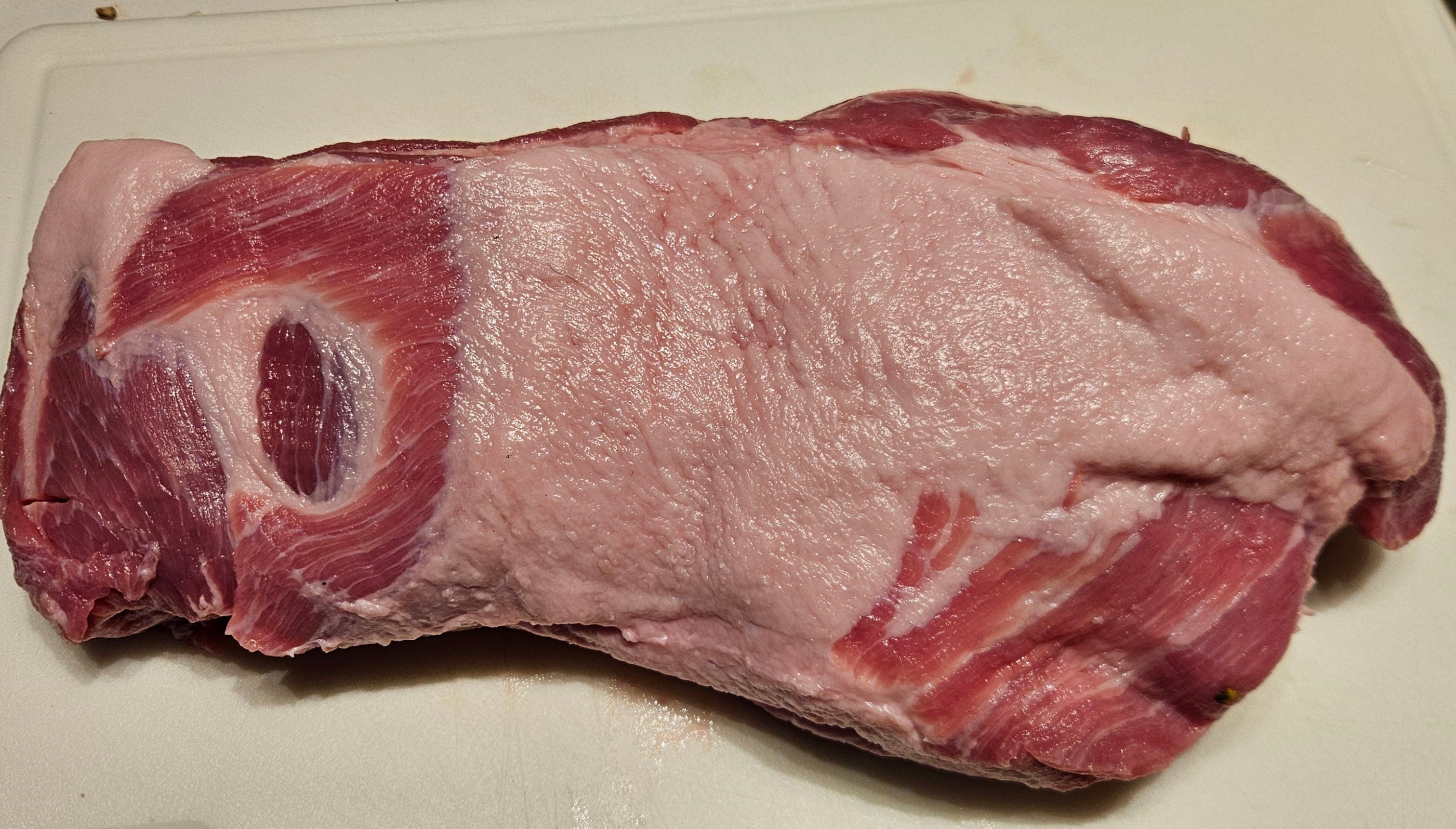
5-6 pounds (~2.5kgs) boneless pork shoulder (mine was 2kgs)
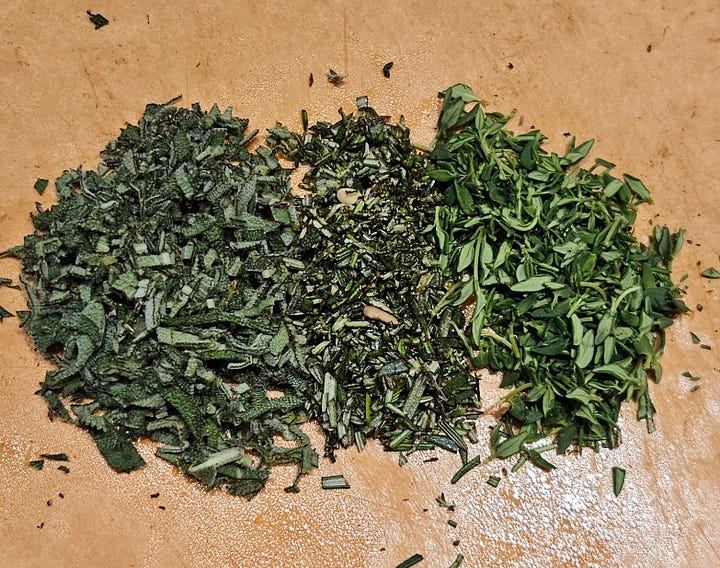
2 tablespoons chopped, fresh thyme
2 tablespoons chopped, fresh rosemary
2 tablespoons chopped, fresh sage leaves
1 tablespoon fennel seeds, crushed (I didn’t have these, so I omitted them)
1 teaspoon dried chili flakes (I didn’t have these, so I used about 1 tablespoon of finely diced, hot red pepper)
5 cloves of garlic, chopped (I used 4 because mine were quite large)
2 tablespoons white wine (I used white Balsamic vinegar)
6 tablespoons olive oil
Salt & freshly ground pepper
Additional ingredients I put in:
3 cremini mushrooms, finely chopped
50g (about 1/3 cup) pine nuts, lightly toasted
Method
Preheat your oven to 425°F/218°C.
Cut 6-8 pieces of butcher’s swine into about 24”/60cm lengths.
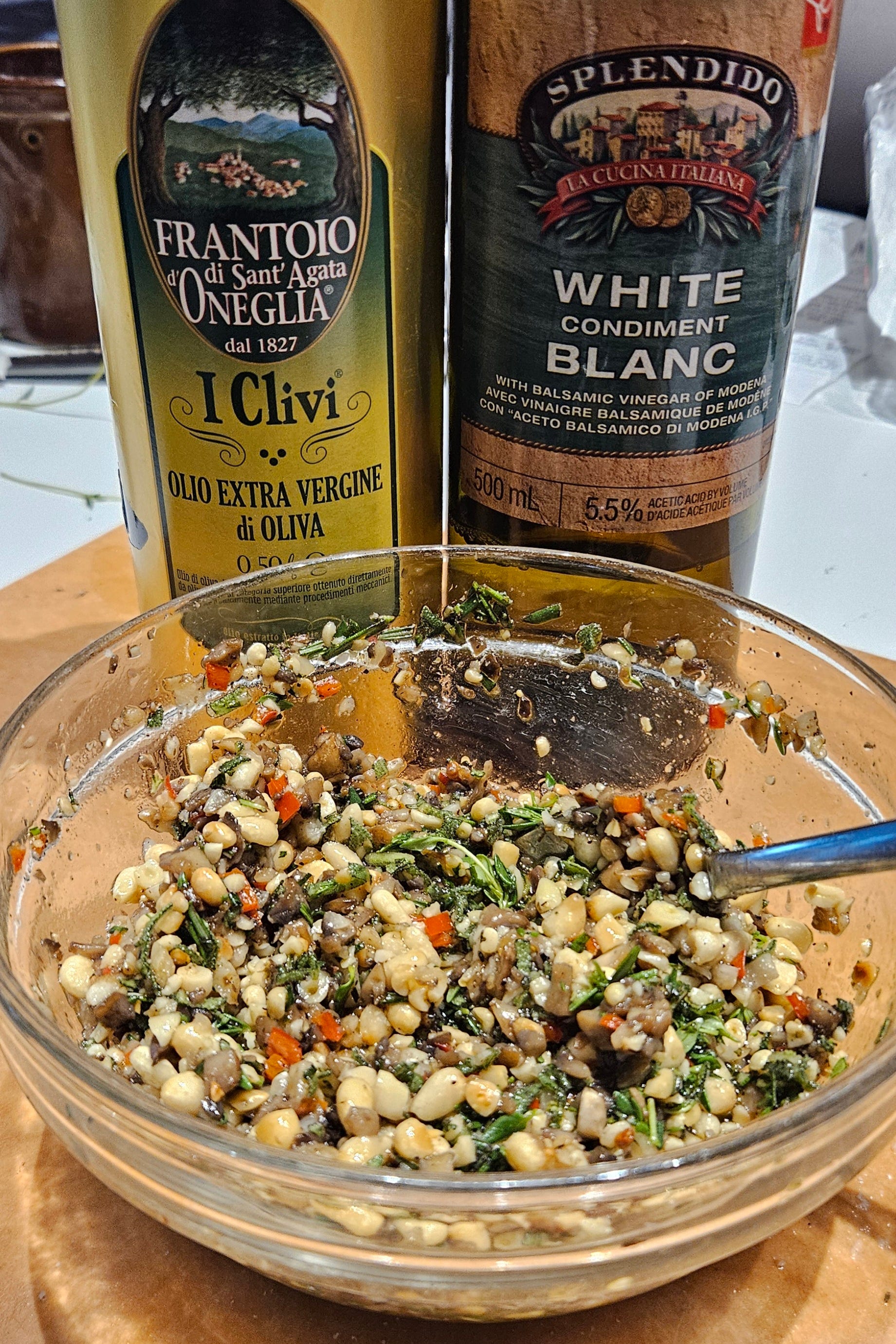
In a small bowl, combine the chopped herbs, 4 tablespoons of olive oil, and 2 tablespoons of wine (or wine vinegar.) [The original recipe has you add all the oil, along with the garlic, fennel seeds, and chili flakes. See my variation in Steps 4 and 5.]
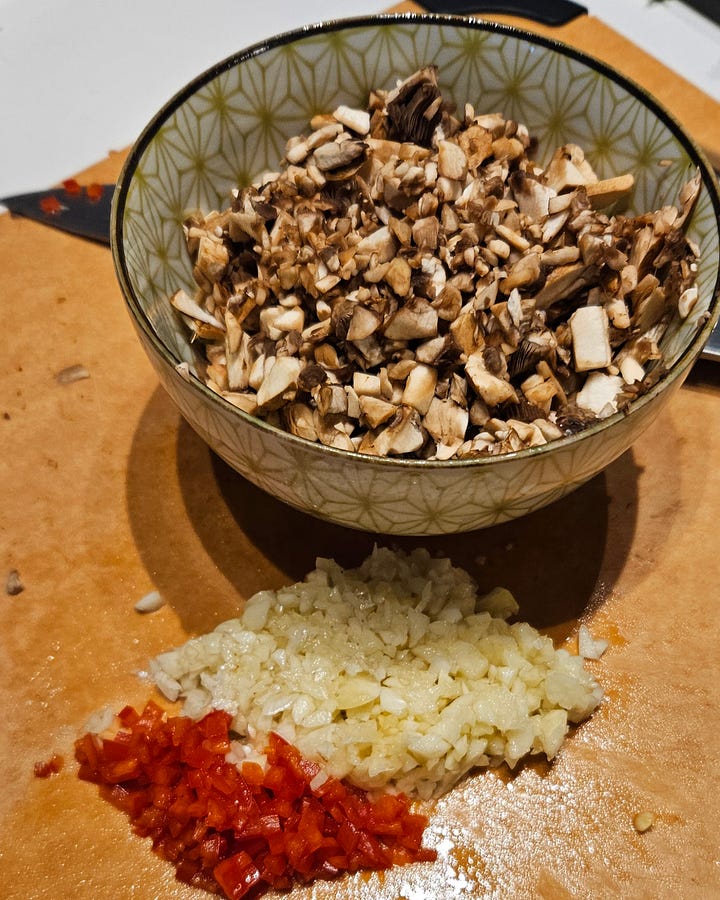
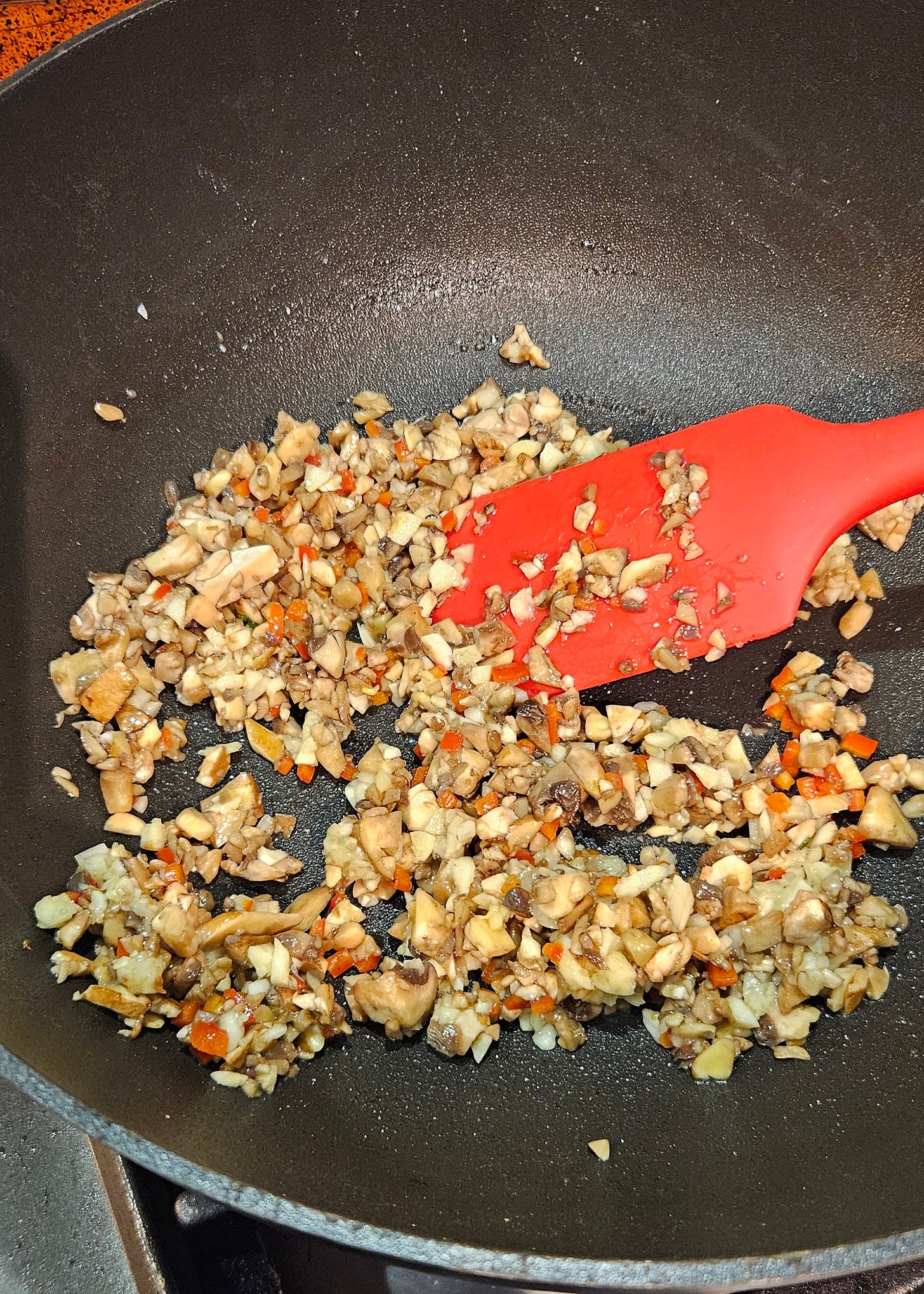
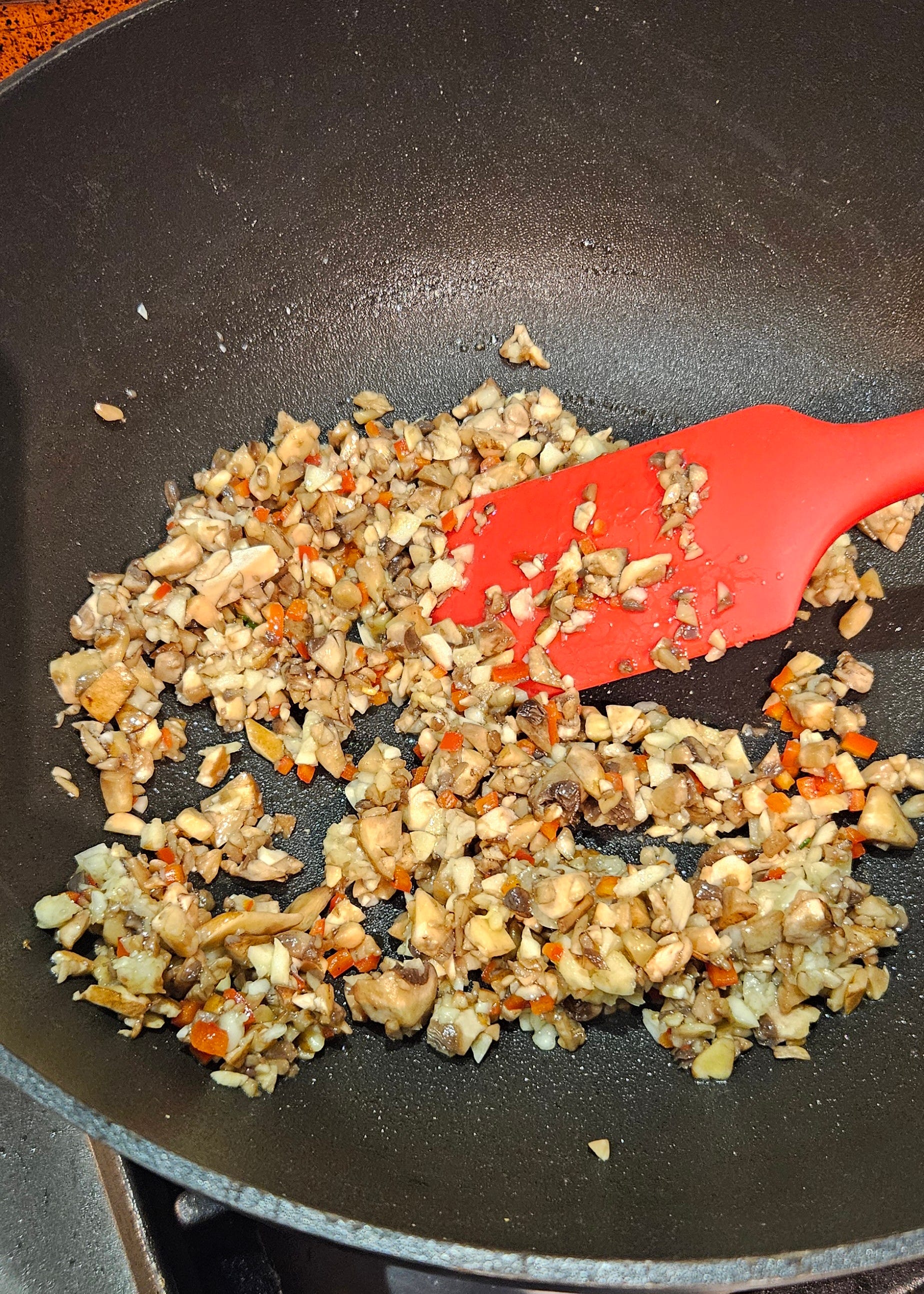
Heat up a pan with the remaining 2 tablespoons of oil, the sauté the mushrooms, garlic, (fennel seeds, if using) and chili pepper (flakes or fresh) until the mushrooms have given off most of their liquid.
Toast the pine nuts in a small frying pan, keeping an eye on them the whole time as they can burn very quickly and easily. If you like, you can also chop them up a bit after toasting (that’s what I did) then add them to the bowl with the rest of the filling ingredients.
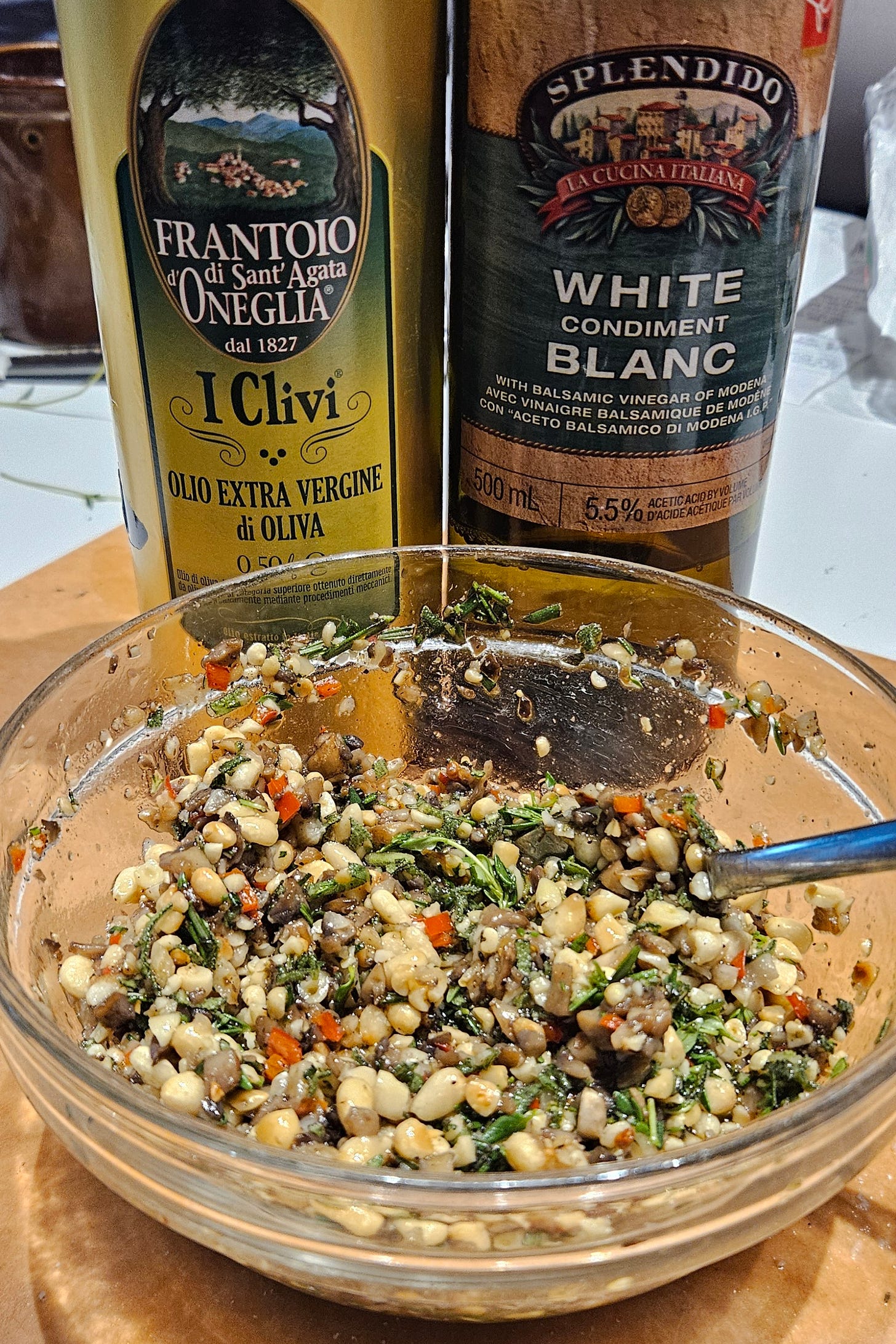
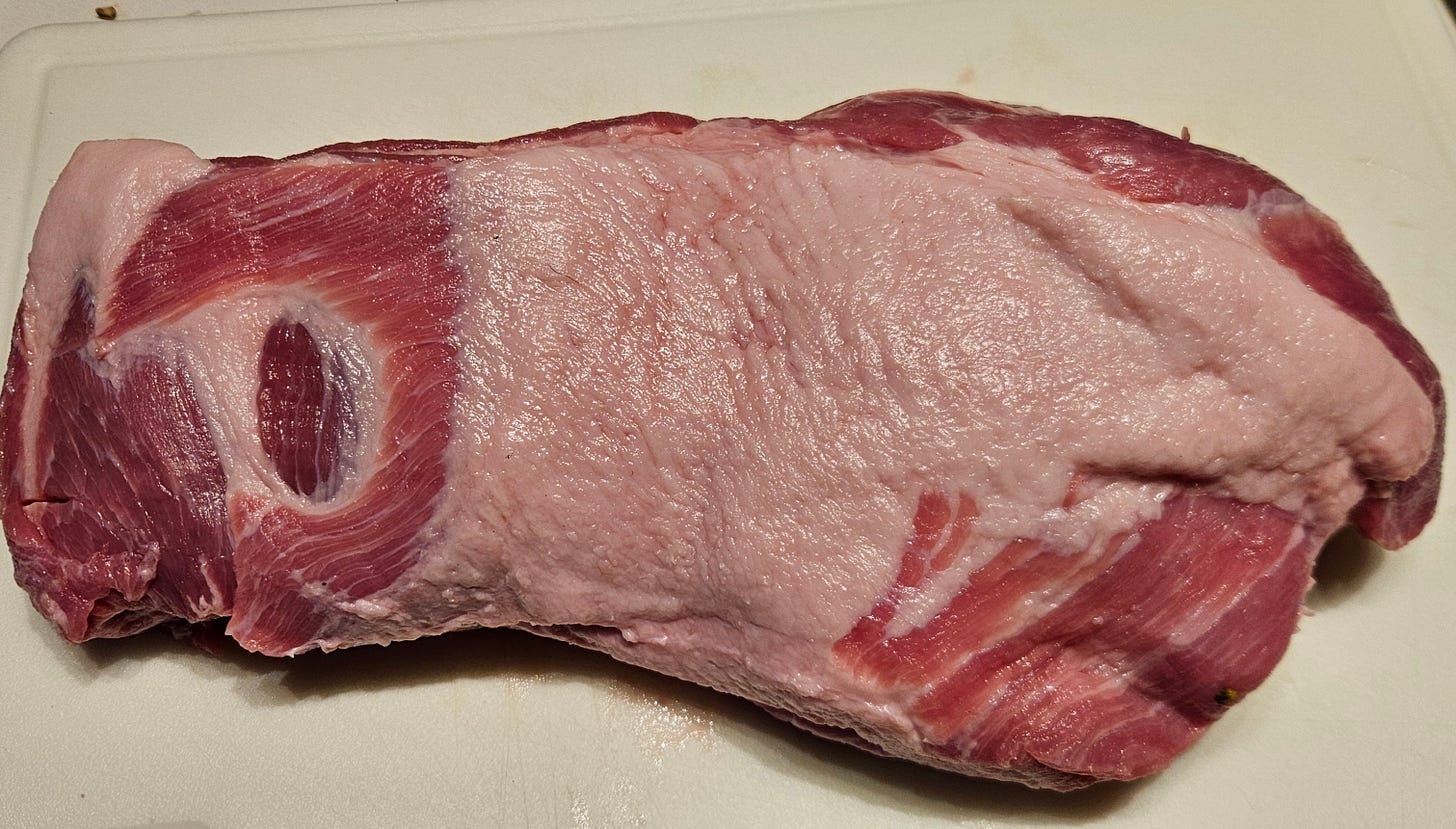
Filling of chopped herbs, mushrooms, garlic, red pepper, and pine nuts with olive oil and white Balsamic vinegar Pat the pork dry, then open it up (see notes below) in such a way that it lies flat, and that you’ll be able to roll it back up again.
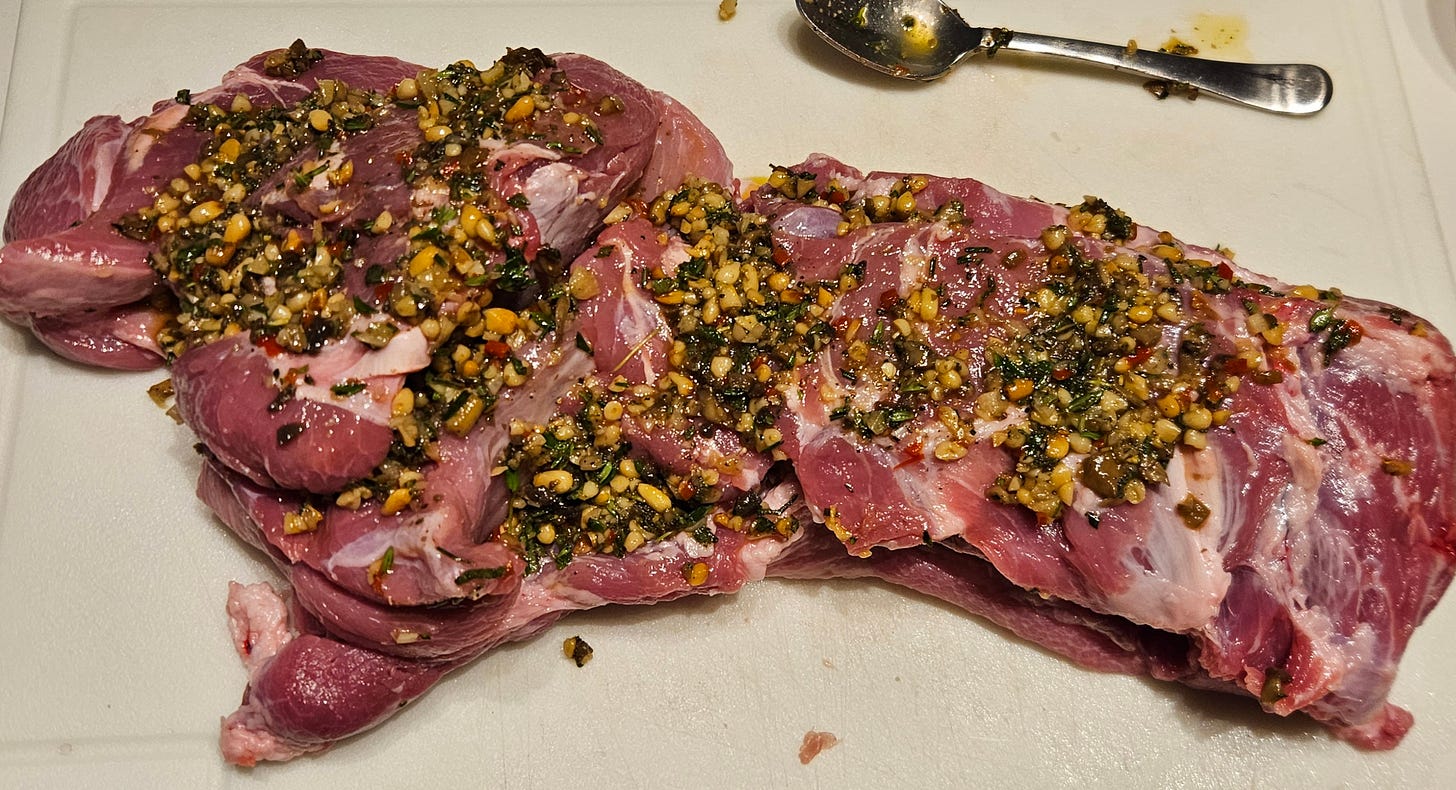
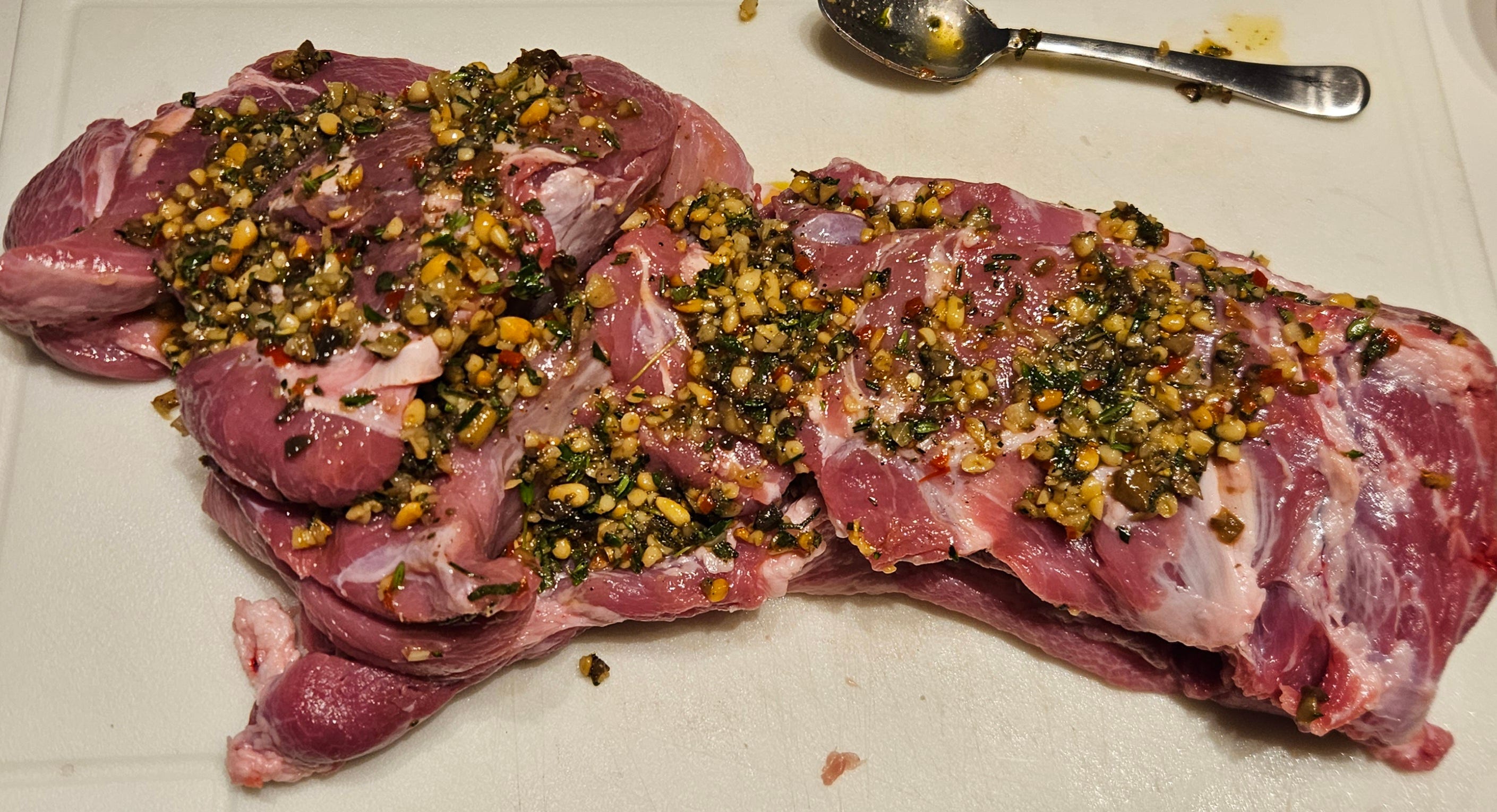
Spread the filling all over the inside of the meat
Roll (or fold) the meat back up, with the fat cap lying across the top, then use the butcher’s string to tie it tightly (how you do this will depend on the shape of the roast.)
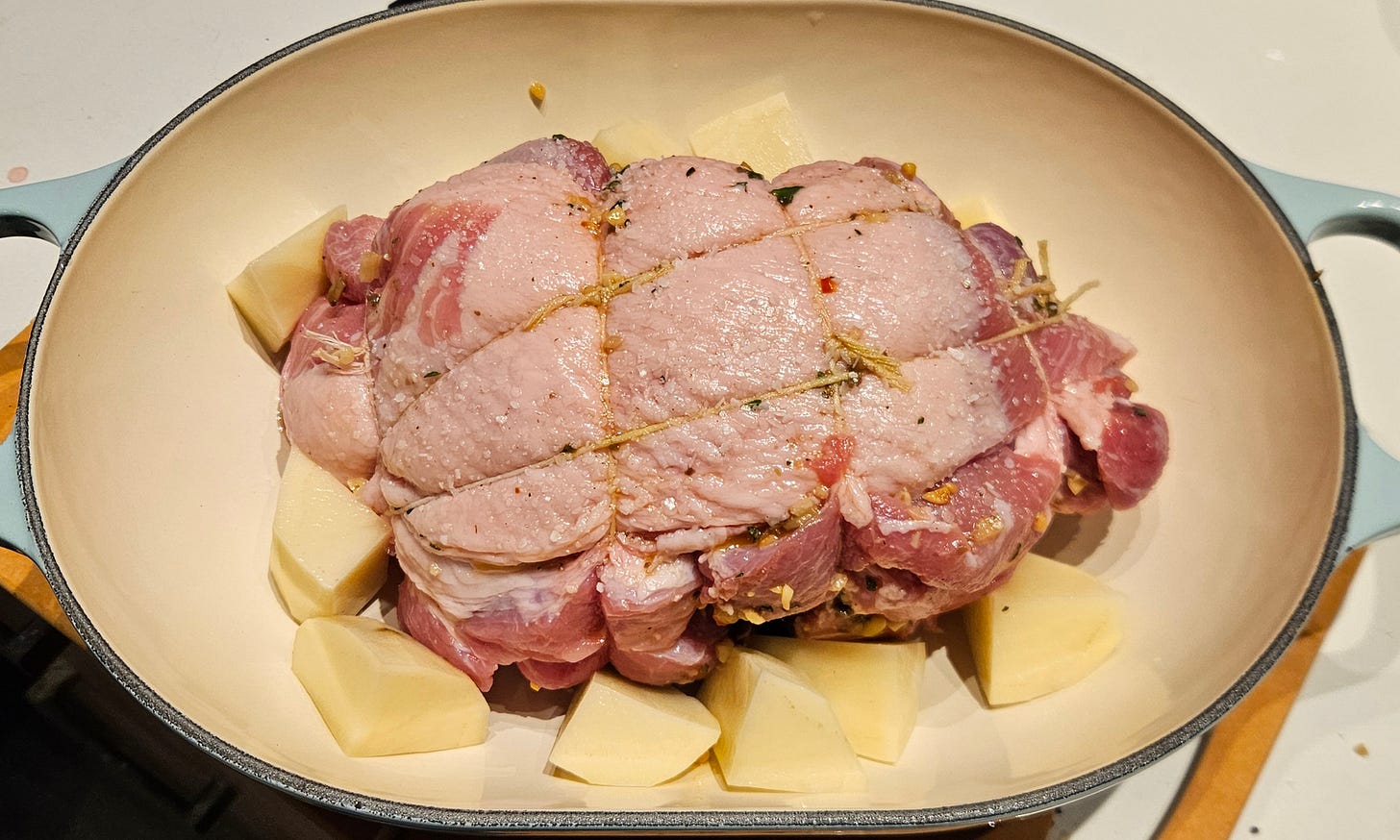
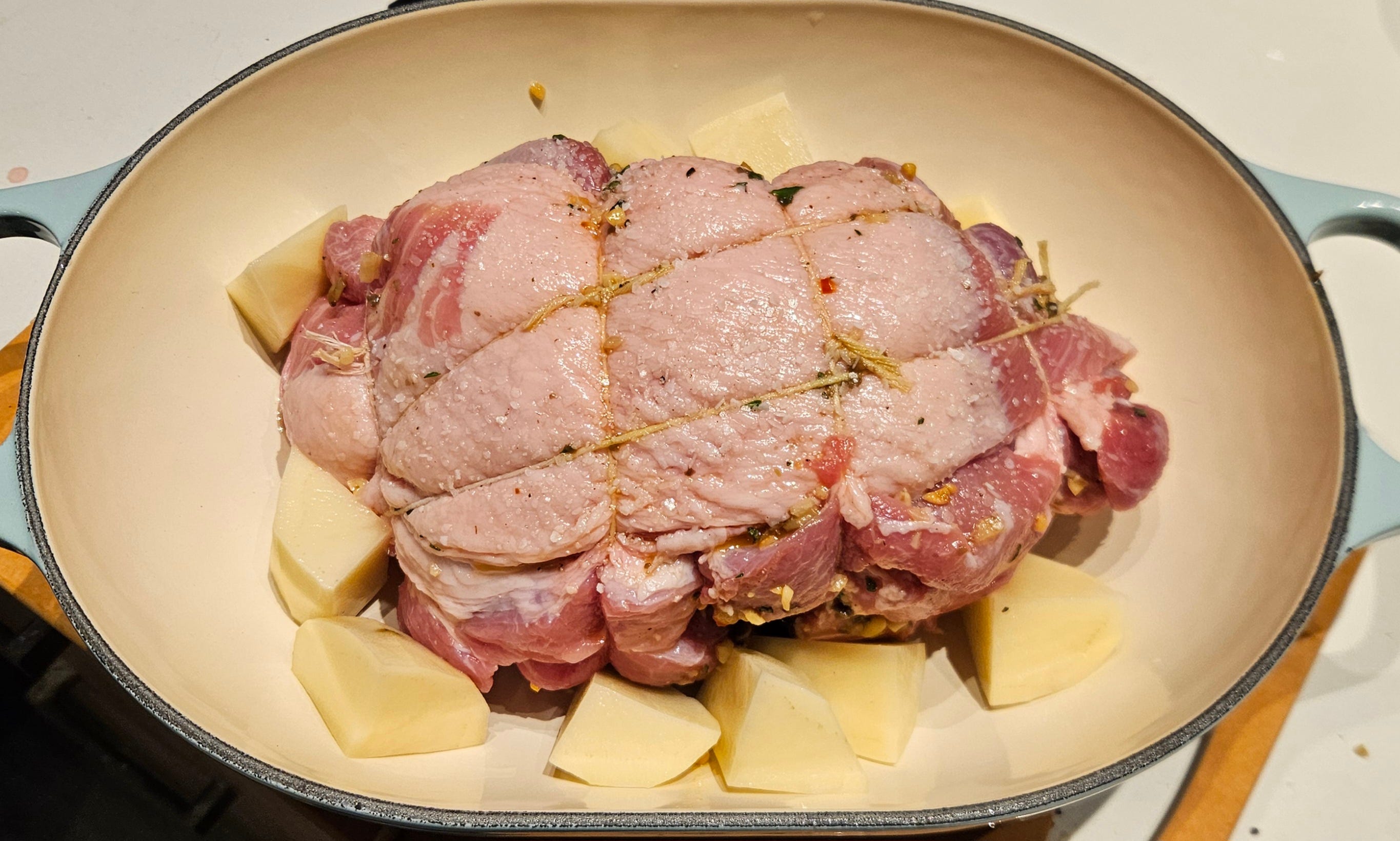
I added a few potatoes to the roasting pan Place the meat in a roasting pan and rub the outside with more olive oil, and season with salt & pepper.
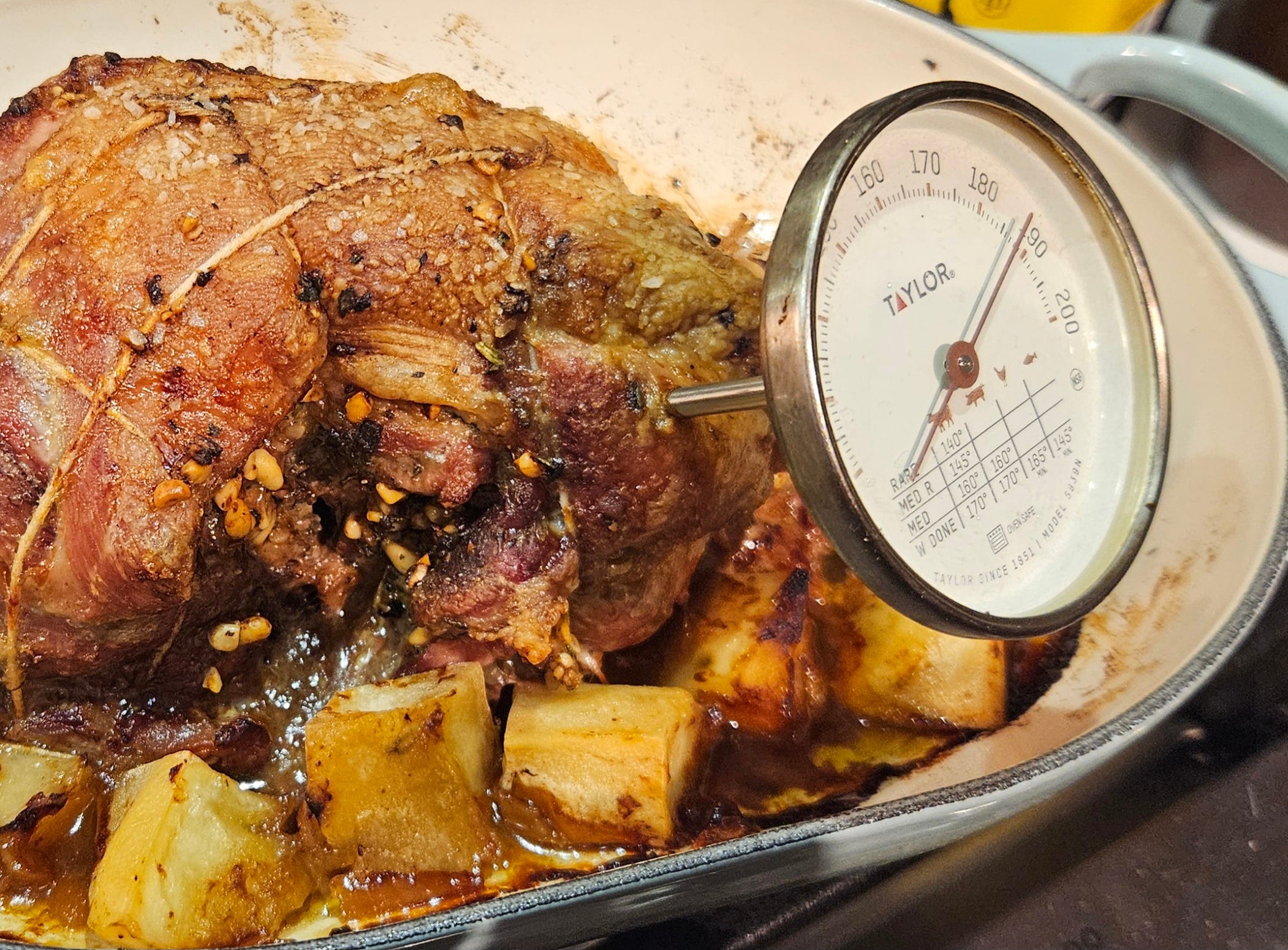
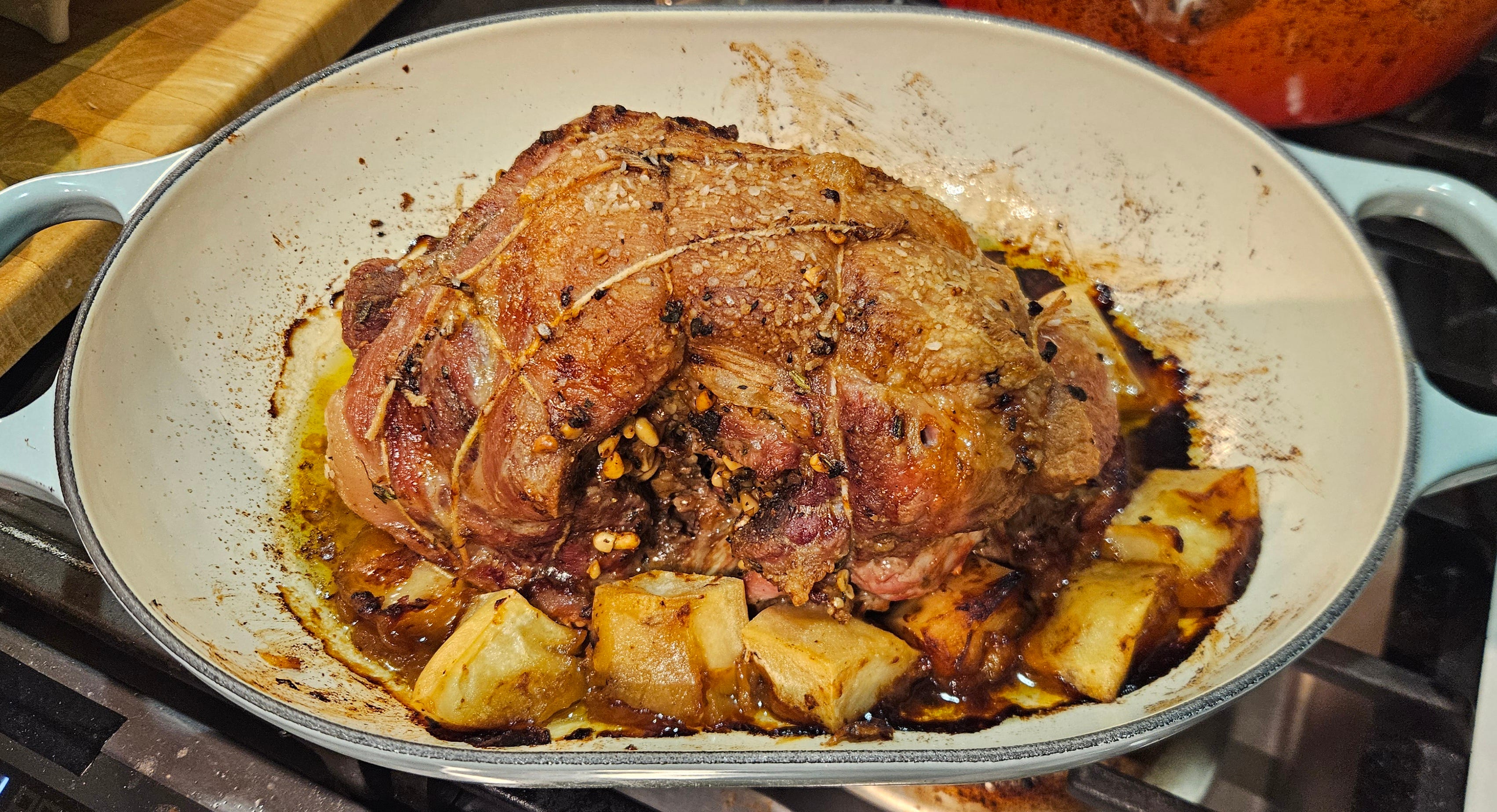
Put the roast in the oven (uncovered) for 20 minutes, then reduce the heat to 300°F/150°C and cook for an additional 2-3 hours, or until the meat reaches an internal temperature of at least 160°F/71°C (mine got up to about 190°F/88°C after a total of 2 hours and 20 minutes.)
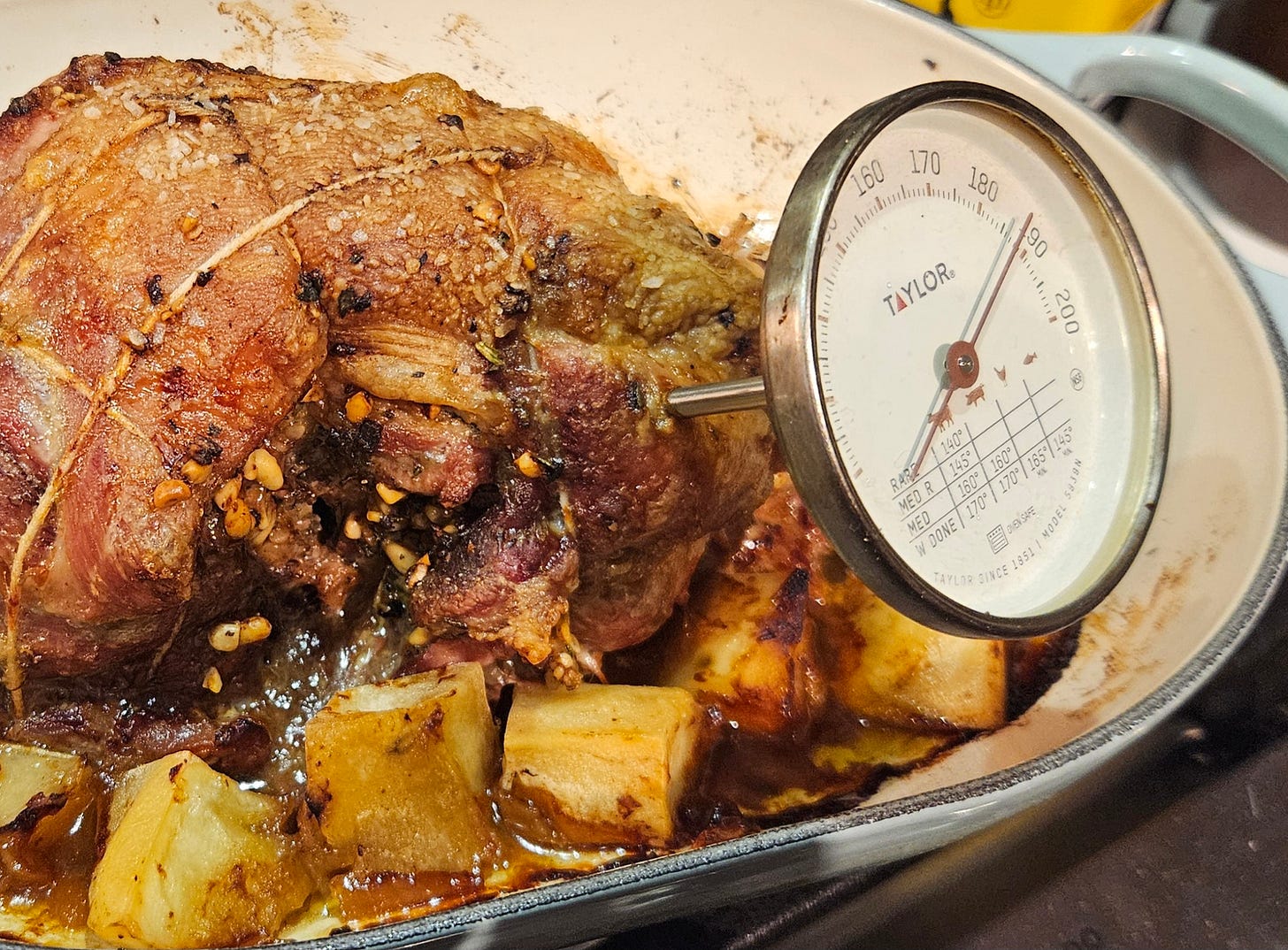
If the fat cap isn’t brown/crispy enough, you can put it under the broiler for an additional 3-5 minutes.
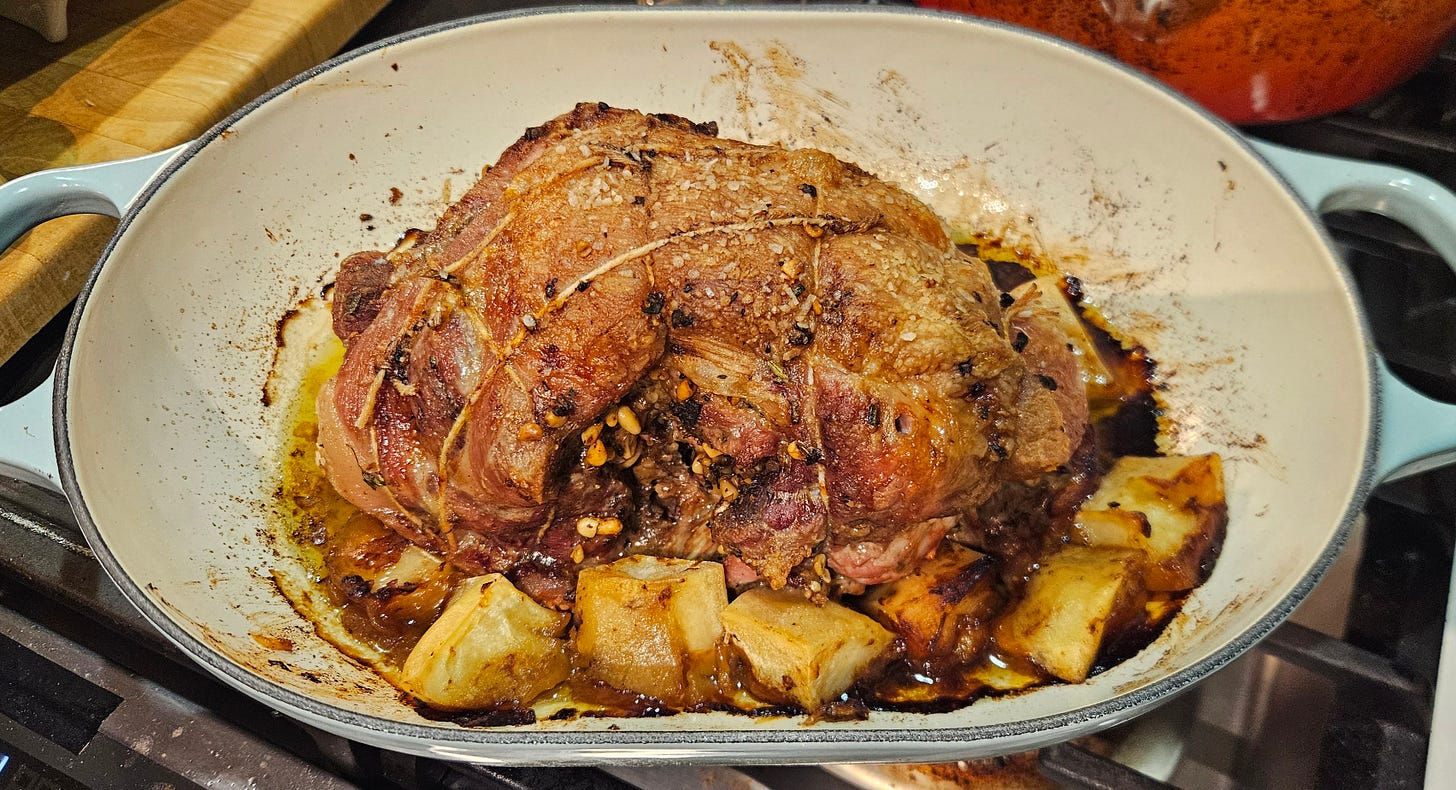
Remove the string and let the meat rest for 10-15 minutes before slicing.
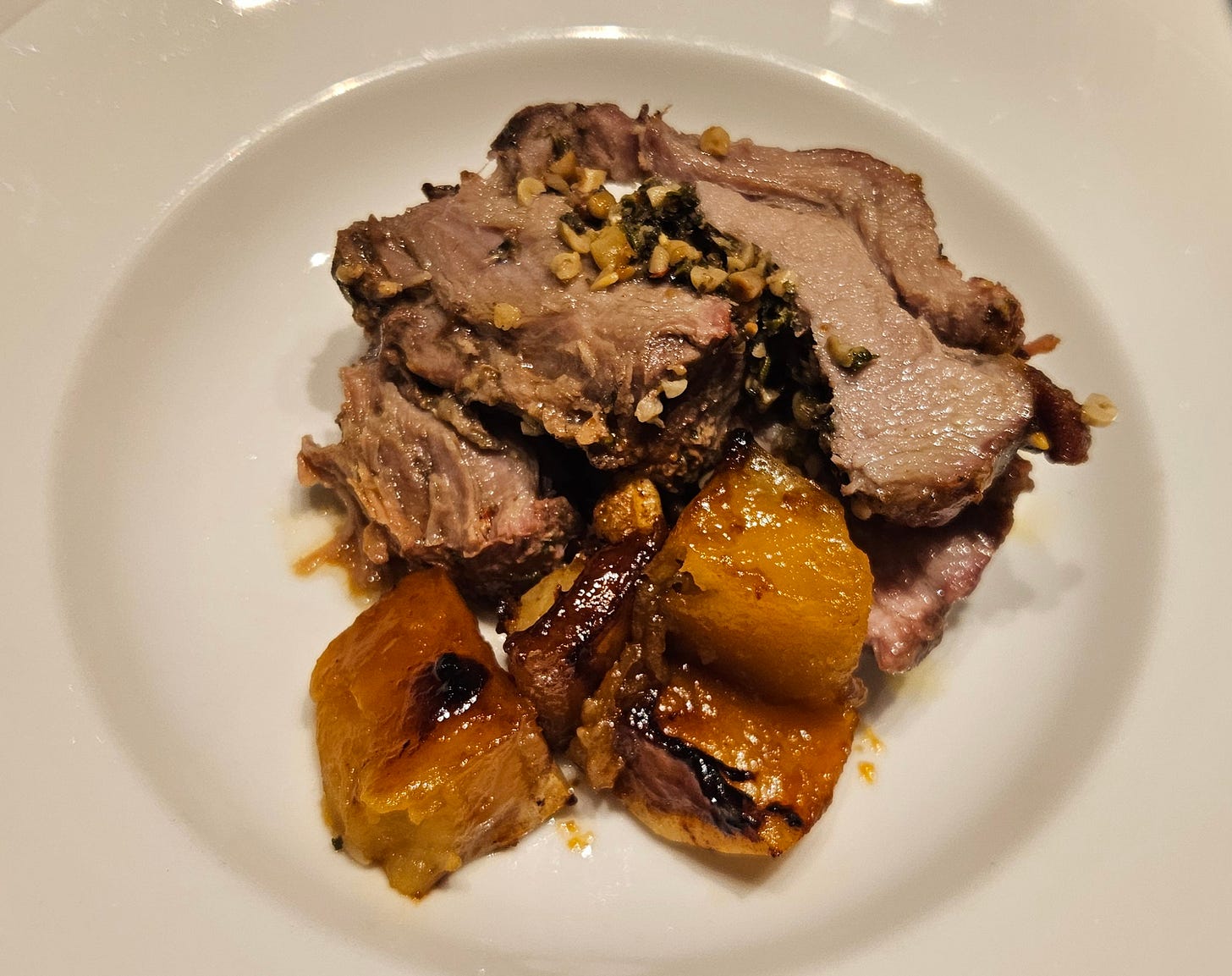
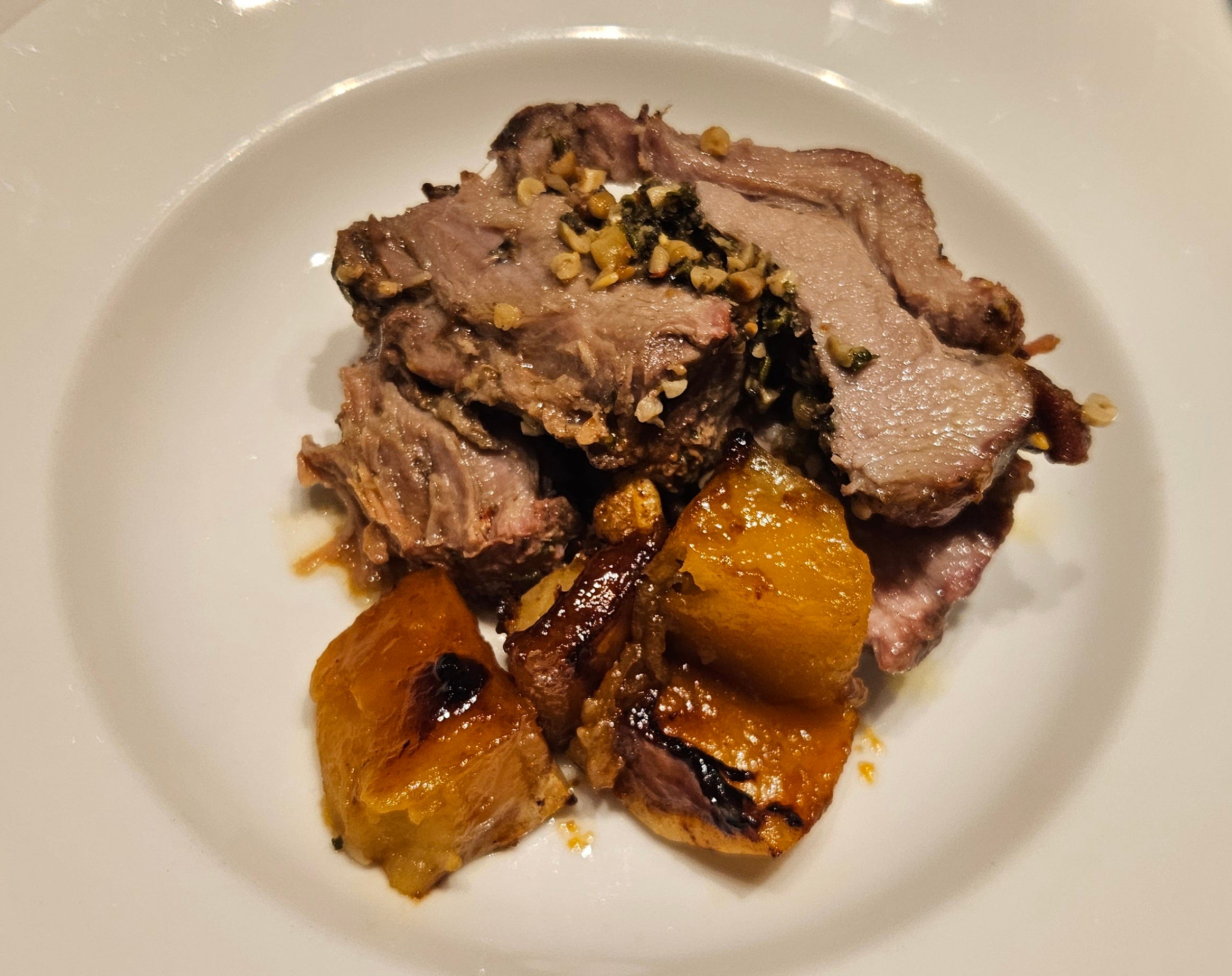
Serve with sautéed greens of choice.


Additional Notes
Depending on the cut of pork you’re using, you might be able to butterfly it, opening it up quite neatly, which then allows you to roll it back up into a nice, tight spiral. But when using pork shoulder, it usually ends up being a bit more haphazard, resulting in a bit of a messier “roll” that’s actually more like a “fold.”
Pine nuts are crazy expensive (my 50g cost $5.50!) so you may want to cut back a bit, or use a different nut (blanched almonds, chopped walnuts, etc.) or omit the nuts altogether (as with the original recipe.)
As I’ve done here, feel free to stuff your porchetta with whatever you like or have on hand and need to use up.
Wine Pairing
With a dish this rich and flavourful, I would suggest something medium-full to full bodied. And given that this is an Italian dish, you can’t go wrong with an Italian wine such as Chianti Classico, Vino Nobile de Montepulciano, Valpolicella Ripasso, or Primitivo.
Final Thoughts on Cookbooks
Cookbooks—especially those written by high-profile chefs or restaurateurs—seem to be having a moment. What I love about cookbooks is that they give me inspiration and ideas (because, you know me, I rarely—if ever—follow a recipe to the letter.) What I don’t like about cookbooks is that they’re really expensive, and many of the recipes are inaccessible or, frankly, unappealing to me. In fact, the Montreal Cooks book that this recipe came from only had a handful of recipes that I’d be interested in making. I also recently came across an old cookbook from the ‘70s from The Galloping Gourmet and there was not one recipe that appealed to me.
My preference is for cookbooks that focus on techniques and getting the basics right, rather than those that have complicated recipes, or those that require very niche ingredients. Once you master the basics, then you won’t actually need a recipe to cook something from scratch.
Some cookbook suggestions are:
How To Cook Everything by Mark Bittman
Cook With Jamie: My Guide To Making You A Better Cook, by Jamie Oliver
The Food Lab: Better Home Cooking Through Science by Kenji López-Alt
Better Homes and Gardens New Cookbook (the one withe the red & white plaid cover that our mothers and grandmothers had)
The Harrowsmith cookbooks are still my favourite. I think they’re still available. It was always my favourite magazine for cooking and life