
Lemon Meringue Pie
A review of Pastry, Meringue, and Curd/Custard

This is one of my favourite pies because it combines three things I love: crisp and flaky pastry, lemon filing, and meringue. The other reason I like it is because it uses the whole egg, so you don’t end up with any unused whites or yolks.
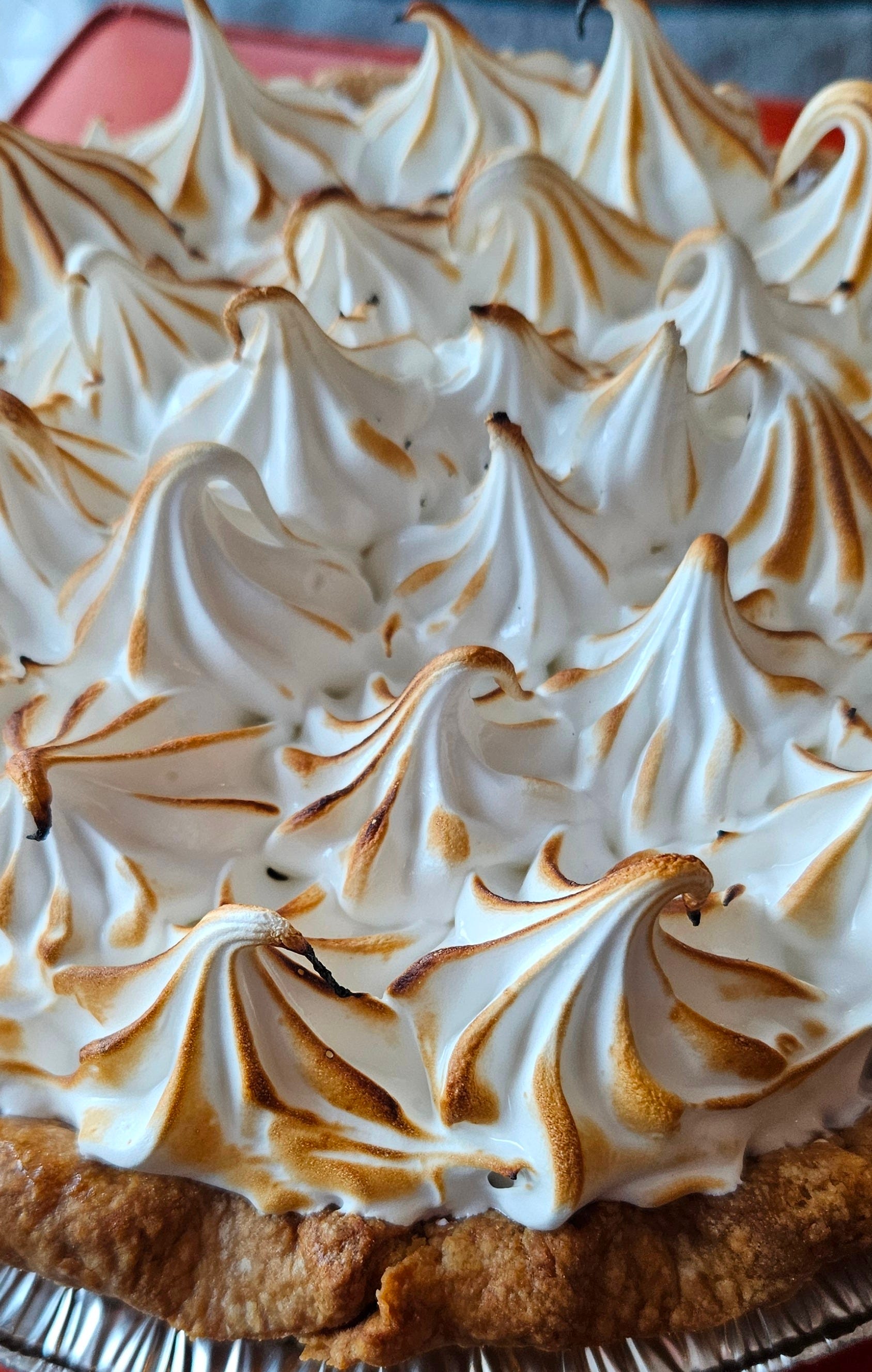
Since I’ve written about two of these things previously (and another, sort of) this will be a bit of a review with some links to previous posts. But that’s what cooking and baking are all about—learning how to make some basic things, then combining them according to your whims, or whichever ingredients you have on hand.
Pastry
Let’s talk about pastry first, since that’s where you’re going to start. You want to make your pastry ahead of time since it needs time to rest after making it and rolling it out, and time to cool after baking before filling it.
This pie uses a basic short crust pastry that is blind baked. I went into a lot of detail about pastry in my post from May 2024, so I won’t do that here, other than to give you the basic recipe.
Ingredients for one 9” pie shell
200g All purpose flour
100g cold butter (salted or unsalted)
55mL cold water
1 tablespoon brown sugar
1/2 teaspoon sea or Kosher salt (if you use unsalted butter, increase the salt to 1 teaspoon)
Method
Preheat your oven to 400°F/205°C and adjust the rack to the bottom third of the oven.
Dissolve the brown sugar and salt in the water, then put it in the fridge to keep it cold
Cut the butter into small cubes, then add it to your bowl of flour.
Using a pastry cutter, two forks, or your hands (I like to rub the butter into the flour) mix the butter into the flour, leaving a few small lumps of butter.
Add the water/sugar/salt mixture and toss the flour/butter mixture with your hands or two forks until the dough comes together.
Turn the pastry dough out onto a floured surface and gently press it together, folding it over itself a few times (this creates flaky layers.)
Press it into a flat disk, wrap in plastic, and let it rest in the fridge for at least 30 minutes, or up to 24 hours, before rolling it out. [I admit that I sometimes skip this step and roll the dough out right away, put it in the pie plate, then put it in the fridge to fully relax and chill before baking.]
On a lightly floured surface, roll the dough out so that it’s large enough to fit in a 9” pie plate with some overhang.
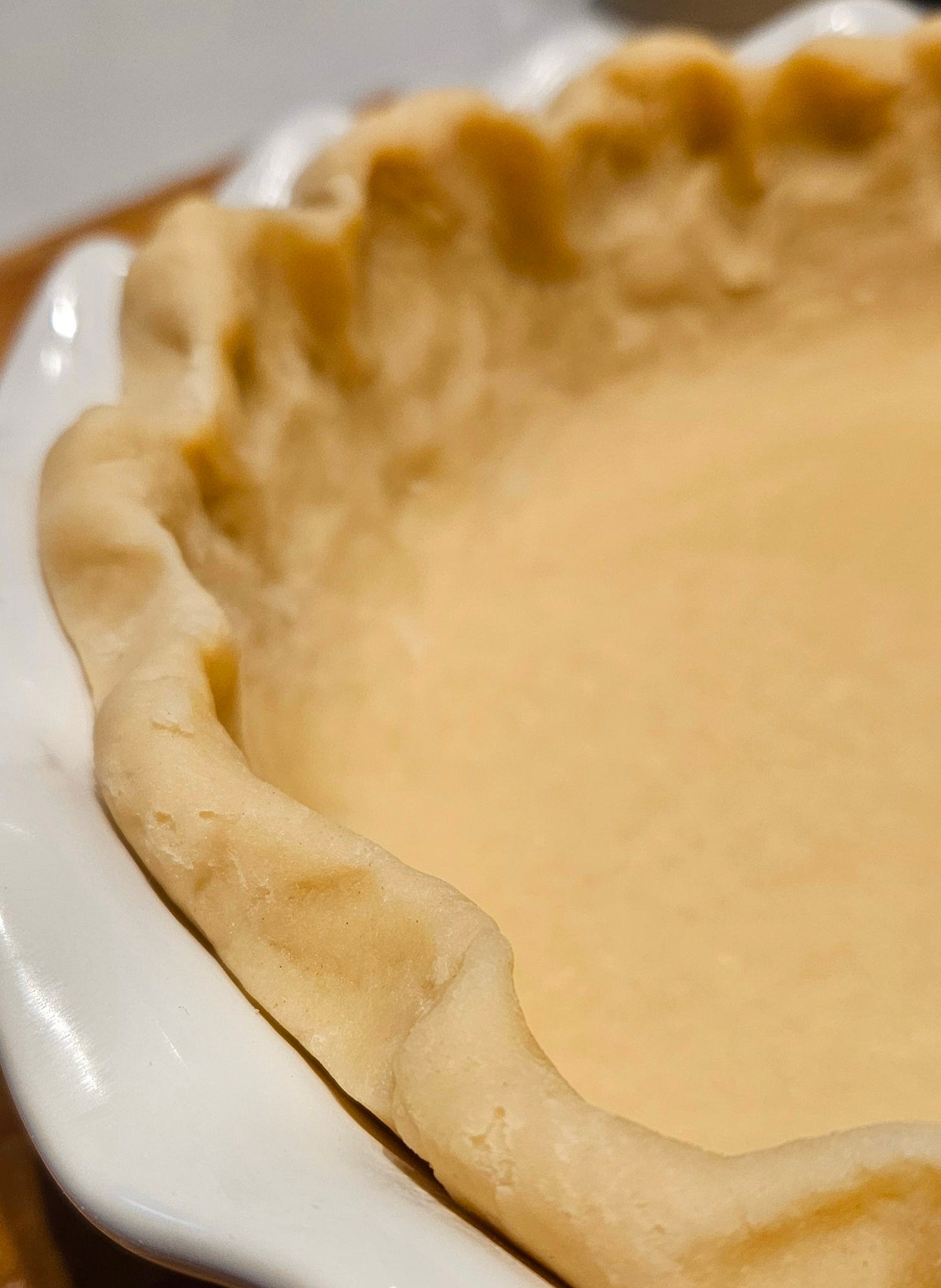
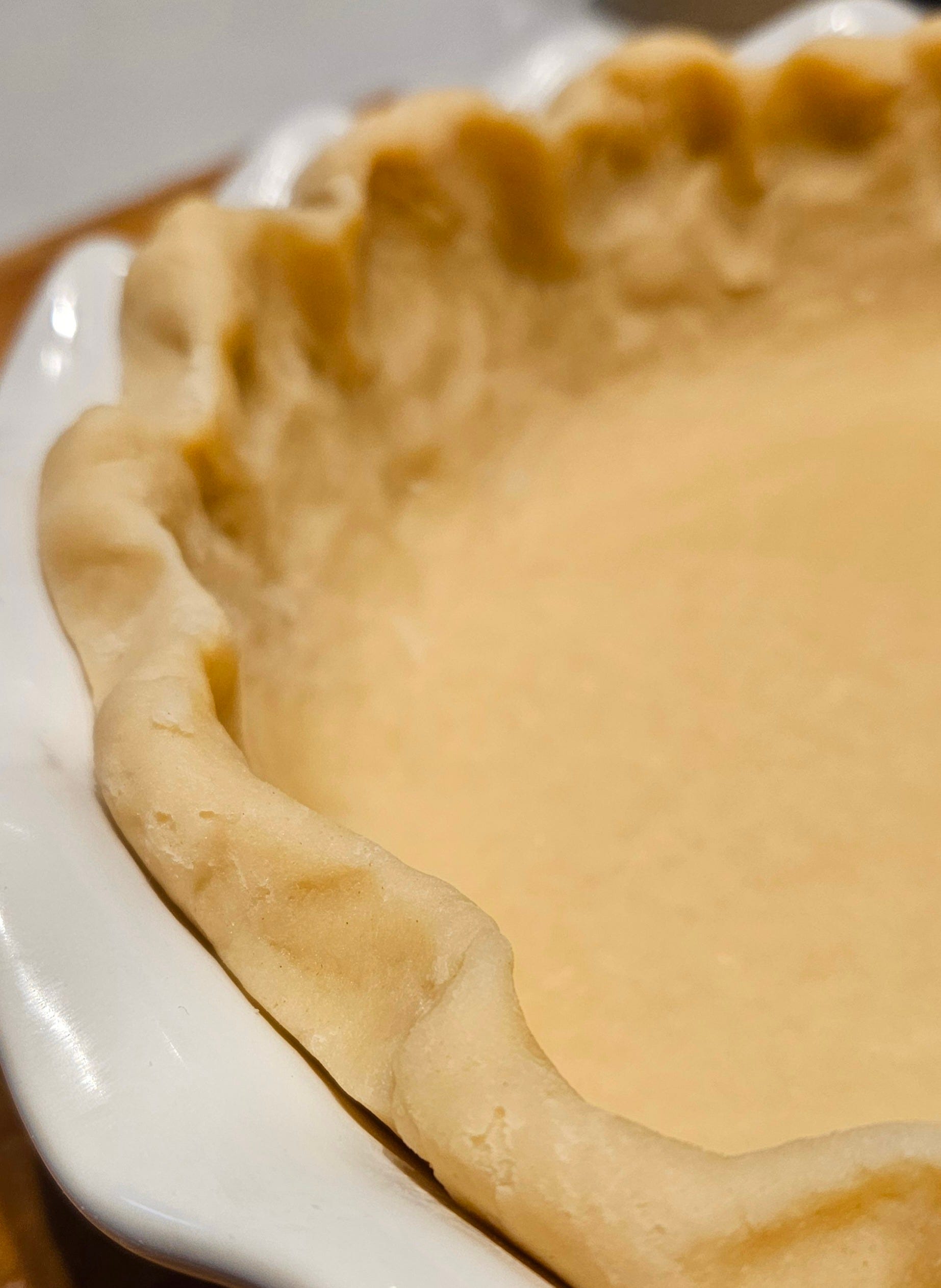
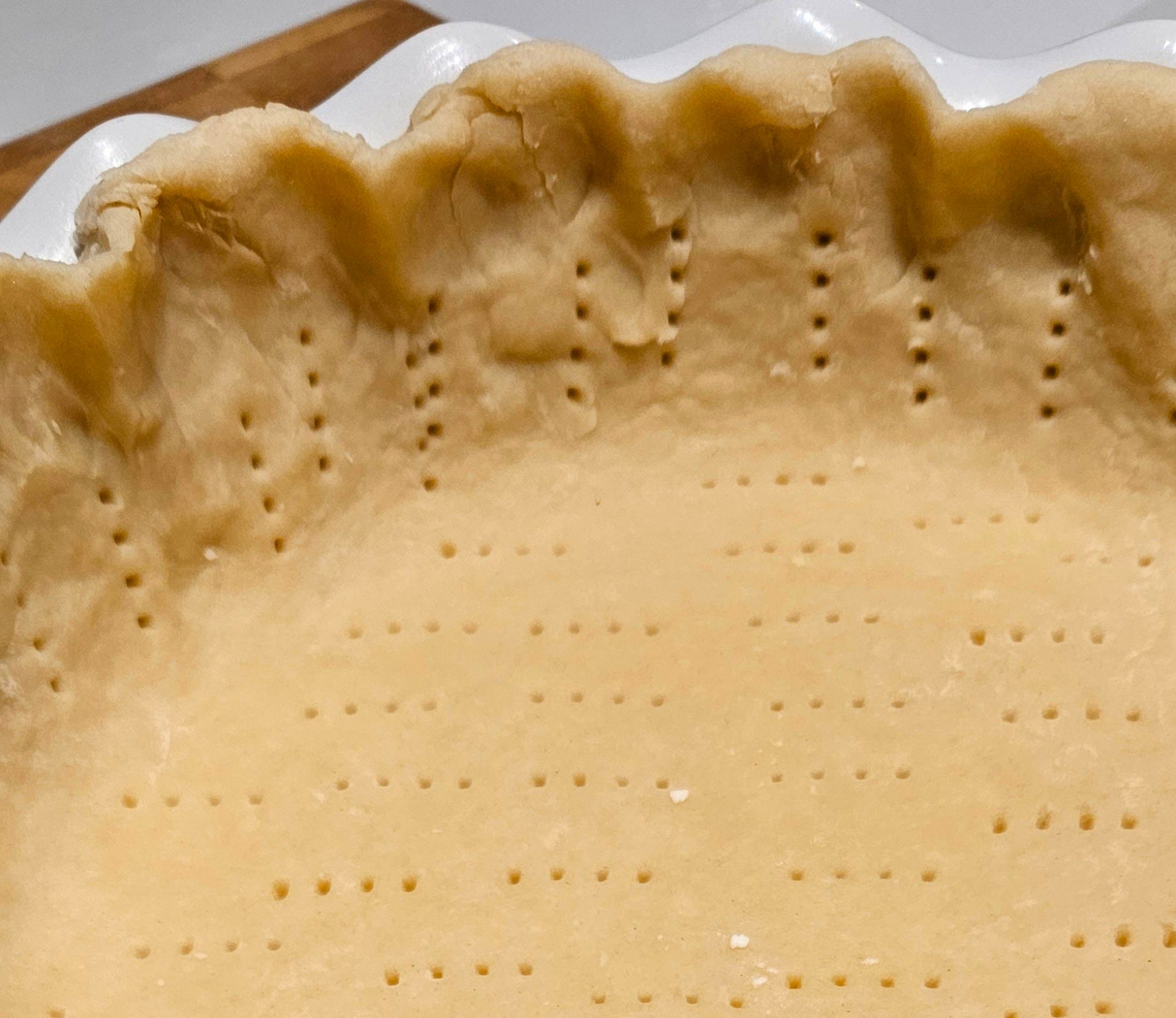
Even up the overhanging pastry by trimming off any excess, then crimp the edges along the rim of the pie plate.
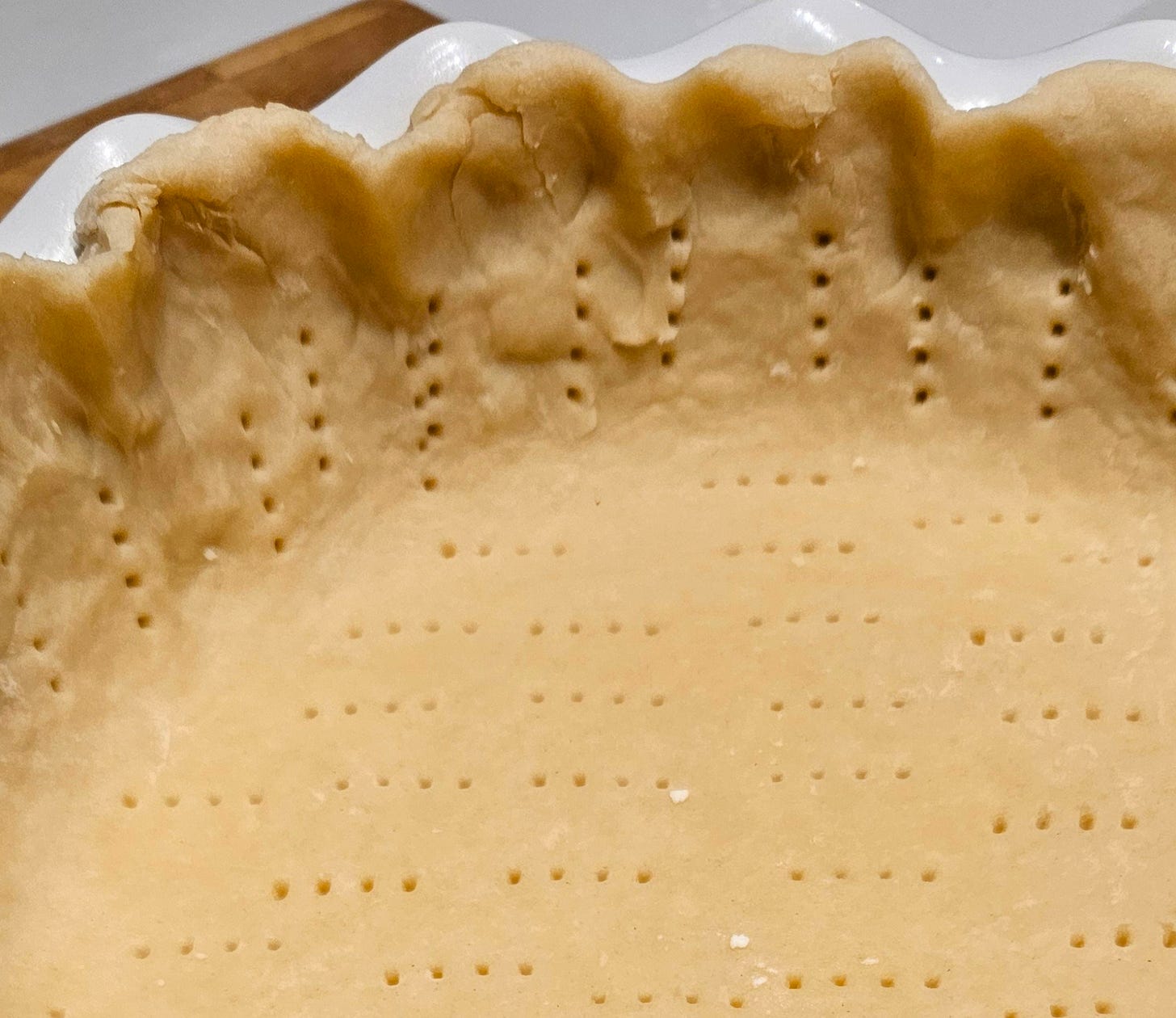
Using a fork, dock the bottom and sides of the pie dough. This will allow steam to escape and prevent the pastry from puffing up too much or warping
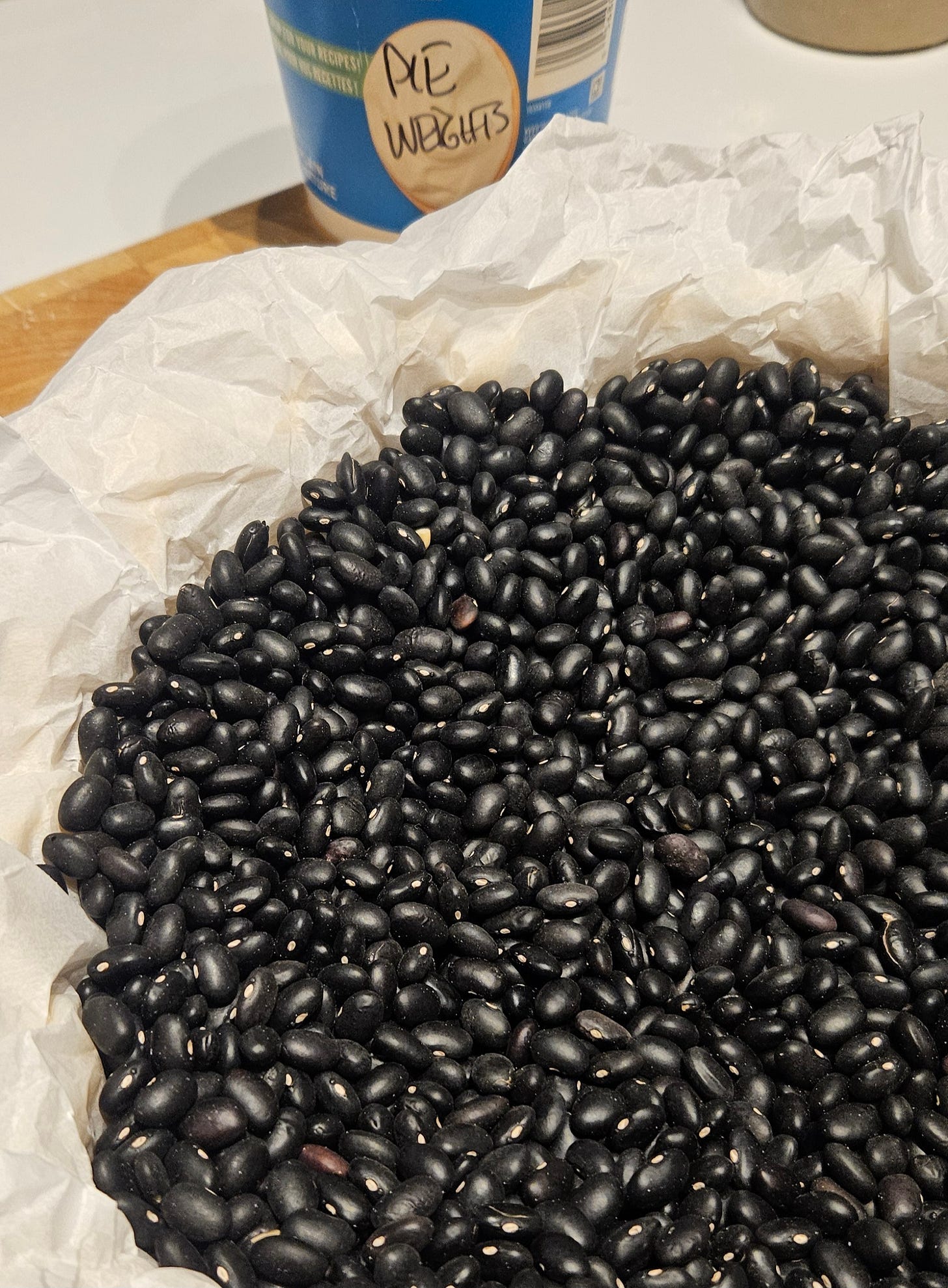
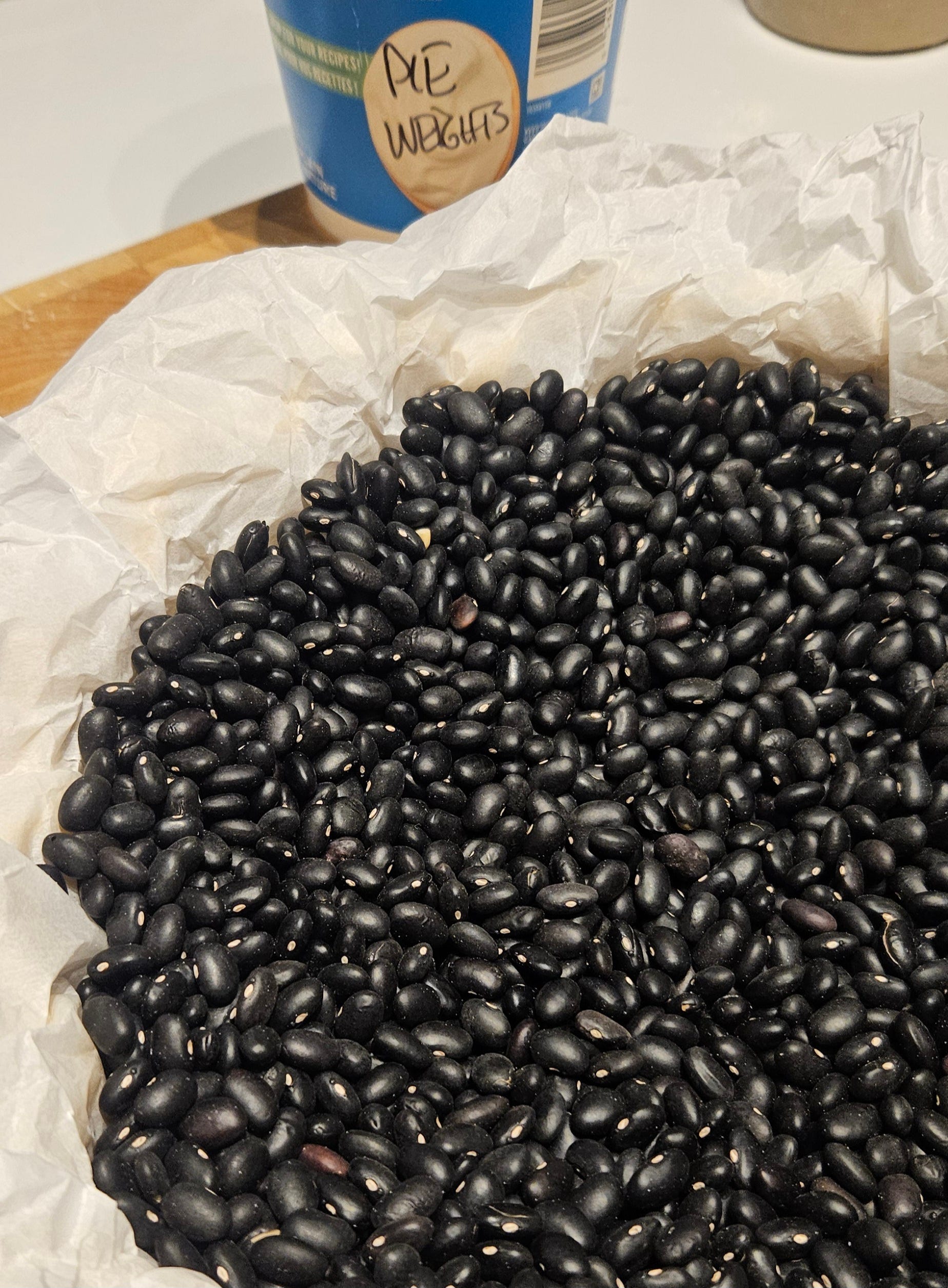
Cut off and then scrunch up a piece of parchment paper the size of your pie plate (with enough for some overhang.) Place pie weights on the parchment (I use dry beans, but you can also use rice or even sugar. These can be stored and re-used multiple times) and spread them out all the way to the edges of the pastry.
Put the pie plate on a baking sheet and place it in the oven.
Bake it for 20 minutes, then carefully remove the parchment and pie weights and return the pie plate to the oven.
Turn the heat down to 350°F/176°C and continue to bake the pie shell for another 20 minutes or so, depending on how dark you want it. It should be a light, golden brown.
Remove the pie plate from the oven and put it aside to cool on a rack at room temperature.
Making the Lemon Filling
When I wrote about Choux Pastry and Cream Puffs a few weeks ago, I made a thick custard to fill them with, and the method for this lemon filling is quite similar. Just like that custard, the juice is thickened with a combination of cornstarch and egg yolks. This filling is much easier and more forgiving than lemon curd.
Side Note: Curd is a term that defines a number of different things, usually the product of curdled milk into cheese (cottage cheese, ricotta, etc.) or mixing fruit juice with sugar and egg yolks to thicken it. So, Lemon Curd is a creamier and richer version of this pie filling. Since it only uses egg yolks as a thickener, it’s recommended to do it over a double boiler.
Ingredients for Lemon Filling
415 mL (about 1 and 3/4 cups) water
140 mL (about 1/2 cup) freshly squeezed lemon juice (3-4 lemons)
Zest of 1 lemon
248 g (about 1 1/4 cups) granulated sugar
42g (about 5 tablespoons) cornstarch
1/2 teaspoon kosher or sea salt*
4 large egg yolks
43 g (3 tablespoons) cold butter*, cut into small pieces
*If you’re using salted butter, omit the salt.
Method
In a medium saucepan, add the water, lemon juice, lemon zest, sugar, cornstarch, and salt and whisk to combine.
In a small bowl, whisk the four egg yolks, then add them to the pot and whisk again to make sure everything is well blended.
Turn the heat on to medium-high and whisk the mixture continuously until it starts to bubble and thicken, about 7-8 minutes, and the colour turns from cloudy yellow to a more translucent colour. The mixture should be thick like pudding.
Remove the pot from the heat and add the cubed butter, whisking to combine.
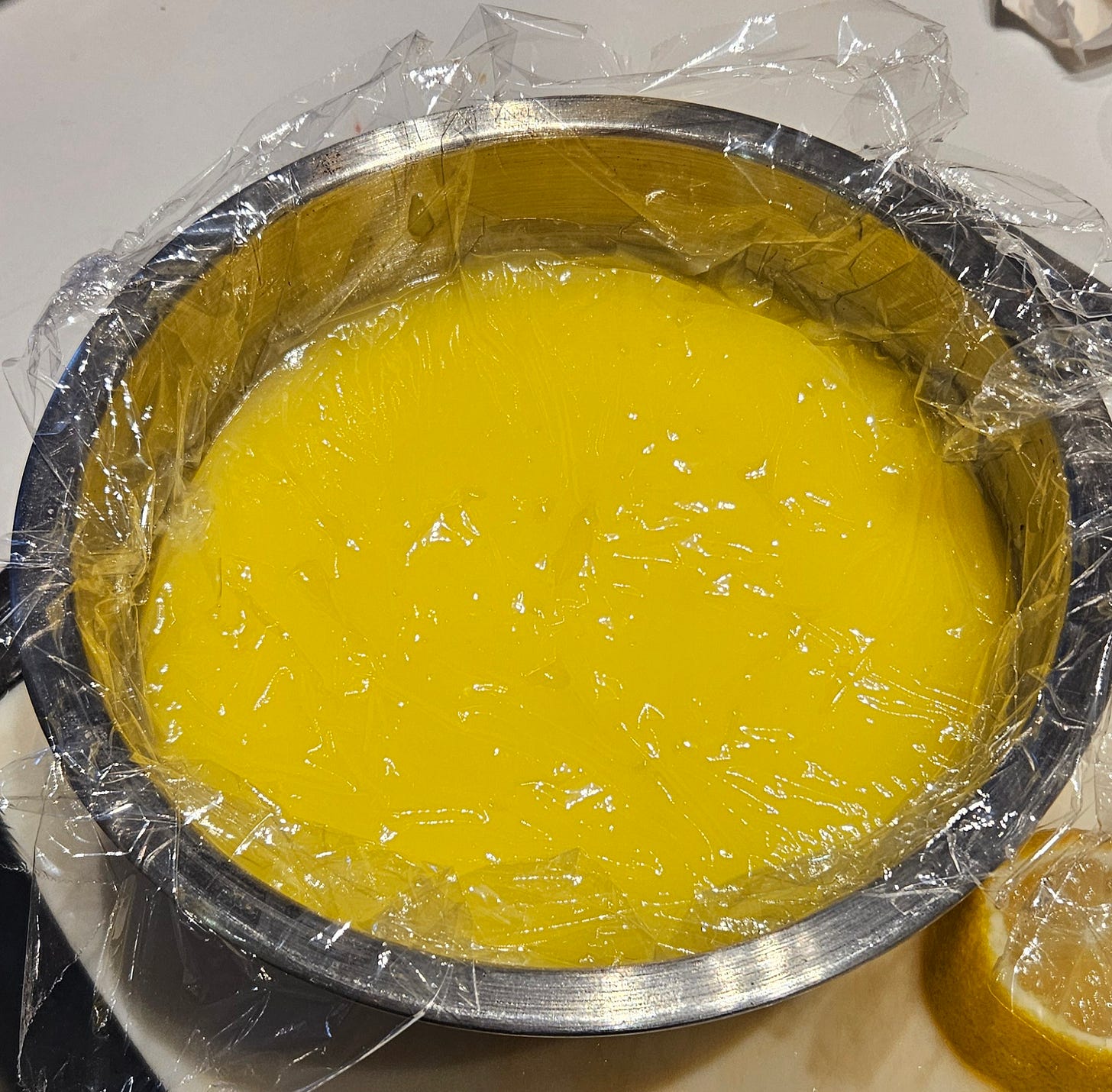
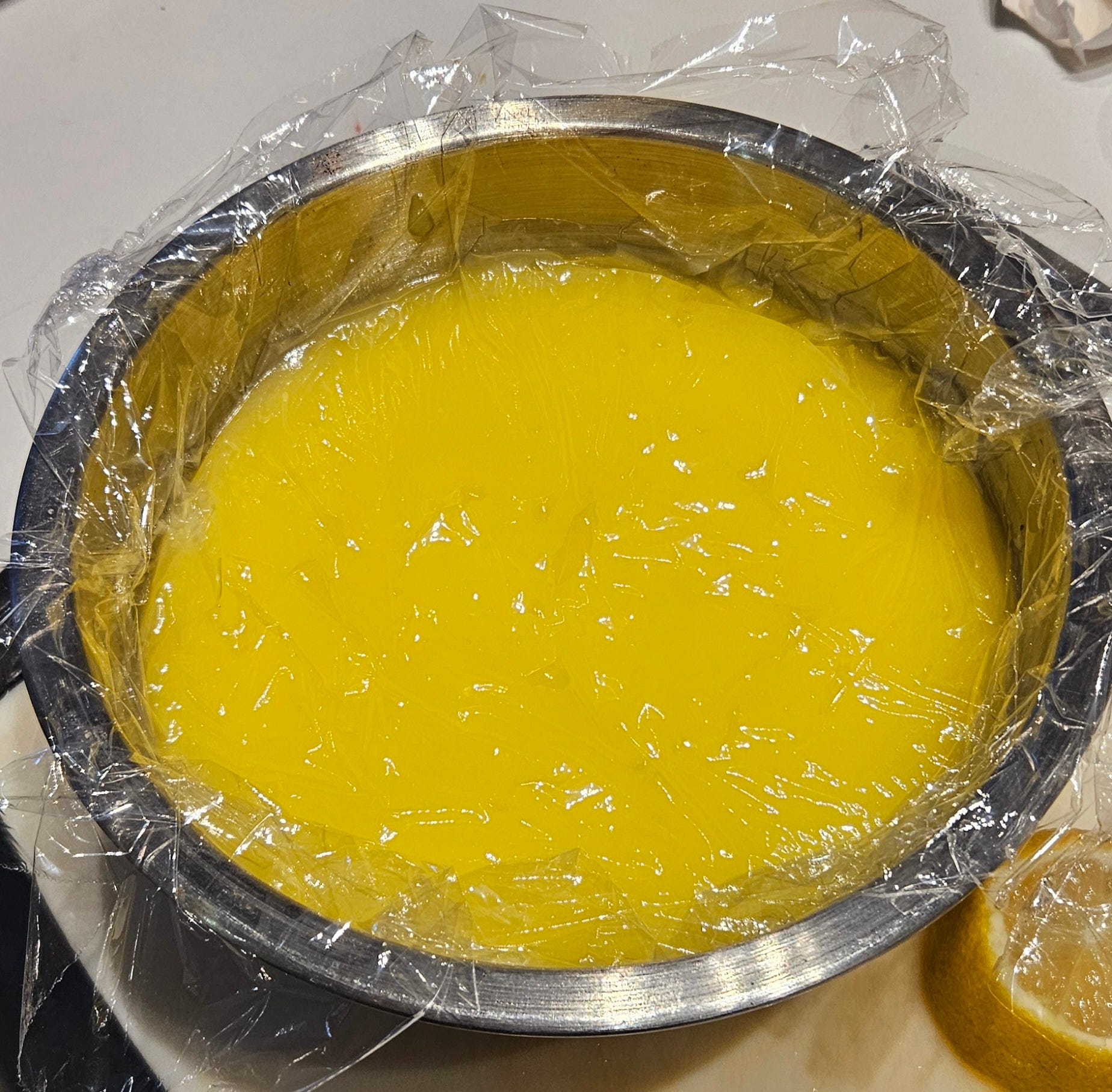
Strain the mixture into a bowl to remove any lumps or bits of cooked egg, cover the surface with plastic wrap, then refrigerate until it’s cool (but not solid/cold.)
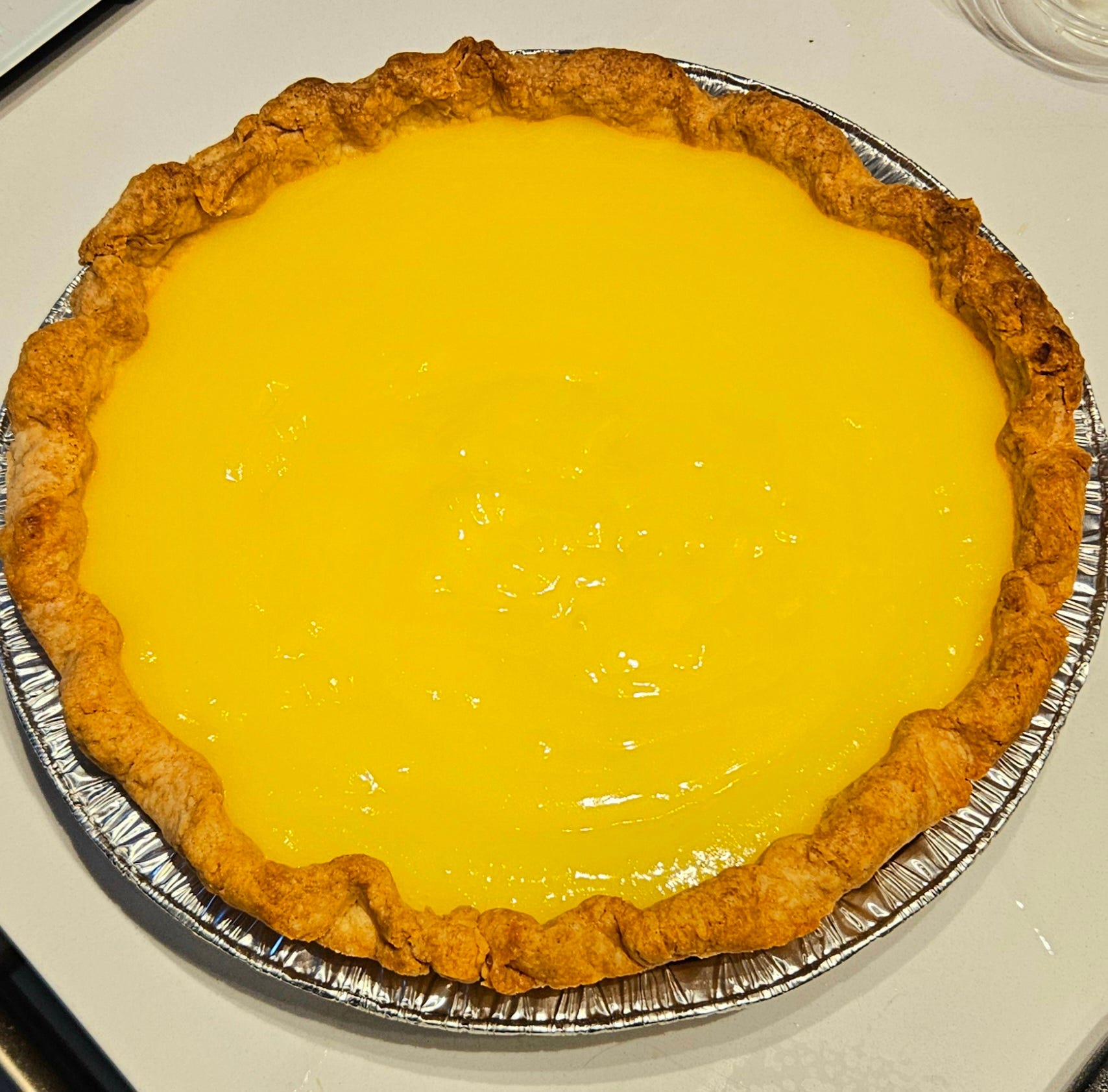
Once cool, pour it into the pie shell, cover the surface with plastic wrap again, and continue to chill in the fridge for at least 2 hours, or overnight.
Making the Meringue
I’ve written about making meringue in the past, but the type of meringue that you put on a lemon meringue pie is slightly different than the kind you would bake to make meringue cookies or Pavlova. The main difference is the amount of sugar used. For baked meringues/Pavlova, you use about 1/4 cup (50g) granulated sugar for every egg white. In the case of the meringue for a pie, you can cut that by 1/3 or one half. I wanted mine to be a little sweeter and not quite as eggy as the original recipe I consulted, so I upped the sugar a bit.
The method used for this is called Swiss Meringue. The whites and sugar are combined and heated over a double boiler until the sugar dissolves and the egg whites get “pasteurized” at about 140°F/60°C. You could use the French Meringue method (whip the eggs, then add the sugar) but if you do, you’ll want to finish with method 3.c. below to toast the meringue, rather than using the torch or broiler method.
Ingredients
4 large egg whites (approx. 120g)
100-150g granulated sugar (1/2 to 3/4 cup) - I used about 140g
Pinch of cream of tartar*
Pinch of salt
1/2 teaspoon vanilla extract (optional)
*If you don’t have cream of tartar, you can use a 1/4 teaspoon of lemon juice or vinegar. Cream of tartar is the term for tartaric acid, a by-product of the winemaking process. It helps to stabilize the egg whites and keep them from deflating.
Method
Set a pot of water about 2” deep to come to a simmer over medium heat. Choose a pot where your bowl will sit on top and not touch the surface of the simmering water below.
In the bowl of your stand mixer (or other bowl you’ll be whipping the egg whites in) combine the egg whites and sugar. Make sure the bowl is clean and free of any grease or the egg whites won’t whip up. I like to rub a wedge of lemon on the inside, then wipe it dry.
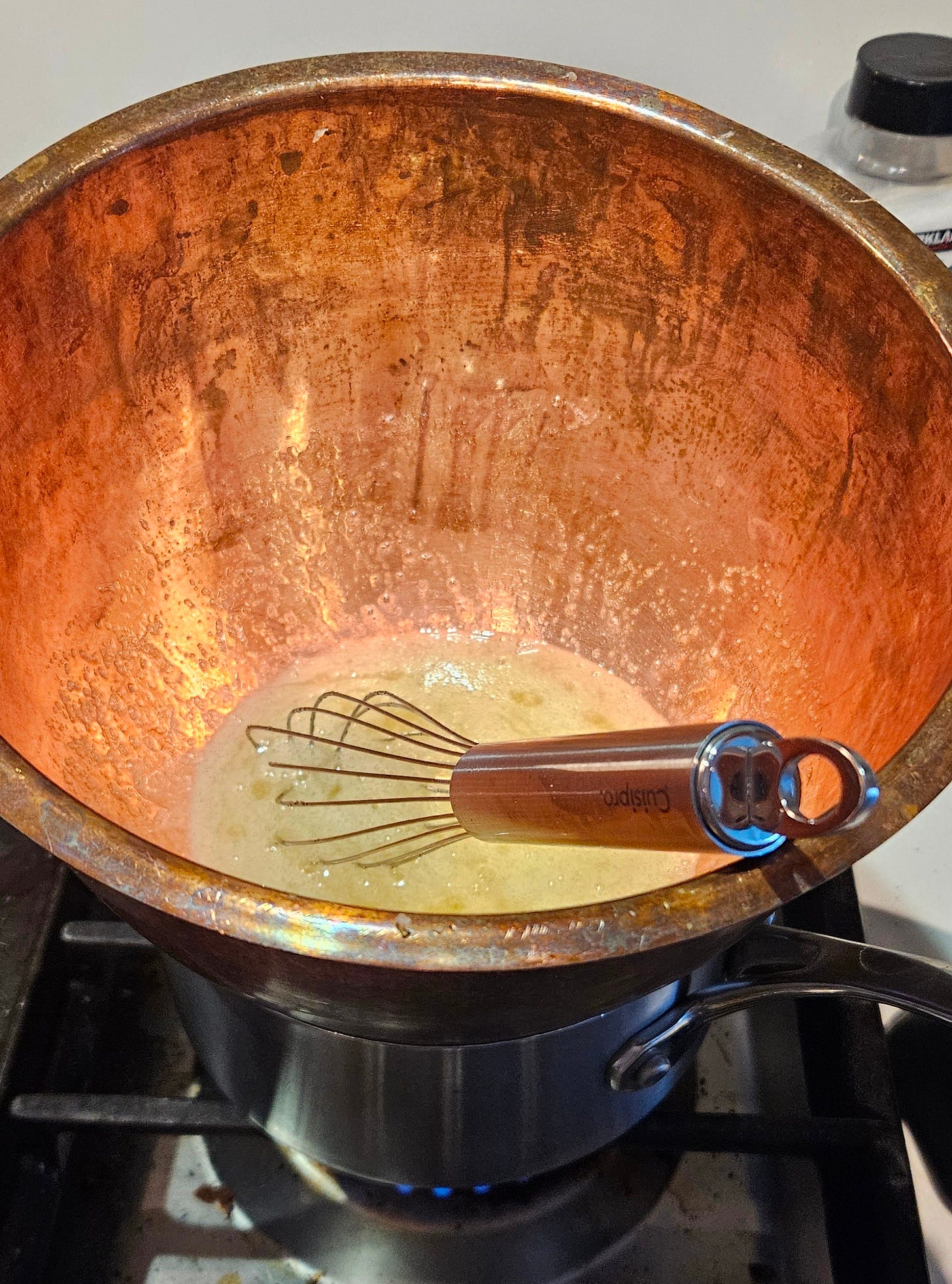
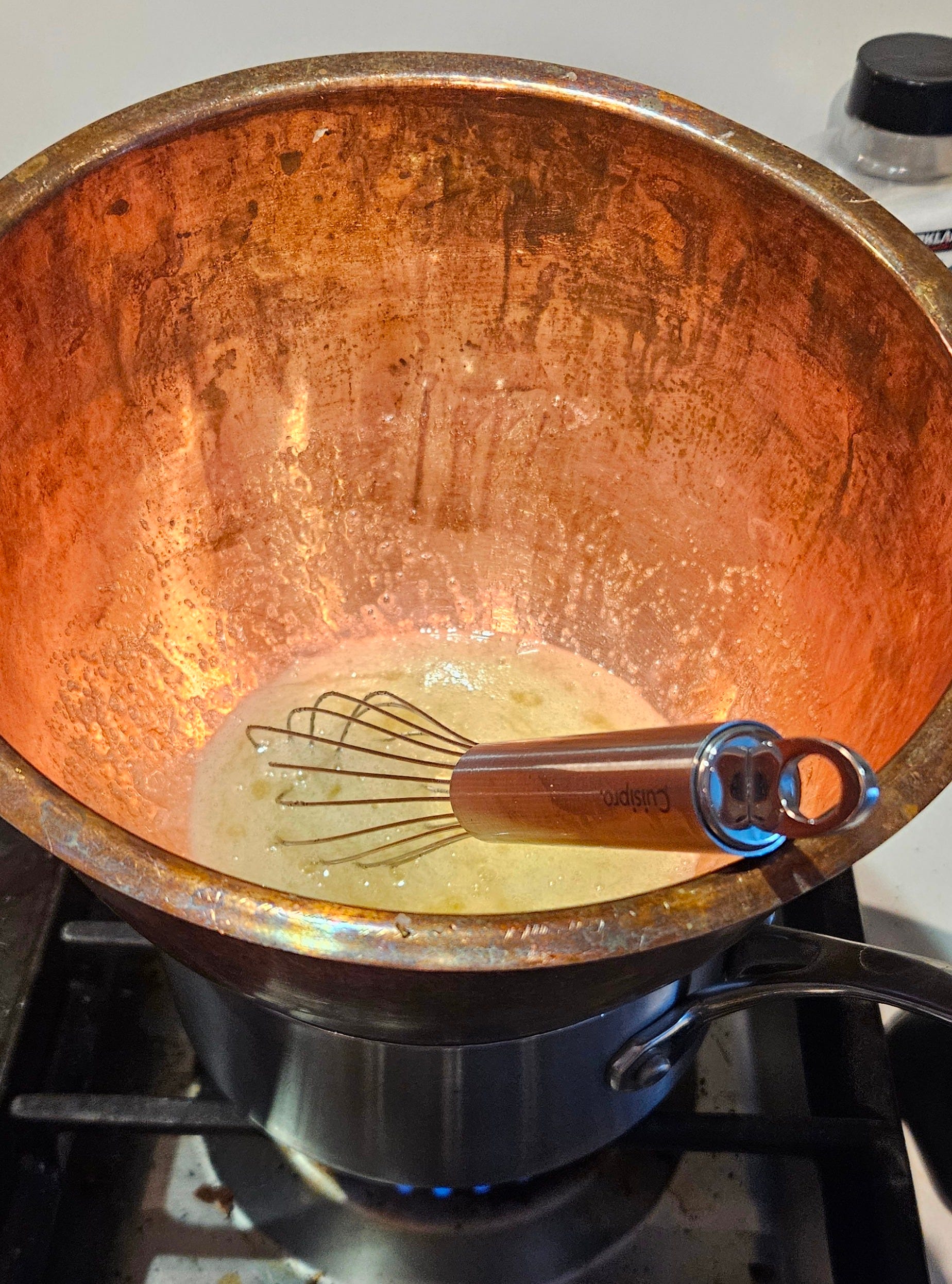
Put the bowl of egg whites and sugar over the pot of simmering water and whisk until all the sugar has dissolved and the temperature gets to about 140°F/60°C.
Remove the bowl and lock it into your stand mixer (if using) or onto the counter (if using a hand mixer.)
Add the cream of tartar and, using the balloon whisk, beat the egg whites/sugar until stiff peaks form. Start at a medium speed then increase it to full speed.
Add the vanilla extract and whip to combine.
Putting it all together
You can make the pie shell and filling up to a day ahead, but you want to wait until just before serving to make the meringue and put it on the pie.
Spoon the meringue onto the top of the pie, creating swirls, and ensuring it touches the pastry edges so that it doesn’t shrink.
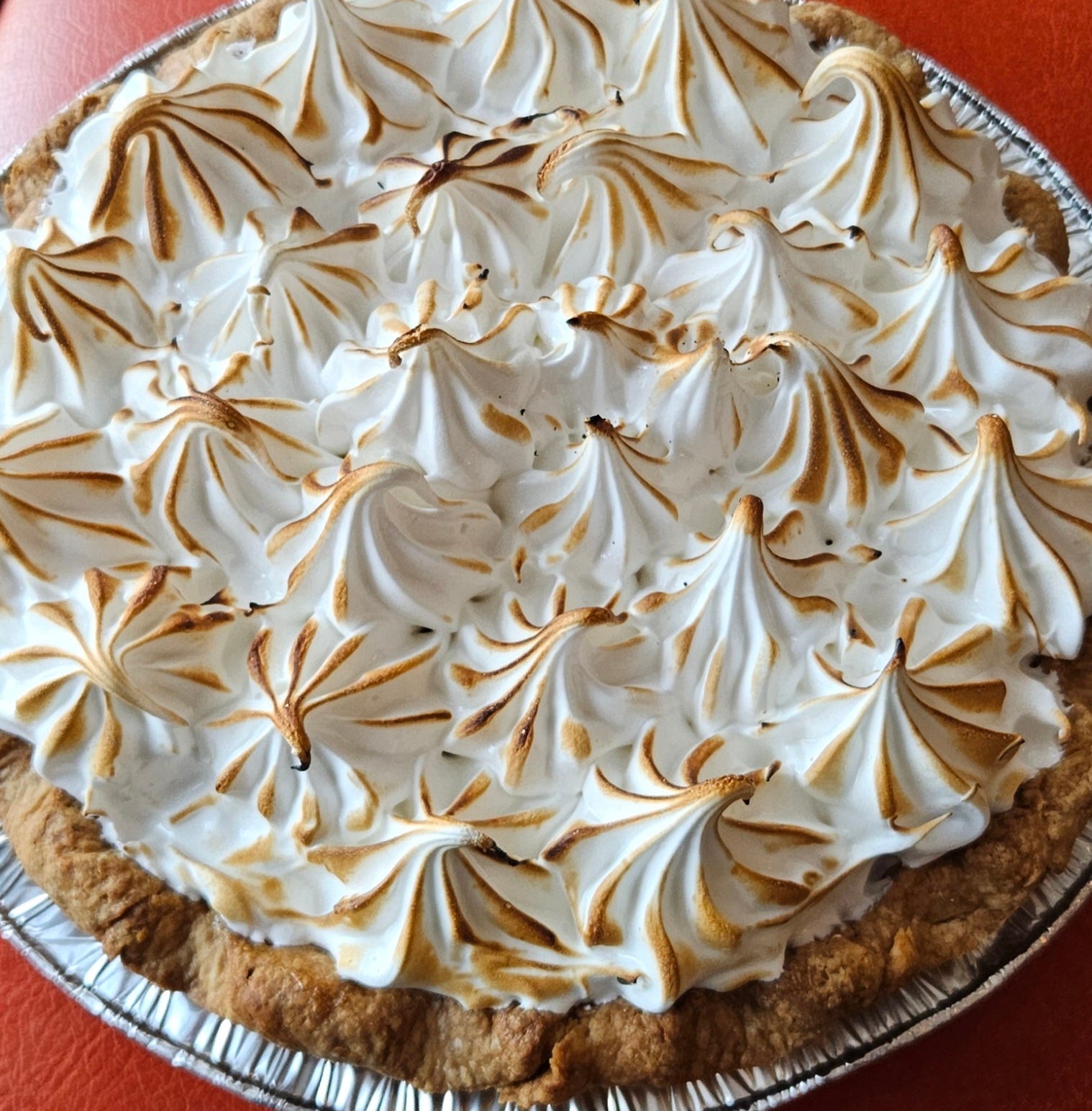
Alternatively, you can put the meringue in a piping bag and pipe rosettes all around the pie, which is what I did.
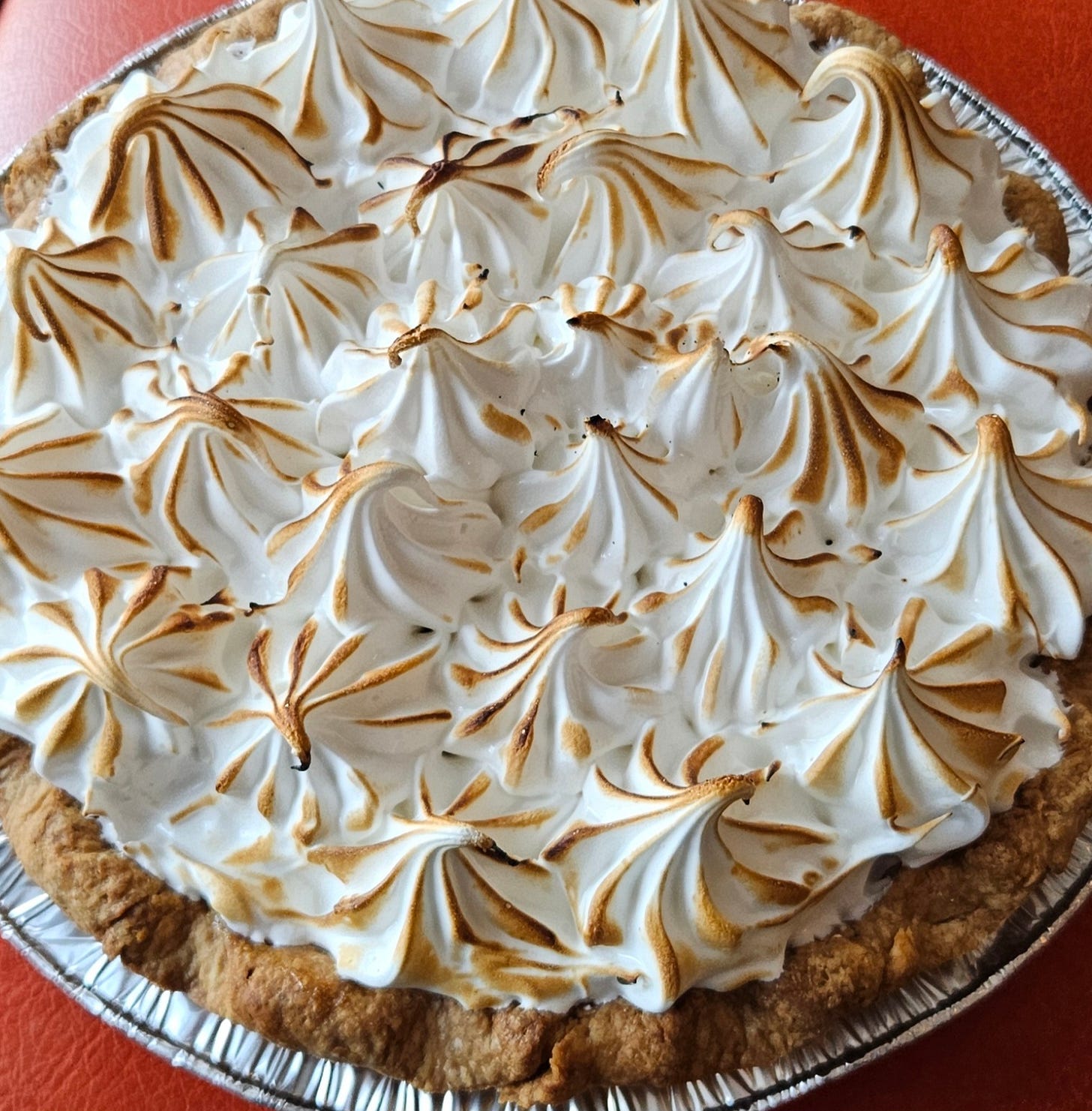
There are three ways you can toast the meringue:
Use a hand-held kitchen torch (the kind you’d use for crème brûlée) to lightly toast the meringue.
Place the pie under the broiler in your oven, about 8”/12cm from the burner for about 2-3 minutes until it’s nice and toasted. You really have to keep an eye on it so that it doesn’t burn.
Heat your oven to 400°F/205°C, then place the pie in the oven for 20-25 minutes until the meringue browns (use this method if you’re making French Meringue instead of Swiss.)
Place the finished pie in the fridge until ready to serve.
Chilling, Serving, and Storing
This pie is best served the same day you make it as the meringue will start to deflate over time and can develop a rubbery film on the outside. Keep it in the fridge until right before serving so that the lemon filling and meringue stay firm. Over time, the meringue might also start to “weep” (i.e., leak sugar syrup) the longer it’s kept in the fridge. That said, while leftover pie may not look its best, it still tastes amazing!
Wine Pairing
We don’t normally think about pairing wine with dessert, but this is the perfect time to drink an off-dry or even sweet wine, especially one with strong citrus notes. When you pair a sweeter wine (especially one well balanced with high acid) with dessert the wine actually tastes less sweet. So, for this I’d probably go with a Riesling from Germany or Ontario. Look for residual sugar content between 20-50g/L.
Charles Baker Picone Vineyard Riesling 2021, 10.8% ABV, 20g/L RS, $39.95
Dr. L Riesling 2024, 8.5% ABV, 41g/L RS, $17.95
[Notice the lower alcohol levels on those wines.]
While we’re on the topic of sugar content in wine, I want to put those residual sugar numbers into context. Typically, dry table wines will have sugar contents of 3-10 grams per Liter. That’s the equivalent of <1 teaspoon to 7.5 teaspoons per bottle, or 1.5 teaspoons per 150mL/5oz glass (at the most.) Contrast that with cola, which has 39g of sugar per 355mL can, which would be 109g/L or 22g (5.5 teaspoons) per 150mL serving. So, when you see the residual sugar number on a bottle of wine being even as high as 50g/L, that’s not even half as sweet as cola. And your perception of that sweetness will be moderated by the acidity in the wine, as well as drinking it alongside something sweet, like lemon meringue pie. So please, don’t turn your nose up at wines with higher levels of residual sugar; they have their time and place in a meal.