
Cookware
My favourite pots and pans

With limited storage space, I have to be sure that whatever pieces of cookware I bring into my kitchen, they are items I’ll be using regularly. I don’t typically fall for fads and like to keep items as long as possible, as evident by the four types of pots and pans I use most regularly.
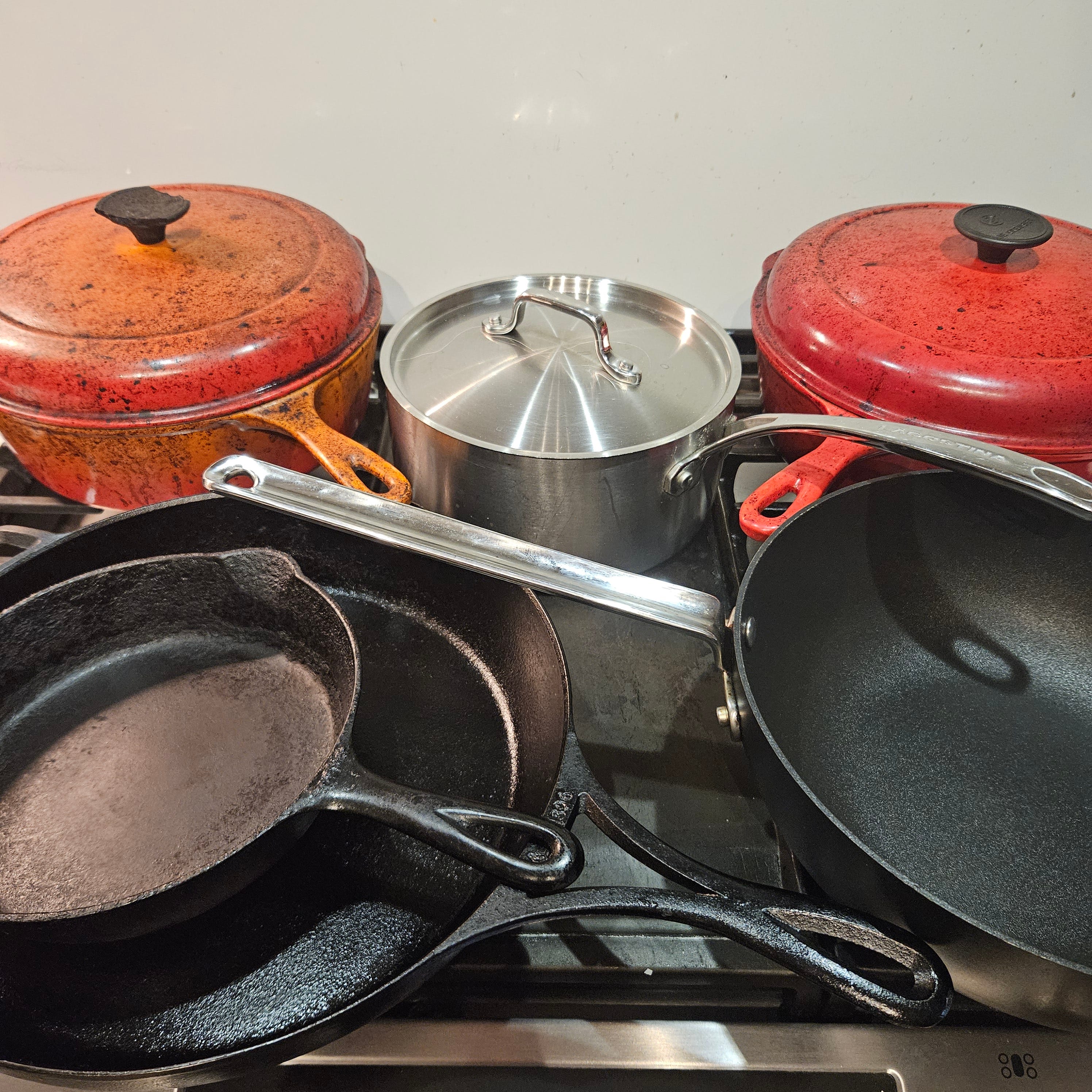
When I used to work in a cookware store I was often asked whether it’s better to buy a matching set of pots and pans, or to buy individual pieces. My answer (and to be honest, my answer to almost any question I’m asked) is “it depends.”
Sets vs Individual Pieces
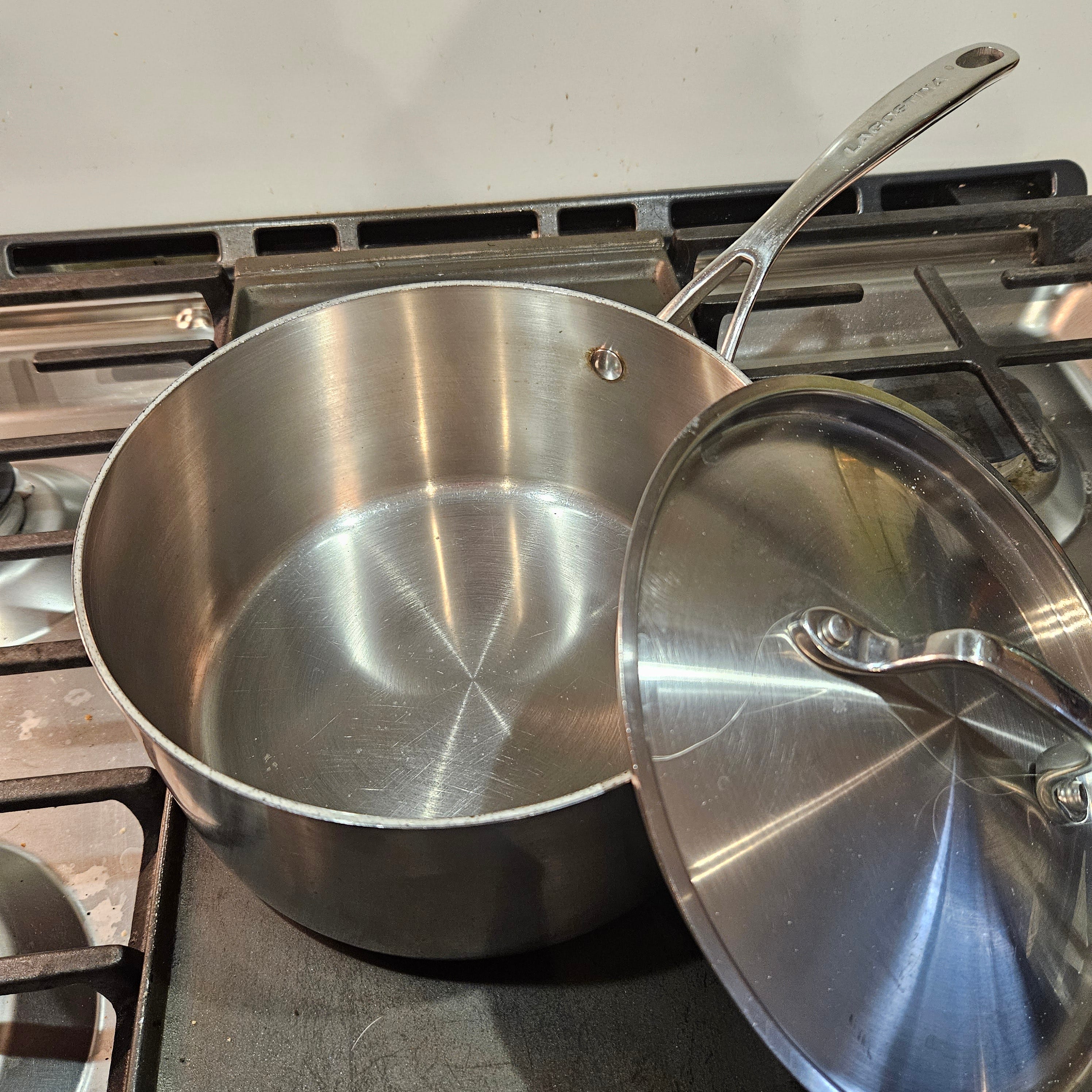
Let’s talk about cookware sets first. I actually do own a set of cookware that I bought about 15 years ago. It’s nothing fancy (Lagostina) but of good quality, and to be honest, the reason I bought it was because it was the only brand name (at the time) I’d heard of that was in a price range I could afford (I’d also heard of All-Clad, yet that was way out of my price range at the time.) The Lagostina were labeled as “professional clad,” so they were similar in quality to the All-Clad that I couldn’t afford. And that’s one of the main reasons someone might want to buy a certain set of cookware: price point. You’re going to get a lot more for our money when you buy a set vs buying pieces of similar quality individually. And there’s the added bonus (if this is important to you) that everything matches. The downside is that you might get a bunch of sizes/styles of pots that you’ll rarely, if ever, use. So how much of a deal is it then? You could have bought two pots of better quality that you’ll use every day for the same amount of money. So, I guess your answer is whether you want to spend your money on quantity or quality.
Tip: When a cookware set says “11-piece set” that number includes the lids, so it’s usually six pieces and five lids. Often, the lid for the largest pot will also fit the frying pan, but do check that.
Cookware quality
What is meant by “quality” when it comes to cookware? First, it’s how well and evenly it heats up, that it doesn’t warp over time (more on this later,) and that it will hold up over time, especially things like handles, lids, and interior finish. The thickness and the material it’s made of also makes a difference. The more layers of metal in a piece of cookware, the heavier it will be, the better it will conduct heat, the longer it will last, and the more expensive it will be. Another price factor will be whether those layers go all the way up the side of the pot, or whether they are just on the bottom. You really do get what you pay for.
Materials
What your cookware is made of (interior and exterior) is important as it will affect heat conduction, durability, ease of cleaning, non-stick properties, etc. Here are some of the most common materials:
Aluminum: Really great for heat conduction, but can react with acidic foods and impart a metallic taste to your food if left in there too long. It’s also quite soft, so it will bend and dent, especially when it’s hot. Many cookware brands will have an aluminum core so that you get the benefit of the heat conduction without the other drawbacks. They don’t work on induction cooktops since they are non-magnetic. You can’t put pressed or cast aluminum pans (or utensils) in the dishwasher as the soap eats away at the finish and makes them dull, though if something is made of anodized aluminum it can withstand the dishwasher.
Stainless steel: Very popular, economical, doesn’t heat up particularly well, can be a pain to clean - especially when things get baked onto the surface. Food can stick if you don’t heat it up well enough beforehand. There are lots of cool videos online that show that a small amount of water should bead up and dance around the surface of the pan, letting you know the pan is ready to cook on. The adage “Hot pan, cold oil: food won’t stick” applies here. Most high-end cookware will be made of stainless steel on the outside and will have a core of aluminum, so you get the best of both worlds in one pan. Depending on the amount of nickel used in manufacturing, some stainless steel can’t be used on induction cooktops. Best way to check is whether a magnet will solidly stick to the bottom of the pan.
Copper: Fantastic heat conduction, beautiful, but very expensive. It will also tarnish over time (unless it has a coating on it, though that can wear away.) All-Clad has a line of cookware that has copper sandwiched in between layers of stainless steel, which is fantastic (if you can afford it.) 100% copper cookware can’t be used on induction cooktops because it’s not magnetic.
Cast iron: Inexpensive, lasts forever, fantastic heat conduction, can become (almost) non-stick over time with proper care and seasoning*. You can’t put it in the dishwasher. Once it’s well-seasoned, it’s very easy to clean (yes, you can use soap on a well-seasoned cast iron pan.) It does need a bit more TLC than other materials, but it’s not difficult or time consuming. If not dried and oiled properly after washing it can rust, but the rust can be scrubbed away and the pan brought back to life. Cast iron can react with acids (e.g., lemon juice, tomatoes, wine) so if your recipe calls for those, you need to add them right at the end and not cook them for very long.
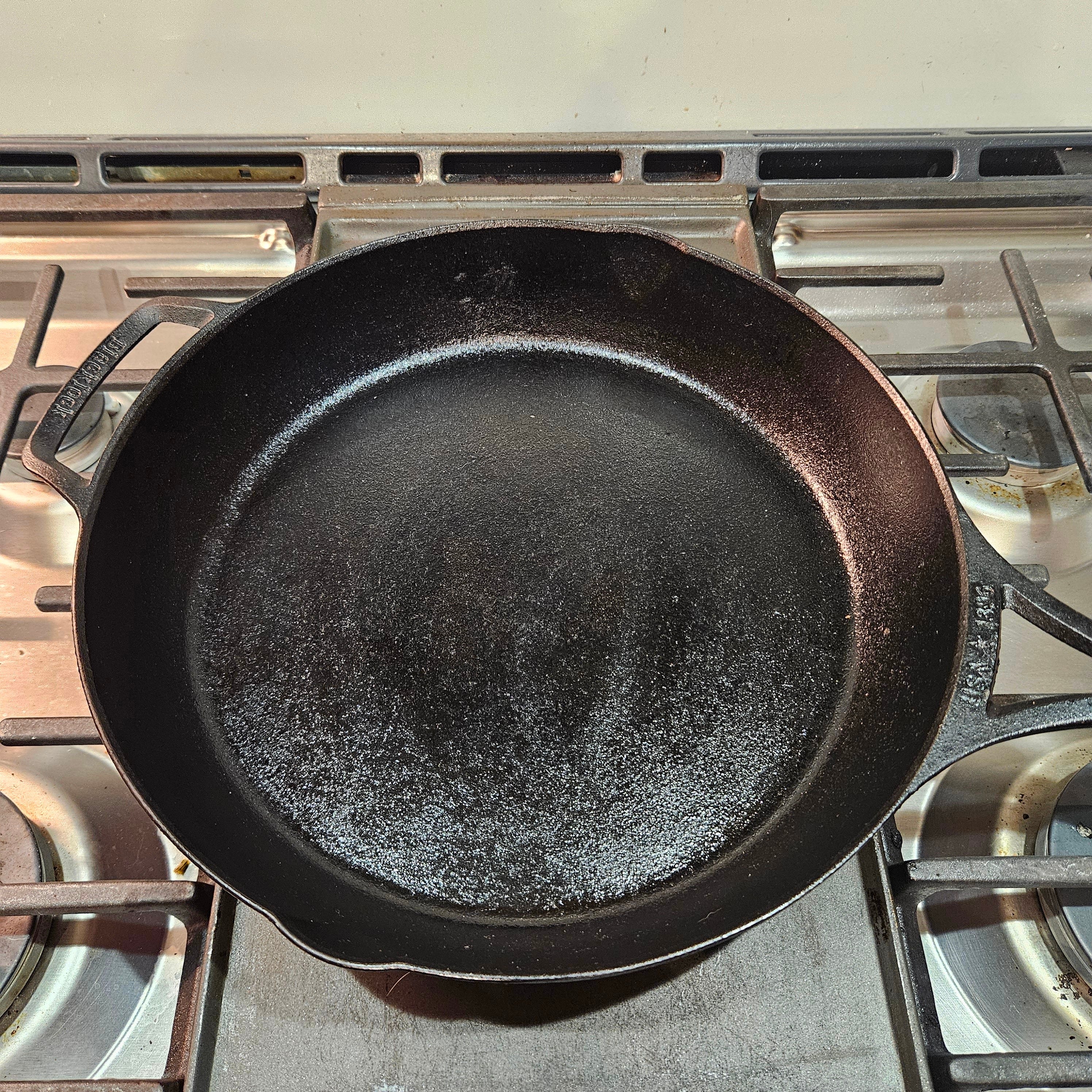
*Most cast iron pans today come pre-seasoned, so you can use them right away. Seasoning just refers to heating up the pan, coating it with oil, wiping the oil off, reheating it, and oiling it again. Ongoing seasoning of your pan just means to wipe a teaspoon of oil all over it after washing and drying. Seasoning protects the cast iron from rusting.
Carbon Steel: Similar to cast iron, but much thinner and lighter. It heats up evenly, can withstand very high temperatures and since the surface is much smoother than cast iron, it is virtually non-stick. They are fantastic for searing meat or any other high-temperature cooking. Traditional woks are typically made of carbon steel. It must be cared for and seasoned just like a cast iron pan and you can’t put it in the dishwasher.
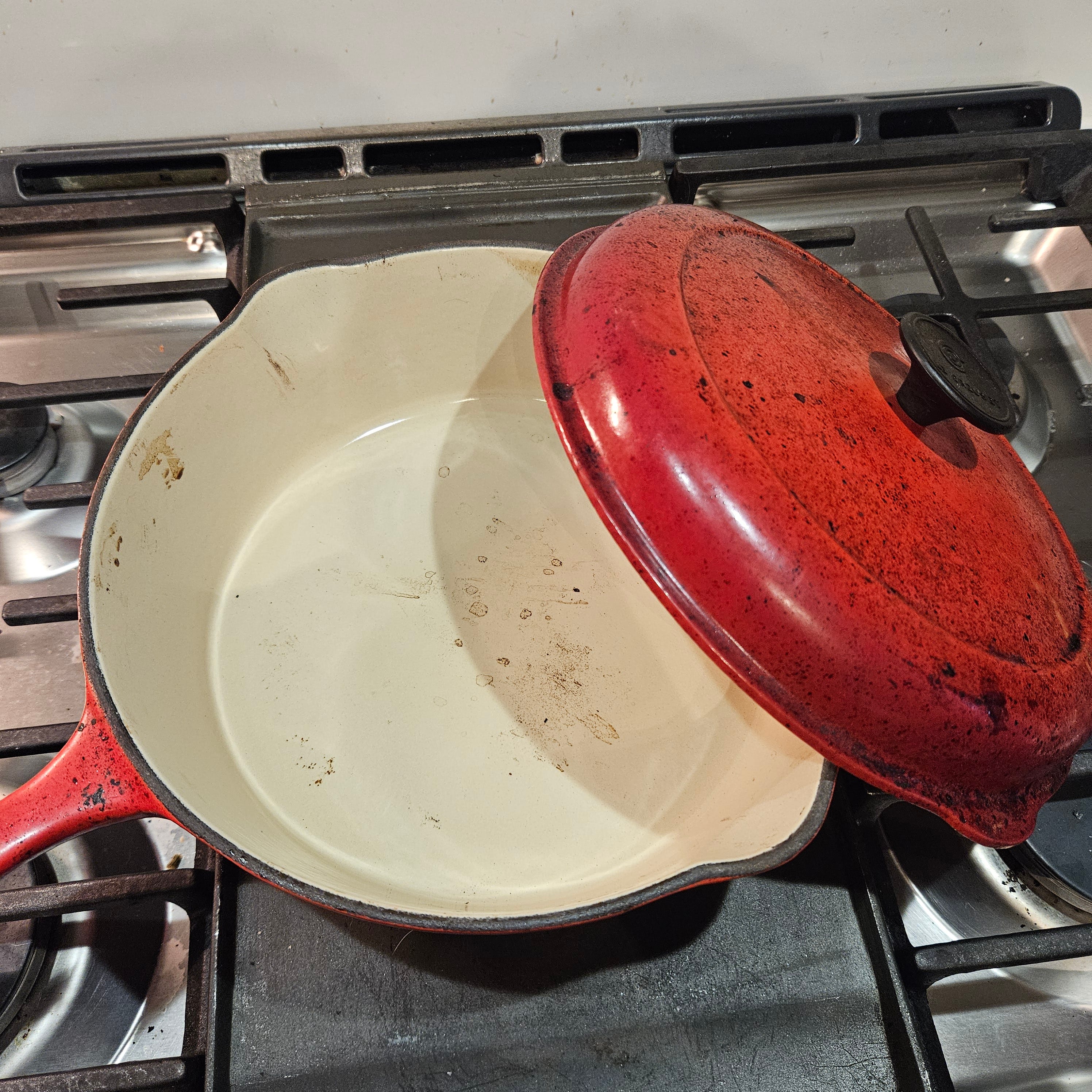
Enamel coated cast iron: Most commonly found in large pots (Dutch ovens) but you can also get smaller pots and frying pans in this style. Because of the enamel coating, you can cook acidic things in them for long periods of time. I do find food sticks in them, which isn’t always a bad thing because you can then deglaze them with wine or broth to release all that yumminess that has stuck to the pan. They can go from stovetop to oven, which, to me, is the most important thing in cookware. The most popular brand is Le Creuset, but there are lots of other manufacturers at various price points. You really do get what you pay for here, so I wouldn’t suggest you buy the cheapest ones. The higher-priced manufacturers typically have many more layers of ceramic, so they won’t chip as easily. Look for sales or warehouse outlets to find deals. Buy the largest one you can afford and have room for in your kitchen. Even though they sell all shapes and sizes of pots, there’s really no need to buy small ones.
Non-stick: There is a LOT of discussion and controversy about non-stick pans. Some older models did have toxic coatings, and some do peel off, but there is a lot of misinformation and fear-mongering in this space warning you that “toxins” are “leeching” into your food. If you have an old non-stick pan that’s scratched or starting to peel, please ditch it, but today’s non-stick coatings are completely safe. The most important thing with respect to non-stick pans is that you cannot cook at very high heats with (most of) them, as that will cause the coating to eventually peel off. And I say “most of them” because there are some that can withstand high heat, like my preferred pan from Scanpan, a Danish company. This one can be used on high heat without damaging the coating, and can also go in the oven.
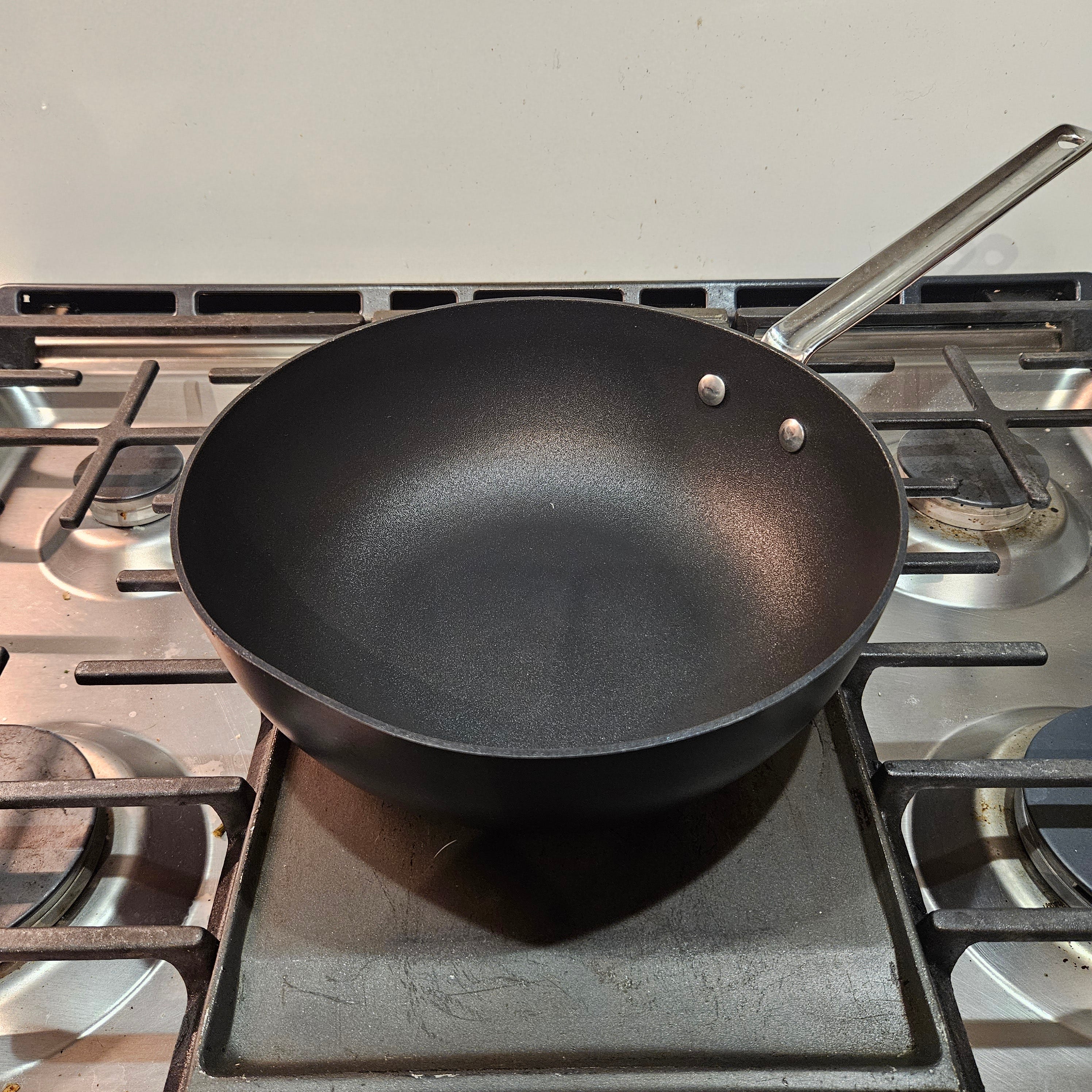
If you buy non-stick, it’s worth spending more money because you’ll get a coating that is much more durable and a pan that won’t warp.* Though available, non-stick saucepans aren’t really necessary, so save your non-stick purchases for frying pans.
*Warping of any pan is usually caused by extreme fluctuations in temperature, coupled with a very thin metal base. Pots and pans with very thick bases are less prone to warping. Also, don’t run your screaming hot pan under cold water as the rapid decrease in temperature can make it warp.
Ceramic non-stick: These have become very popular in the last few years (mostly capitalizing on the fear-mongering about other non-stick coatings) touting themselves as the “natural” non-stick. The entire pan isn’t ceramic, just the non-stick coating (which is made from sand.) They’re not meant to be used at very high temperatures. And if you have an induction cooktop, do check beforehand whether the brand you buy is compatible.
Glass: Some people like glass for the same reason they like ceramic: it’s non-reactive, conducts heat well, and perceived as a “natural” alternative. You can see your food as it cooks, though I don’t really understand why that might be necessary. Even though they’re made from tempered glass, they are obviously still more fragile than metal pans, and they can shatter if exposed to extreme temperature fluctuations. I like tempered glass for serving and storing food, but I don’t see the point in using them for cooking.
Handles & Lids: The maximum temperature of your pans will be dictated by the maximum temperature of the handles! If the handles on your pots and/or lids are made of plastic, you won’t be able to put the pan in the oven, and if you have a gas stove, it can melt if it gets too close to the flame. Another thing to be mindful of (and I wish I’d checked this when I bought mine 15 years ago) is the length and thickness of the handles: are you able to easily lift the pot or pan with one hand when it’s full? I find the handles on my pots to be a bit too long and thin, so I have to use a pot holder or oven mitt and grab them closer to the pot for stability. Some larger pots will often have a “grab handle” on the opposite side to help with this. Also, make sure the handles are securely attached with rivets, rather than screws. These details are what distinguish the quality of a piece of cookware.
Even though they look like plastic, the lid handle on my Le Creuset pot can actually withstand oven temperatures up to 450F. And they do make replacement lid handles that can go up to 500F. Glass lids are nice to be able to see how things are cooking inside the pot, but depending on their thickness they may not be able to go in the oven.
Does Size Matter?
Yes and no. Bigger is not necessarily better when it comes to pots and pans. It’s best to buy the sizes that you’ll use most often and that will fit on your stove and in your cupboards or drawers. Sizes can be measured by volume (usually for pots, in either quarts or litres, depending on where they’re made,) or diameter (usually for frying pans.) My advice is to buy the largest you can easily handle and store.
Another thing to factor in with sizes is metric vs imperial. If you have a mix of the two, rarely will you be able to swap lids between pots as they just won’t fit. Having a lid that fits multiple pots and pans will save a lot of space (an money.)
My Essentials
These are the cookware items that get the most use for me. I typically cook meals for 1-2 people, but I also often cook in bulk and freeze meals for later, so I think these items will work well for any size household. I’ve included the links to some of the items, but I don’t get any affiliate income from them, they’re just products I like.
12”/30cm Cast iron frying pan (Lodge Blacklock)
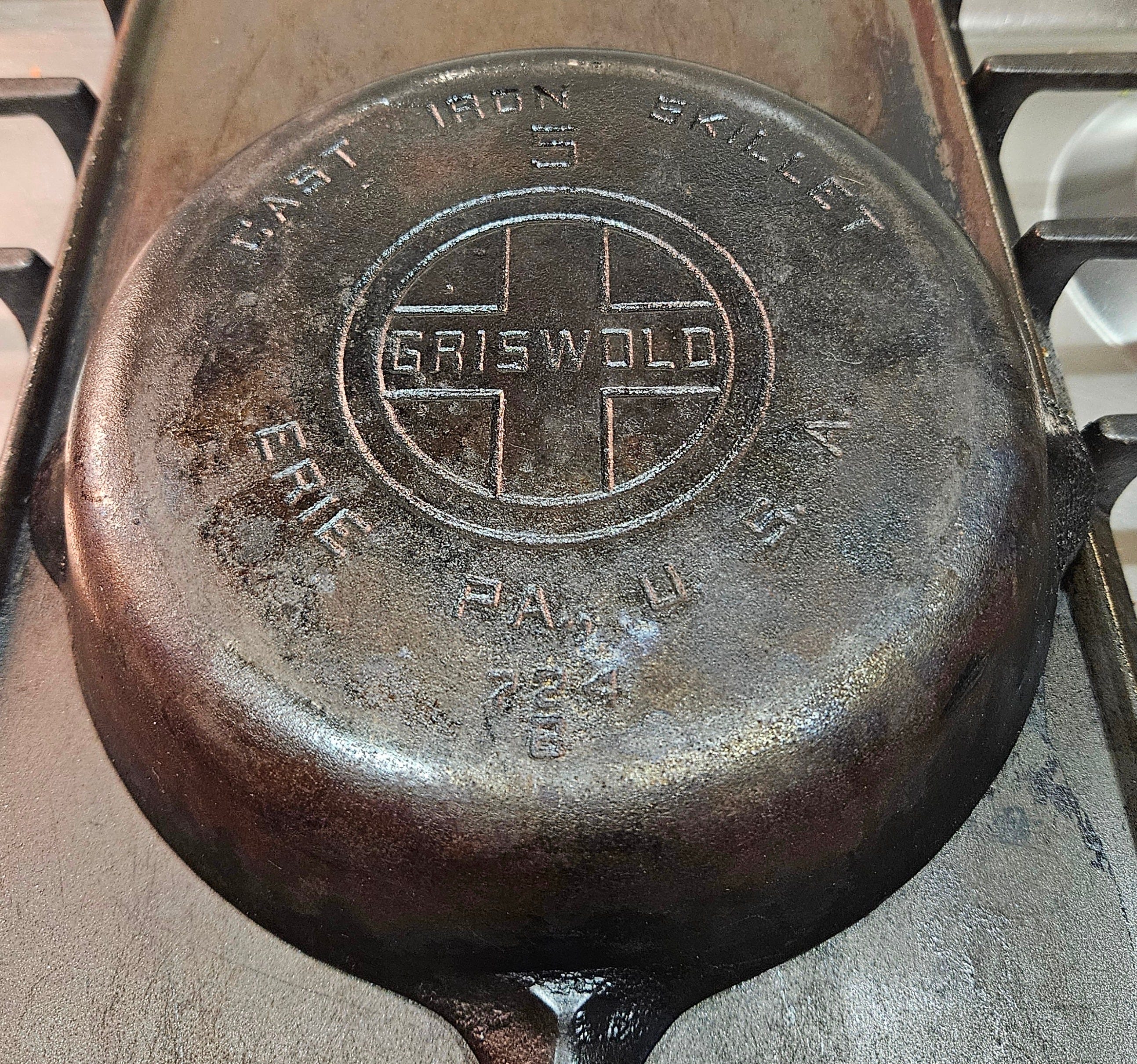
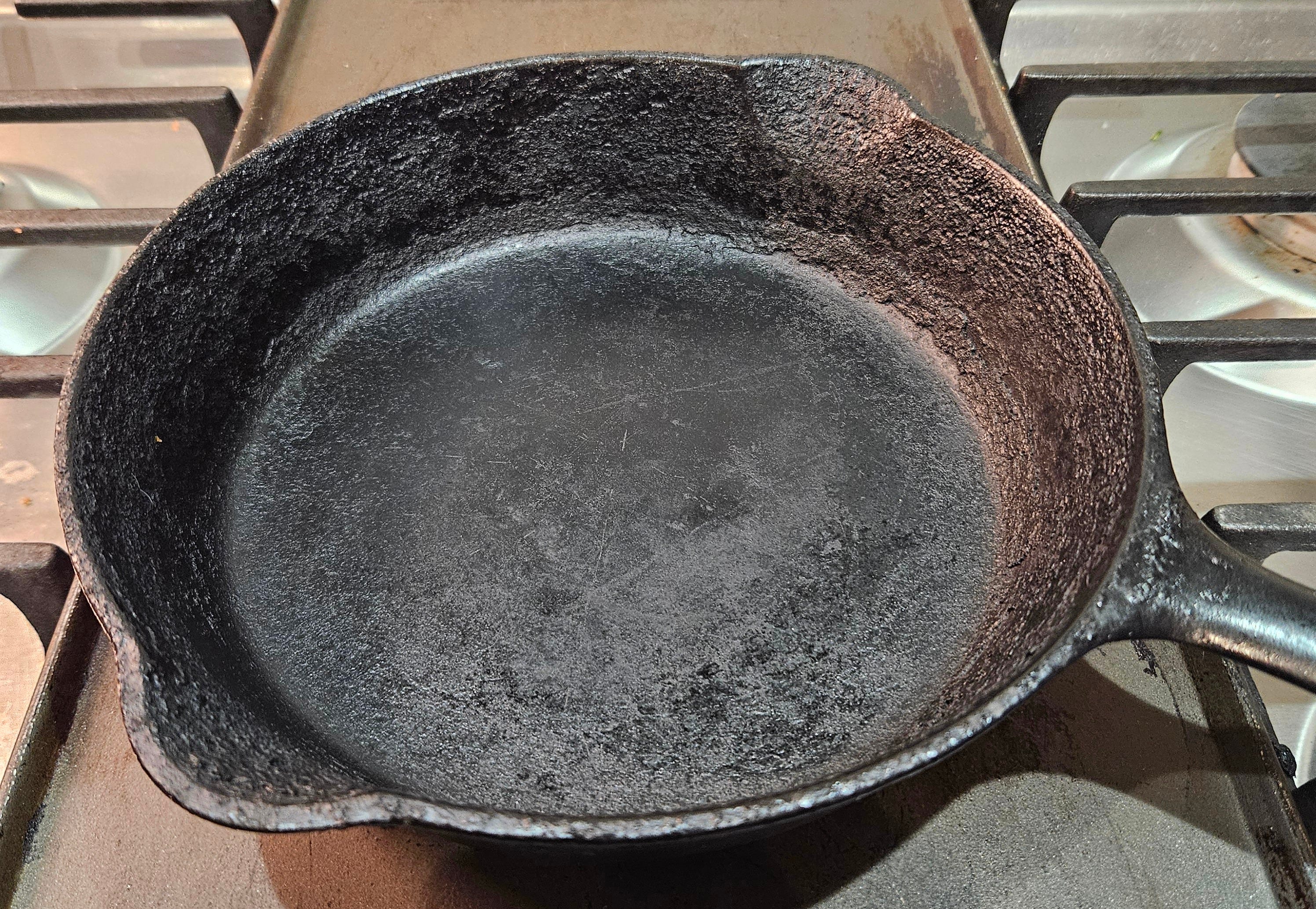
6-8”/15cm Cast iron frying pan (no link, mine is older than I am as it was my grandmother’s and the company went out of business in 1957)
12”/30cm Non-stick Bistro pan (sort of a combo between a pot, a frying pan, and a wok) or frying pan
5-7L Enamel coated Dutch oven with lid
3-4L Stainless steel saucepan with lid ( don’t have this brand, but it’s a good, Canadian-made brand)
1-2L Stainless steel saucepan with lid
6-9L Stainless steel stock pot with lid
What are your go-top pots? Do you typically use the same pots/pans over and over? Tell me in the comments.
Did we all “borrow” Granny’s cast iron? I have 3 that I got from my Mum, that she “borrowed” from Granny. 😆😆
I recently invested in hexclad. I only have the pans but I’m a complete convert and love them. Use them over my Creuset and all clad when I have the choice.